One of the many wonderful things about Northern France is how easy it is to reach from the UK. Travelling from London via the Eurostar you can be in Lille, the gateway to the Pas-de-Calais region, is less than 90 minutes making it the perfect destination for a weekend break.
Some of my favourite places to visit along this northern slice of France include Arras, Le Touquet, Boulogne-sur-Mer, and Calais. New to this list is the city of Lens. I recently spent two days exploring this former coal mining town and am happy to report that it’s the perfect spot for a weekend break.
If you are planning a trip to northern France or are simply looking for a place to stop on a drive towards southern France or the Alps then here’s everything you need to know about spending time in Lens, France.
Disclosure: This post may contain affiliate links. I have been or could be if you click on a link in this post compensated via a cash payment, gift or something else of value for writing this post. See our full disclosure policy for more details.
A weekend in Lens, France
Table of Contents
Lens was once a major production area for France’s coal mining industry. For nearly three centuries, life in Lens and the surrounding towns was focused entirely on excavating charbon from the ground. When the last pit closed in 1990, the region’s economy crashed: shops closed, houses were abandoned and the unemployment rate in Lens was three times the national average.
Today, however, that has changed and it’s thanks to the arrival in 2012 of the Louvre-Lens Museum, a branch of the famed Louvre Museum in Paris.
Now 12 years old, the Louvre-Lens Museum has helped to breath new life into the town creating not only employment opportunities – both at the museum and in the wider Lens area – but also giving the town and its people a renewed sense of pride and identity.
This guide is aimed at helping you discover the best things to do in Lens, France over two days. There’s a lot to see and do and the following is a guideline for making the most of your time here.

Day 1 in Lens
How you organise your first day in Lens depends on when you arrive. I took the 9am Eurostar from London and arrived in Lille just before 11.30am. From Lille it’s an approximately 30 minutes by train to Lens. However, you can follow the below itinerary regardless of when you arrive – even better if you can dedicate two full days to exploring the town.
Morning
Your first port of call should be the Louvre-Lens Museum.
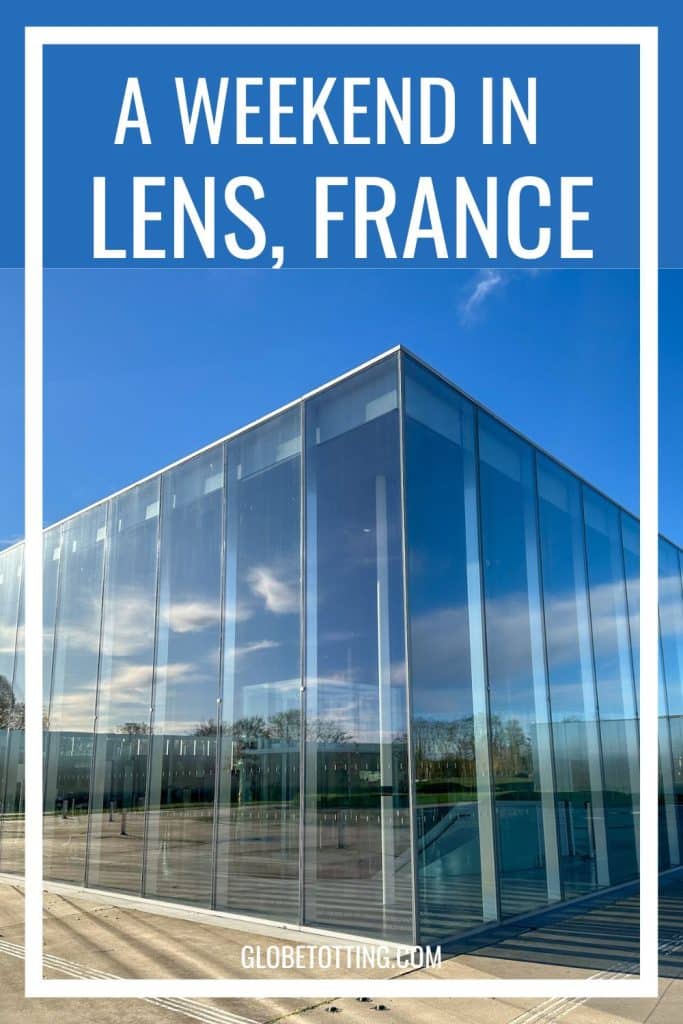
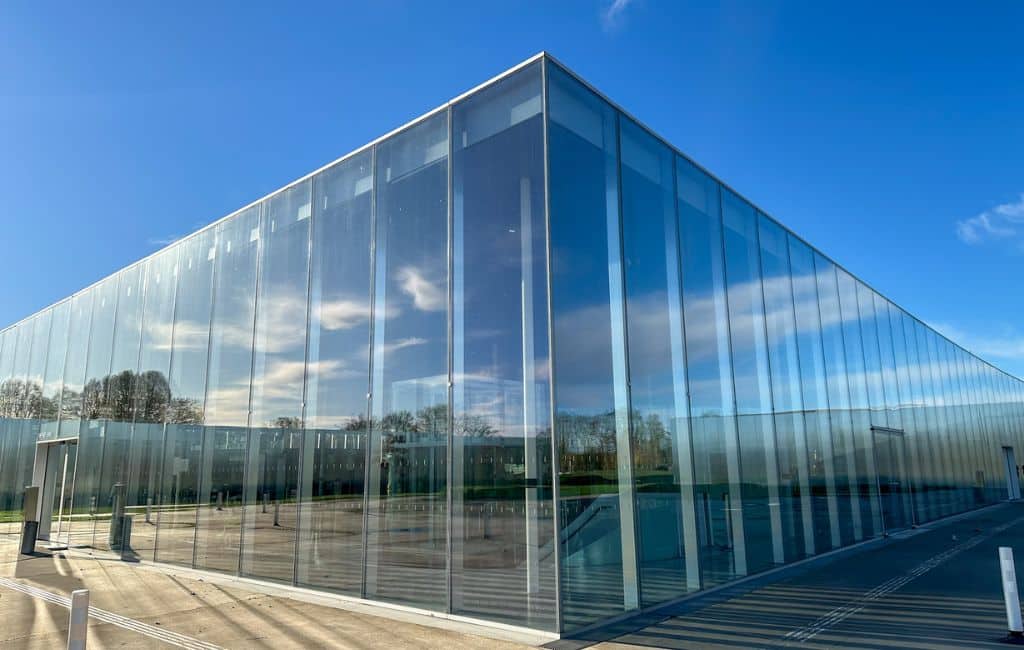
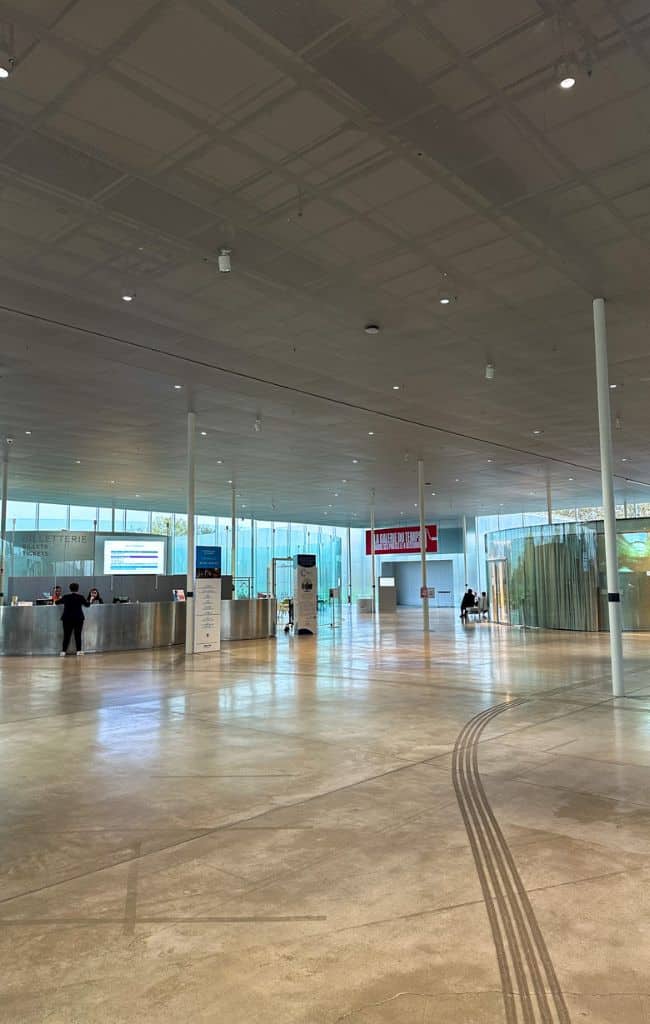
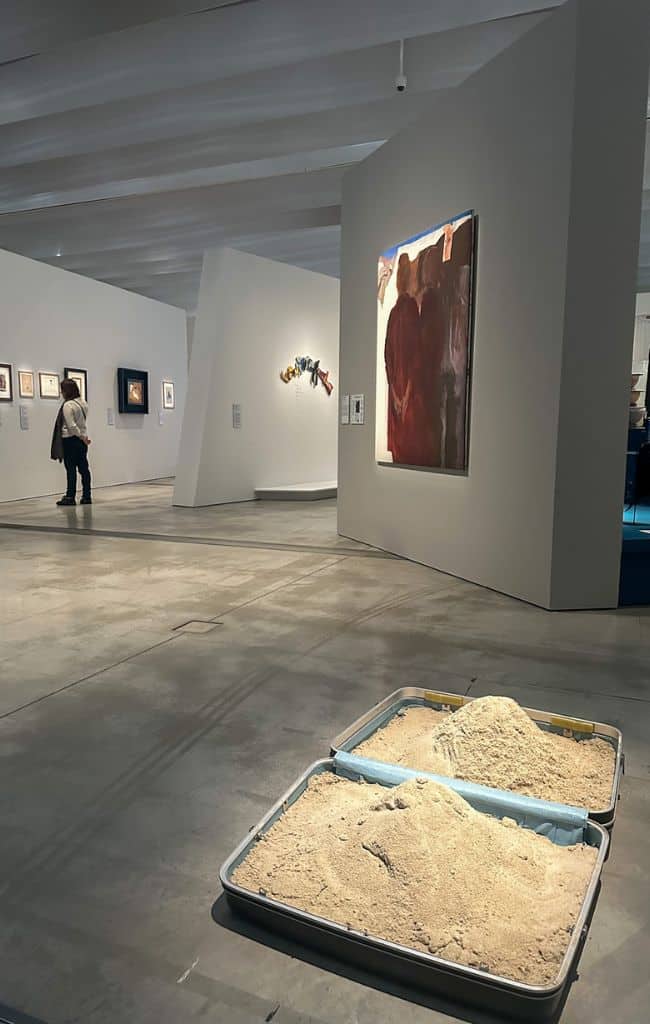
The Lens outpost of the Louvre Museum is very different to its glamorous Parisian sibling. While the glass pyramids and historical buildings of the Louvre sit on banks of the River Seine, the Louvre-Lens Museum sits on the site of an old coal mine. The building – a single-storey glass and aluminium structure – was designed by a Japanese architect firm and was purposely designed to blend in rather than stand out.
There are two gallery spaces at the Louvre Lens Museum, the permanent Gallery of Time (Galerie du Temps) and the temporary exhibition space.
Some 250 works of art from the Louvre in Paris are displayed in the Gallery of Time, organised in chronological order. Typically, 5 to 10 per cent of the works are swapped with new pieces from the Louvre’s archives every year but to celebrate the museum’s 12th birthday in December 2024, the collection was renewed in its entirety.
Highlights of the new exhibition include The Four Seasons by Giuseppe Arcimboldo and Portrait of Luis Maria de Cistue et Martinez by Francisco de Goya.
I was a couple of weeks too early to enjoy the new Gallery of Time but did get to visit the temporary exhibition, Exiles.
The museum hosts two themed temporary exhibits annually and Exiles explores the idea of being forced to flee your homeland and how it has affected humanity throughout history. The exhibition only runs until 20 January 2025 so if you have the chance to visit before it finishes then I would highly recommend it. The next exhibition, the Artist and Outfit, will open in March 2025.
You can easily spend half a day at the Louvre Lens, if not longer, especially if you visit both exhibition spaces. Just be aware when planning your trip to Lens that the museum, like many in France, is closed on Tuesdays.

Lunch
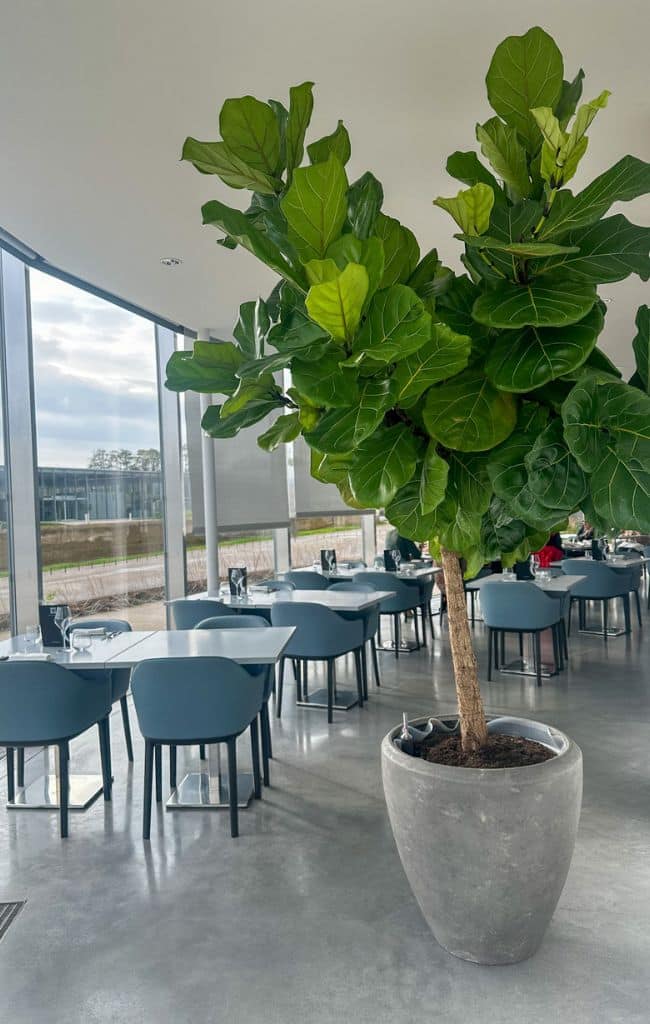
There is a cafe in the museum as well as a picnic space but I highly recommend making a reservation at L’ Atelier du Cerisier, a glass-fronted circular restaurant that’s part brasserie part fine dining and sits within the museum grounds, opposite the entrance. It’s part of the Michelin-starred Cerisier restaurant in Lille and lunch was excellent when I visited.
Afternoon
Once you have finished exploring the Louvre-Lens Museum then there are a couple of options for the afternoon. The first is to wander across the road towards the Louvre-Lens Hotel and explore the streets around the hotel.
Miners Village
The streets surrounding the Louvre-Lens Museum are a step back in time. Each mining company would establish a small town surrounding the mine with cottages for the miners, a doctor’s office, a church, a school , cinemas, concert halls, and green spaces for children to play and for families to spend time together. The theory being, of course, that the more facilities miners had on their doorstep, the less need they had to leave the area.
The Stade Bollaert-Delelis, the Bollaert-Delelis Stadium, was first built in 1932 by one of the local mining companies and it’s been home to the Racing Club de Lens (RC Lens) football team ever since. If football is your thing then the Tourist Office runs tours of the stadium.
Wander along the streets near the museum and you will see former miner’s cottages that have been (or are in the process of being) repaired and renovated as well as the larger homes once belonging to the doctor, engineers and pit managers – the house sizes growing in proportion with a person’s job title.
Art Deco Tour
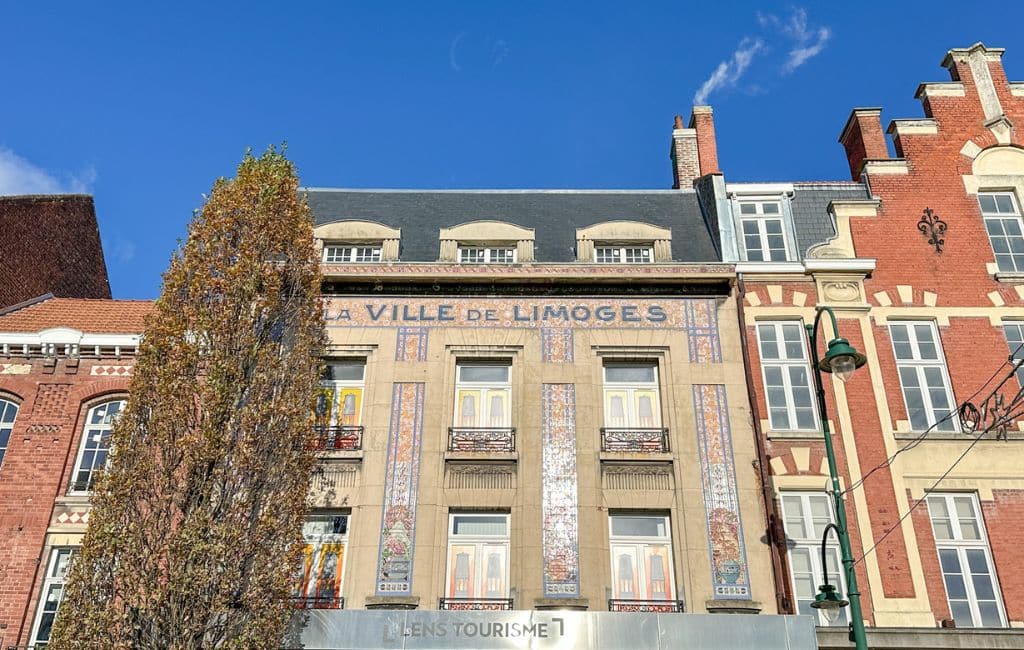
Depending on time you may also want to join one of the Art Deco architecture tours run by the Tourist Office. At the very least, stop by the Tourist Office in the centre of town. Lodged in a former shop, the Art Deco decor is some of the prettiest in town. Ninety percent of Lens was destroyed during the First World War and so most of the architecture dates from after the 1920s.
The Tourist Office has a small shop selling crafts made by local artisans and they also have a small second-hand area. Sadly, the set of elegant green stem wine glasses – for only 5 euros! – were too fragile to come with me on my trip.
The hour-long Art Deco tours take place at 3.30pm from Wednesday to Sunday and include the Lens train station with its Art Deco mosaic paying tribute to the town’s mining legacy. The office also run a Museum and Mines tour at 2pm, also from Wednesday to Sunday.
Day 2 in Lens
Your second day in Lens is all about the mines. Starting from the Belgian border, the mining basin spread west for 120km and was peppered with countless mines. Today, the Nord-Pas de Calais Mining Basin has been recognised as a living and evolving cultural landscape by UNESCO. Of the many quarries once involved with extracting coal from the ground, four remain today and are open to visitors.
Morning
We visited the 11/19 Pit first on a very wet and windy November morning.
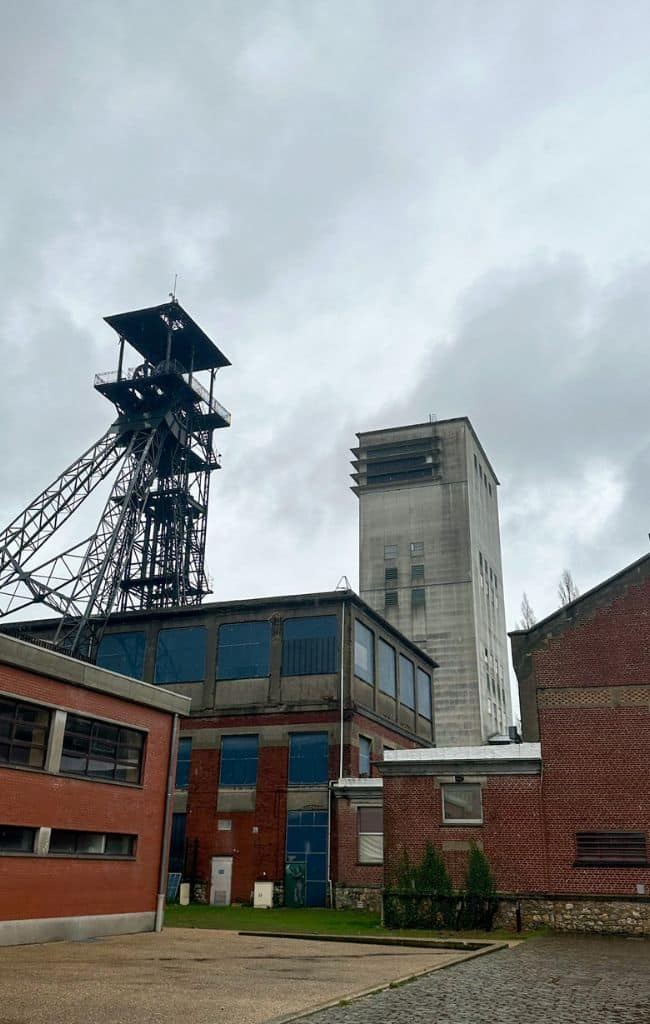
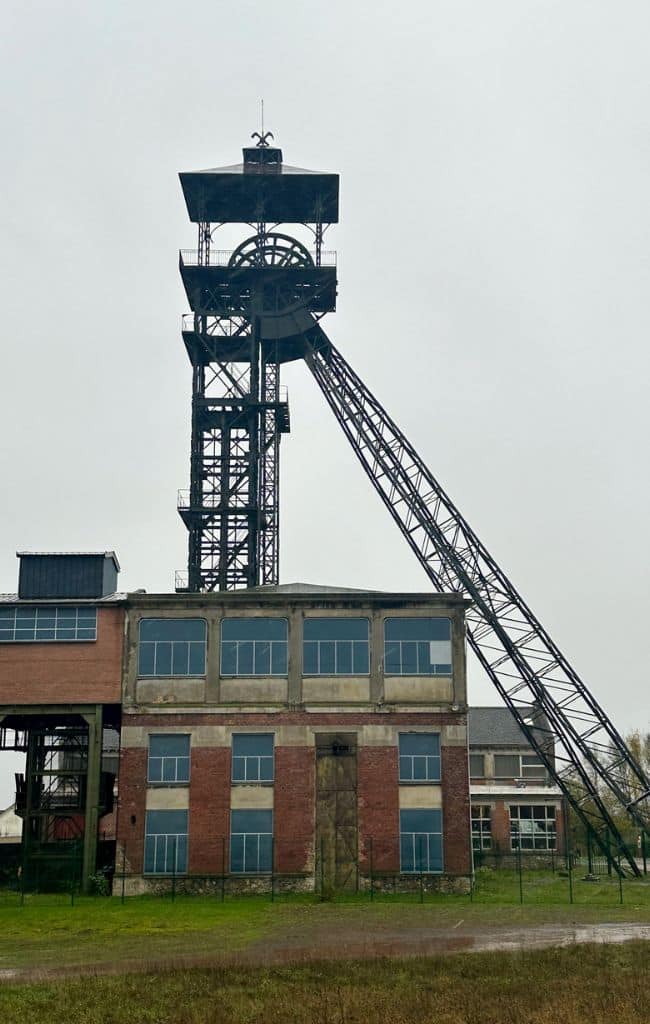
The colliery, in the nearby town of Loos, is home to two pits, Number 11 and Number 19. Digging on pit number 11 started in 1891 but the iron A-Frame that sits above it came later in the 1920s, after the First World War (the mines were all destroyed by the Germans during WWI).
Following the Second World War, the private mining companies were bough by the state who needed to increase energy production in a country ravaged by war. They built the enormous concrete tower standing behind pit number 11 and soon this, pit number 19, had replaced the original mine. With four lifts and an extraordinarily powerful engine, it was able to extract coal at a rate not seen before.
But where the private companies had used architecture and design to reflect their wealth and power (the A-Frame of Number 11 is really quite elegant, topped with a pair of traditional tools cast from iron), that state was less interested in design aesthetic and more in getting as much coal out of the ground as quickly as possible
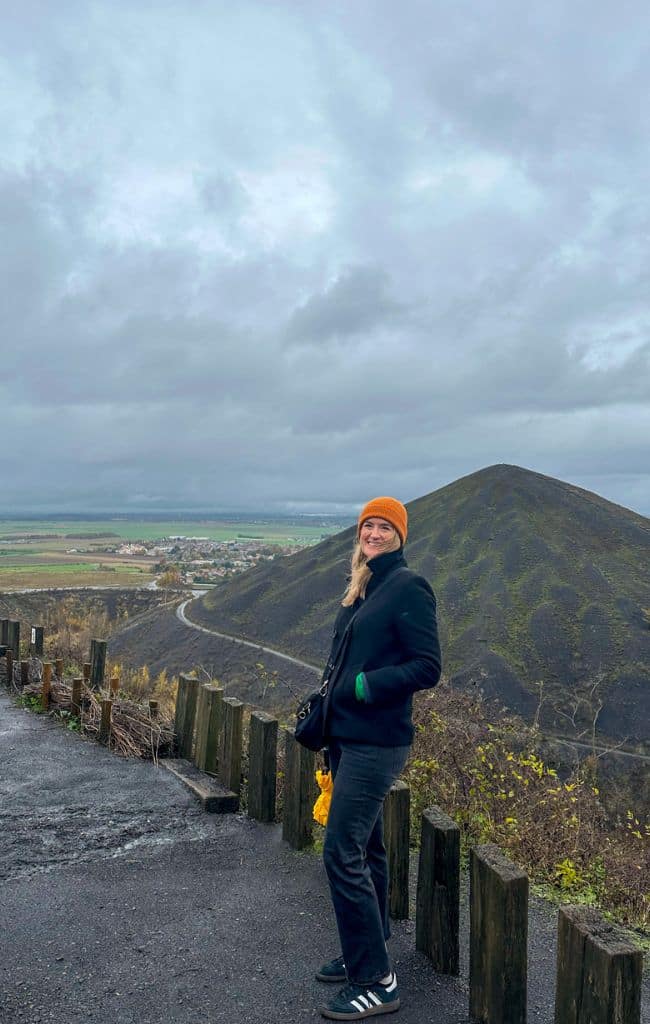
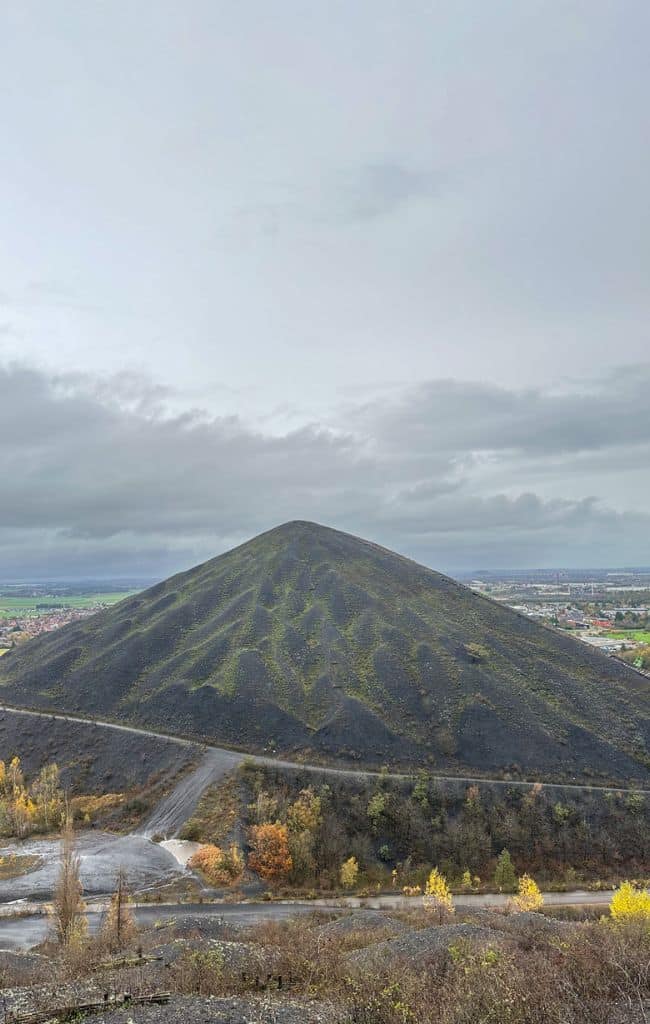
There are no buildings open to the public here, most are office spaces dedicated to sustainable development, but you can climb the nearby twin slag heaps (also known as spoil heaps), Terrils des Loos en Gohelle.
There are 51 slag heaps – essentially the waste produced from coal mining – still standing in Northern France but these twin black conical hills are the tallest in Europe.
One is open for visitors to climb and there was a brief pause in the rain while we made our way to the top. The views weren’t as far-reaching as they would have been on a summer’s day (on a clear day, views stretch for 30 kilometres) but we still got an impressive 360-degree view of the countryside.
What’s most surprising about these slag heaps is that they support growth and various plants and even trees are growing on them.


Lunch
The wind and rain picked up as we were descending from the top of the slag heap so I was wet through by the time we arrived at Al’ Fosse 7 in the town of Avion.
This popular local restaurant is designed to resemble a mine shaft and filled with memorabilia from black and white photos of miners in the pits, old lanterns hanging from the walls, and miner’s clothes hung from hooks dangling from the ceiling, as they once were at the end of a shift.
The food is very traditional, hearty and filling. I tried the Welsch Complet, the Northern France version of a Welsh rarebit (essentially melted cheese on toast for anyone unfamiliar).
Well, that is what I had been told but the reality is that the dish is more like a fondue, made with cheddar cheese, beer-soaked bread, ham and a poached egg. It arrived with frites and a green salad and was tasty but it was a little too filling for me to finish the entire thing.
Afternoon
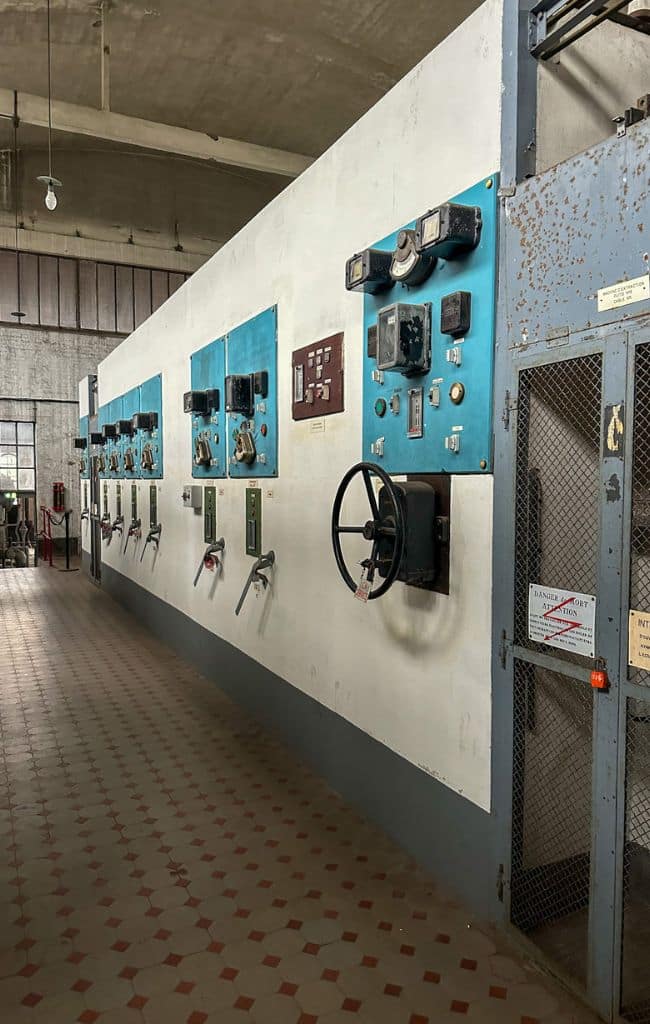
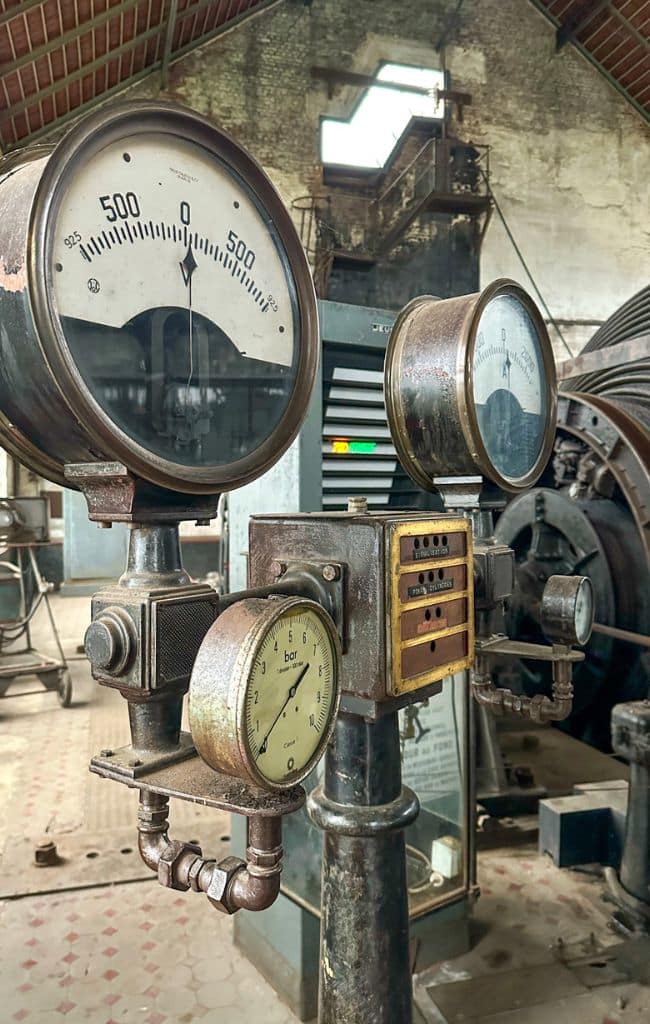
To get a sense of how the mines operated it’s well worth going the 9-9bis pit at Oignies. Almost 5 million tonnes of coal was extracted from here between the years of 1933 and 1990 and, in its heyday, some 2,500 miners worked here.
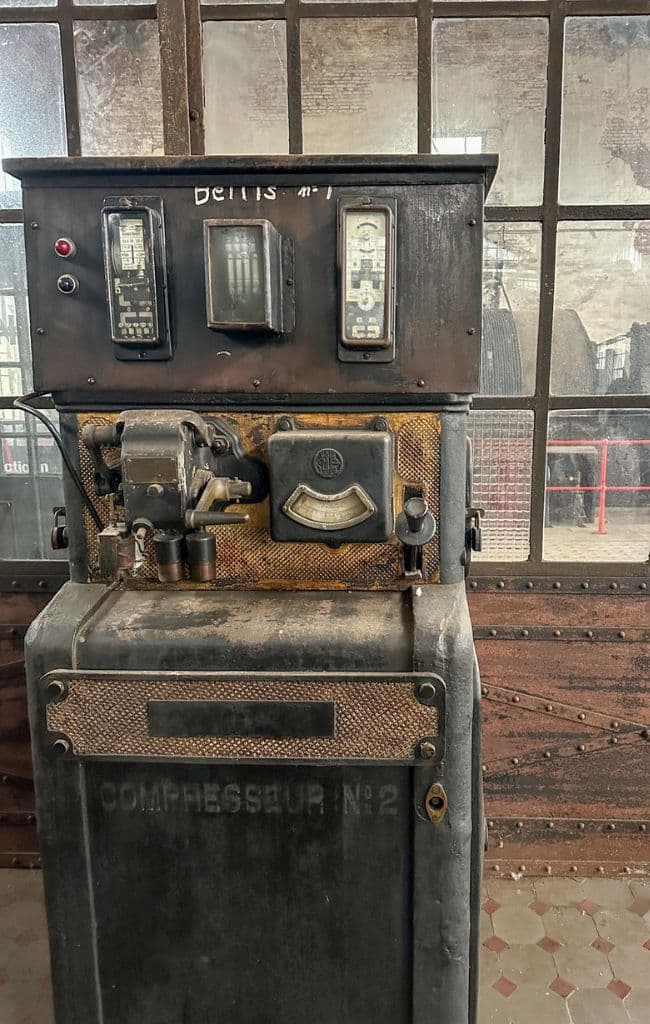
Some of the original buildings are open to visitors on a guided tour, providing a fascinating step back in time. Little has changed in these buildings since the 1930s: the hulking great machines used to power and monitor the mine are still standing and the engine that raised and lowered the mine lift still functions.
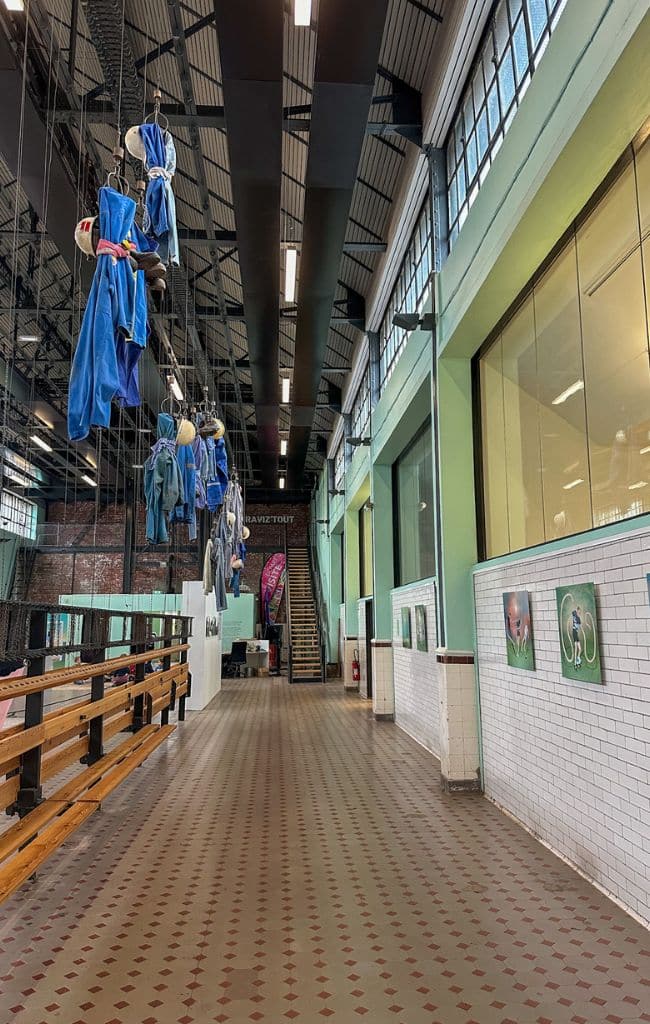
The miner’s old bathhouse is today a contemporary space with music studios and a dance space but there’s also an evocative display of dozens of old miner’s clothes hanging from ceiling by hooks as they once did when coal was king.

Other things to do in and around Lens
- Tour the nearby memorial sites of the First and Second World Wars including the Canadian memorial at Vimy, the Ring of Remembrance and the 14-18 Memorial.
- Visit the town of Arras, famous for its elegant market squares, its UNESCO-listed Belfry, its giants, and the Wellington Tunnels.
- Spend a day in nearby Bethune with its elegant Grand Place, its wonderful Art Deco swimming pool (Piscine de Bruay-La-Buissière) and La Cité des Électriciens (The Electricians city), an excelent example of a former mining city.
Where to stay in Lens
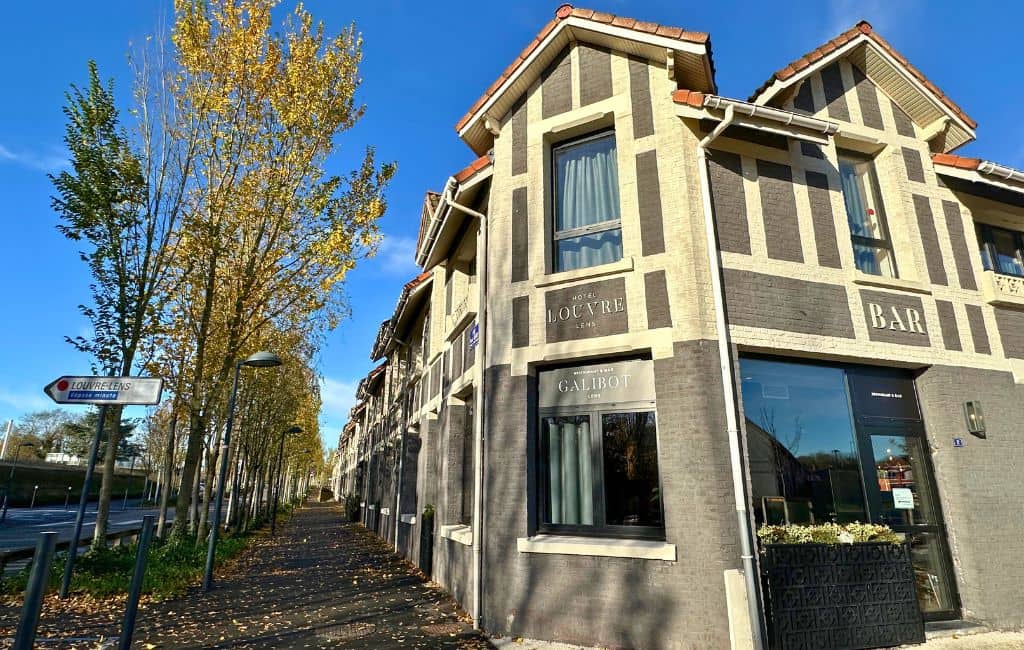
The best hotel in Lens is the four-star Louvre Lens Hotel. The property sits within a row of old miner’s houses directly opposite the Louvre Lens Museum.
It’s a member of the Esprit de France hotel group that blends hospitality with art and culture and the 52 sleek, modern and very comfortable rooms pay tribute to the region’s coal mining heritage with exposed wood and brick and dark colours. The hotel restaurant, Le Galibot, refers to the name used for young, novice miners.
How to get to Lens, France
Lens is easy to reach by train. It’s just 30 to 40 minutes to Lille, approximately 45 minutes to Arras, between 1 hour 10 minutes and 1 hour 37 minutes to Paris and just under two hours to Brussels.
I took the Eurostar from London Kings Cross at 9am and arrived in Lens un time for lunch.
If travelling by ferry, Lens is a little over an hour’s drive from Calais.