The south of France has long been a favourite with holidaymakers drawn by the promise of china blue skies, brilliant sunshine and the warm waters of the Mediterranean Sea.
But while most visitors battle for sun lounger space along the Côte d’Azur or restaurant reservations in Provence, those in the know head further west towards the town of Narbonne and a very different, more relaxed experience of the country’s south.
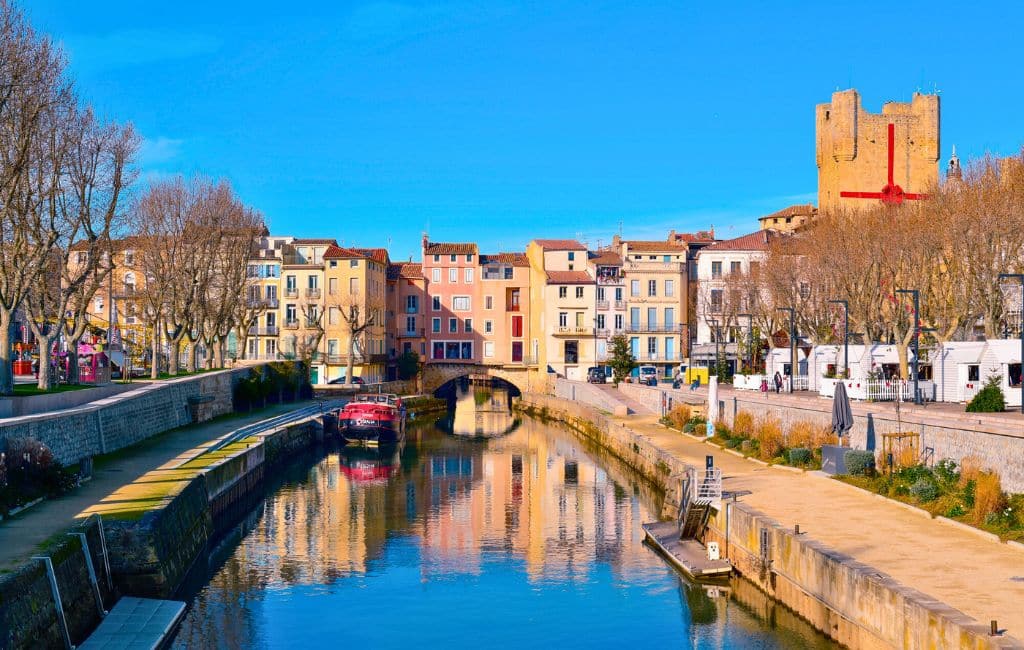
Located in the heart of the Occitanie region – less than an hour from some of the area’s most famous sights included the Medieval towers and concentric walls of Carcassonne – Narbonne was once an important Roman port city although centuries of silting of the Aude river means that the town now sits 15km inland. The focal point of the town today is instead the Canal de la Robine, an offshoot of the Canal du Midi.
I visited Narbonne on a BlaBlaCar road trip across France and quickly fell for this laidback city. Packed full of history, lined with honey coloured buildings and home to one of the most popular restaurants in France (not to mention one of my now favourite museums) there are lots of things to do in Narbonne.
Here’s how to spend a weekend or more in this charming French town.
Disclosure: This post may contain affiliate links. I have been or could be if you click on a link in this post compensated via a cash payment, gift or something else of value for writing this post. See our full disclosure policy for more details.
A weekend in Narbonne
Table of Contents
I recommend spending at least a weekend in Narbonne itself, there’s plenty to do in town and, if you have longer, some of the neighbouring villages are well worth a visit. This guide is aimed at helping you discover the best things to do in Narbonne, France over two days.
Day 1 in Narbonne
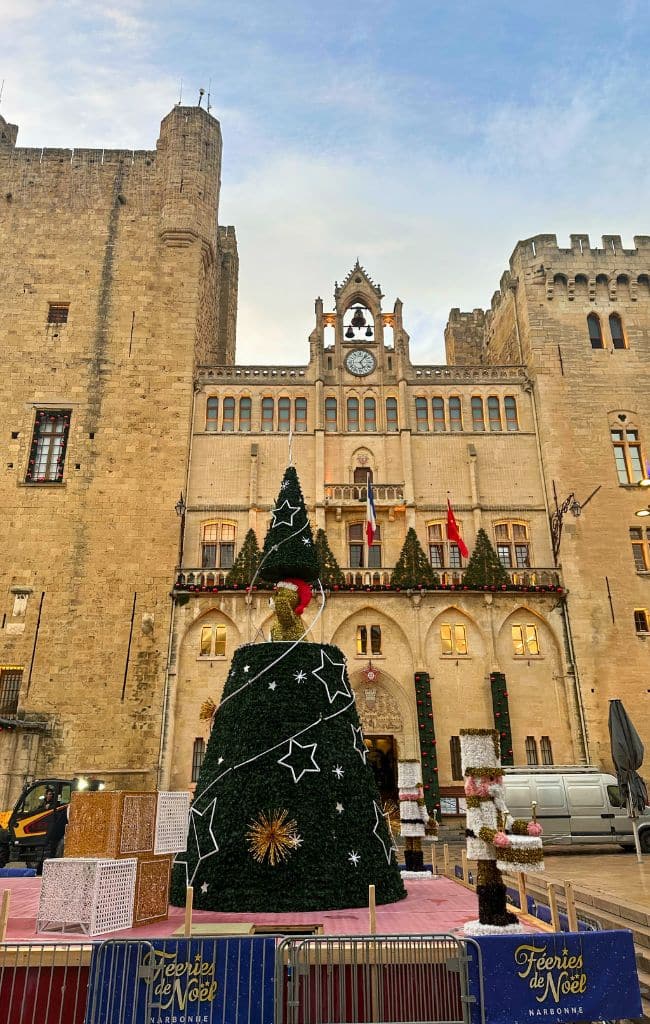
Your first day should be all about exploring the city and its Roman history starting with the modern day Hôtel de Ville (town hall) and former Palais des Archevêques (Palace of the Archbishops) in the heart of the city centre.
This grand residence was originally built as both a fortress and a residence with a tunnel leading underground to the nearby cathedral. It grew exponentially over the centuries into a vast complex of interconnected buildings and three military-style towers.
Directly in front of the Hôtel de Ville are the remains of a small section of the Via Domitia, the first Roman road built in Gaul that started in Narbonne. It was covered by a Christmas tree when I visited but at any other time of year it is on display for everyone to see.
Morning
We started our visit walking up the narrow spiralling staircase to the top of the square-shaped Donjon Gilles Aycelin tower in the Palace of the Archbishops.
Little has changed since it was first constructed during the Middle Ages, only today the tower is used simply for views over the city rather than keeping a lookout for marauding invaders (it was once part of the Chappe telegraph system, conveying coded messages to nearby towers via wooden flaps).
It was an unseasonably grey day when I visited (typically Narbonne receives over 300 days of sunshine a year) but the views from the top – over the city, vineyards beyond and peaks of the distant Pyrenees – still made the climb worthwhile.
The once-private apartments of the former bishops are today home to the Musee d’Art et Histoire (the Museum of Art and History). If you can, it’s worth visiting with a guide (ask at the Tourist Office) who can translate the ancient oil portraits into tangible, relevant information. My guide, Olivia, pointed out that some of the names of people featured in paintings hanging along the walls were still the names of big families in Narbonne today.
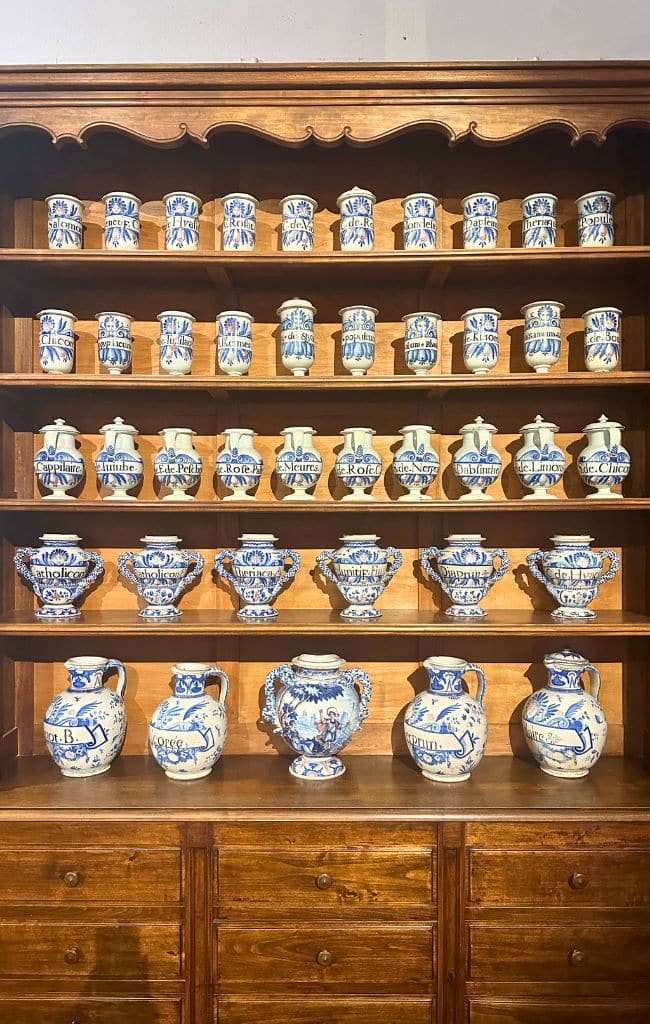
My highlights include the Roman mosaics and the apothecary jars from the 16th and the 17th centuries displayed in three large wooden cabinets..
Apparently during Roman times and through the Middle Ages, Narbonne honey was particularly famous and texts have been discovered detailing shipments of Narbonne honey being sent to places such Alexandria.
Honey was also used in Theriaca, an antidote for various poisons, and a jar marked Theriaca stands among the shelves in the apothecary display.
It’s also worth seeking out the portrait of Arthur Richard Dillon, the last Archbishop of Narbonne, who died in 1806. His body lies in the nearby cathedral but his false teeth – apparently a perfectly crafted set of 18th-century porcelain dentures with gold springs – are in London.
The palace is also home to the Musée Archéologique although this was closed when I visited as works are taking place to try and better organise the museum and its collection. What was open (but was sadly only temporary) was a fantastic Playmobil exhibition depicting the Bishop’s Palace and life in Narbonne during the Middle Ages. Personally, I feel they should make this permanent!
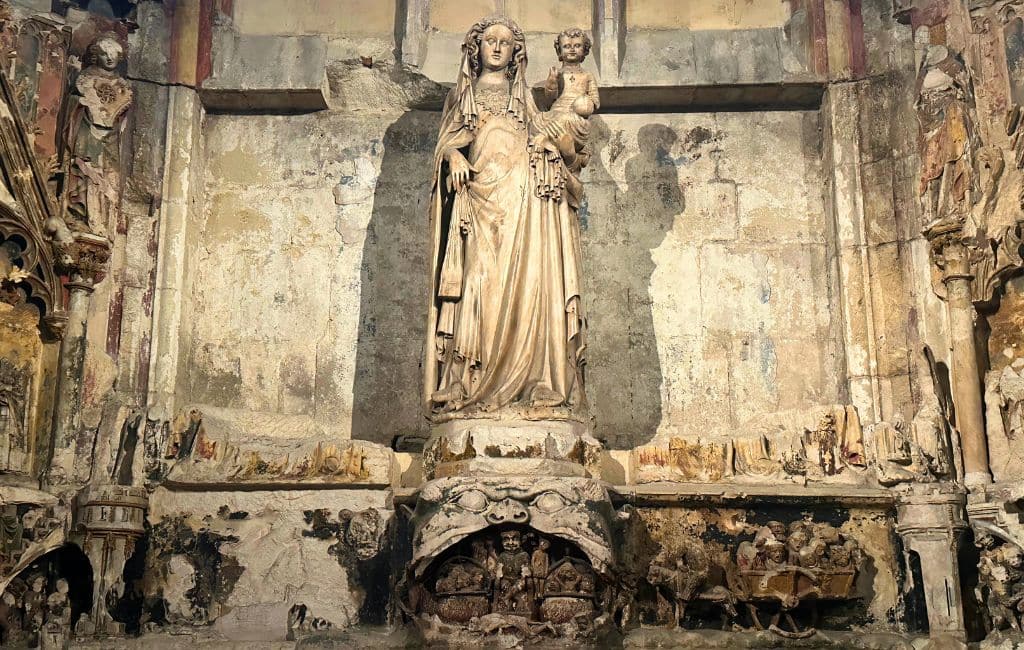
St-Just-et-St-Pasteur Cathedral
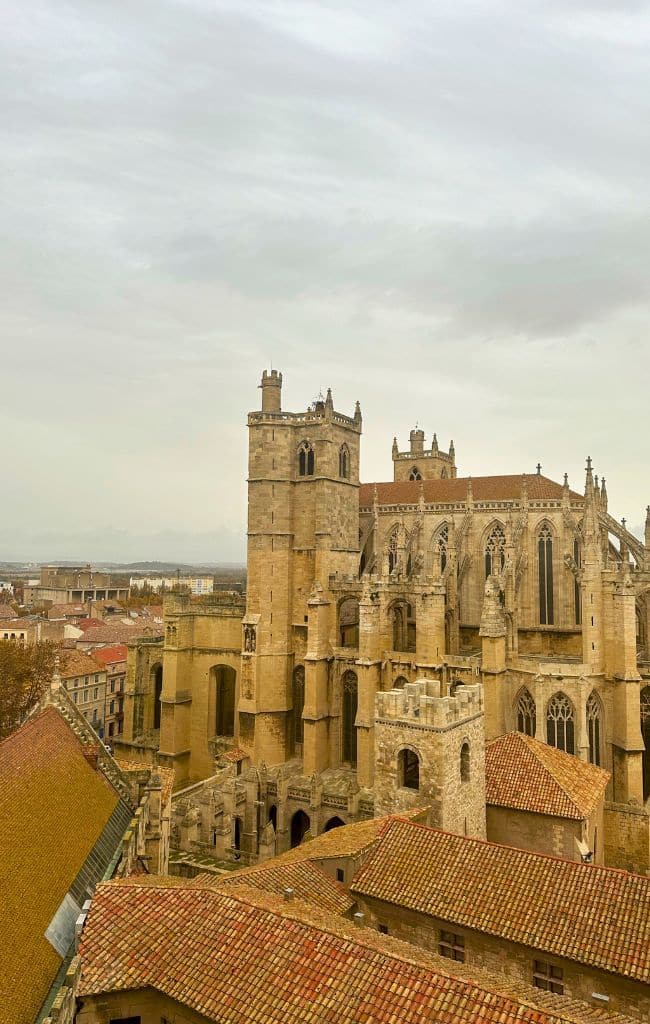
A short walk from the palace is the St-Just-et-St-Pasteur Cathedral – or the part of it that was actually built. The original plans for the Narbonne Cathedral were much grander but time, money and most importantly security meant that the nave of the cathedral was never built – constructing this part of the cathedral would have meant destroying part of the city walls thereby threatening the security of the town.
It proved to be a good decision as the Black Prince did later attack burning to the ground everything outside the fortifications.
The cathedral may be missing a nave but it is home to a rather incredible sculpted triptych from the 14th century. The detailed carving, which was discovered hidden behind another work of art, depicts the Last Judgement with intricate sculptures of poor souls being carried to their fate in a wagon.
It’s free to visit the cathedral but you will need to pay a small entrance fee to visit the Cathedral’s Treasury where medieval manuscripts are on display alongside a tapestry from 1490 telling the story of the creation of the world.
If you are visiting Narbonne with kids then they’ll be thrilled to learn that this room echoes. If you stand in opposite corners of the rooms and whisper into the walls, the person on the other side of the room will be able to hear and respond.
Lunch
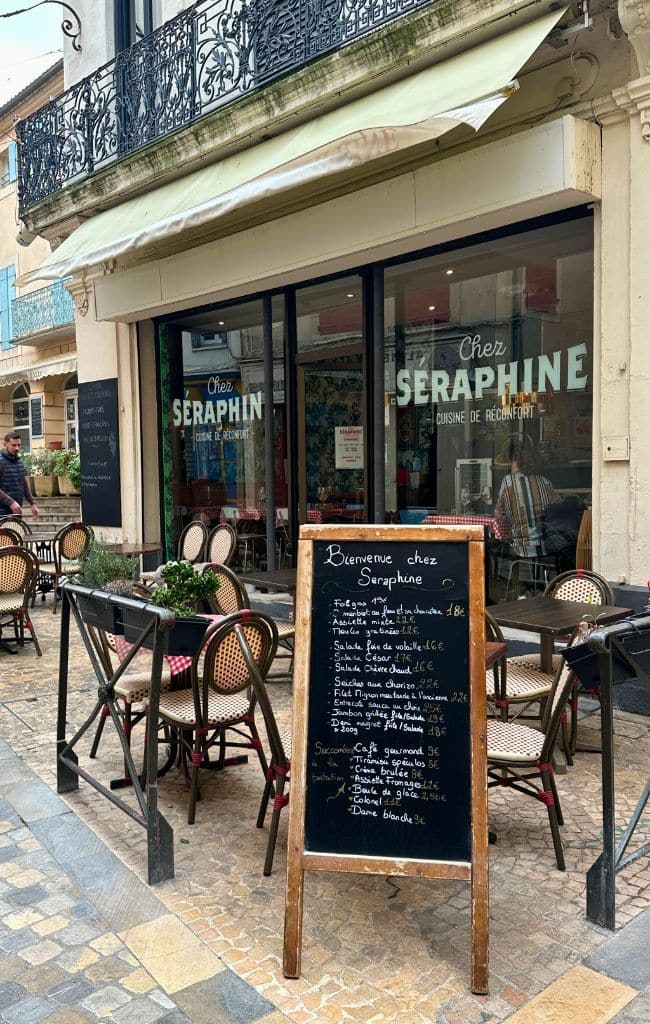
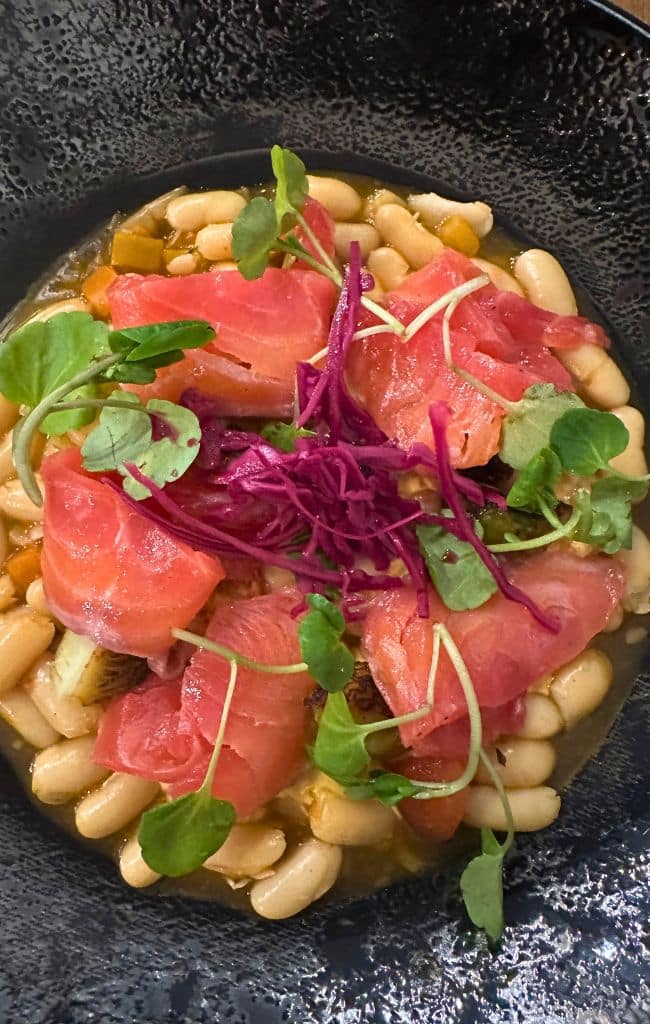
Narbonne is hone to some very good restaurants. Try the cosy Chez Séraphine bistro or the very tasty La Table de Nicolas.
Afternoon
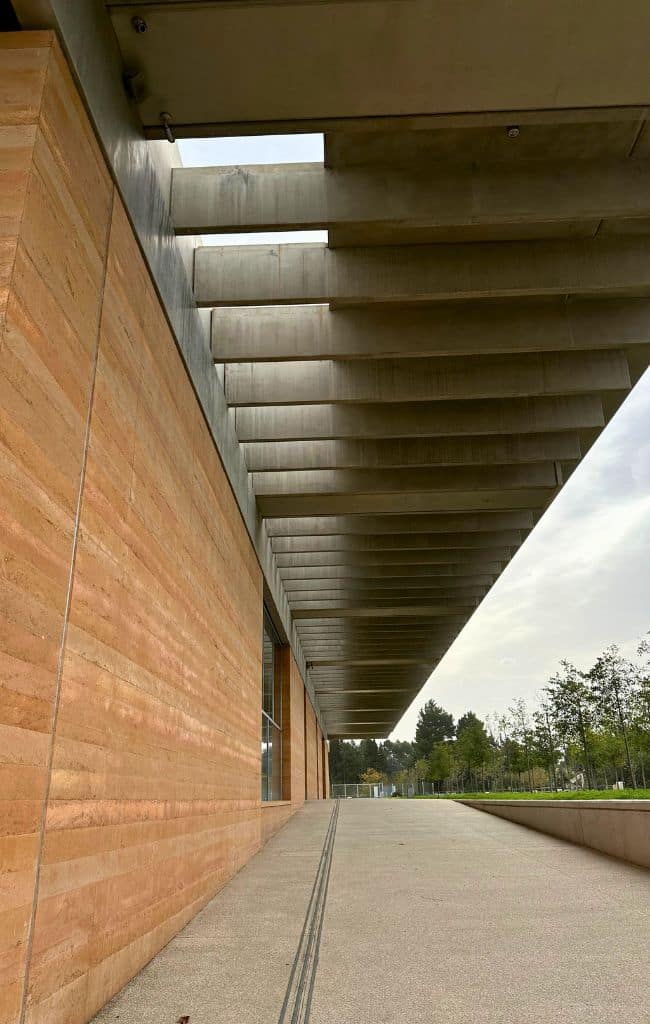
After lunch, talk a walk along the banks of the Canal de la Robine towards the Narbo Via, the Norman Foster-designed museum dedicated to showcasing the city’s Roman past.
Located just outside the centre of Narbonne, the museum opened in 2021 and is truly beautiful, a single storey stone and steel structure designed to house the city’s collection of ancient artefacts from when it was the Roman port town of Narbo.
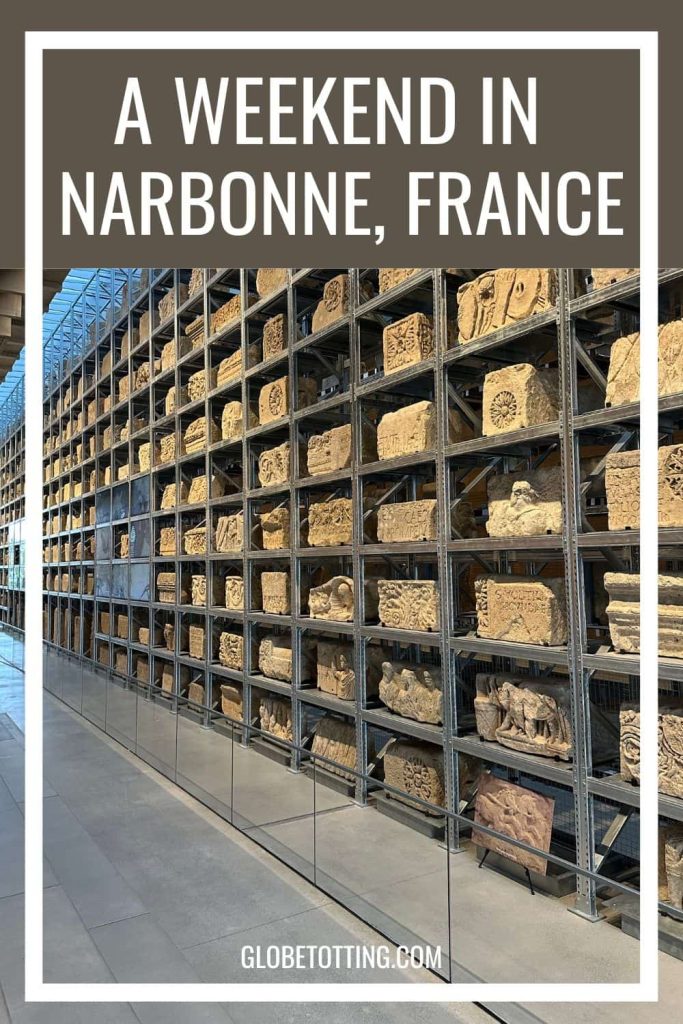
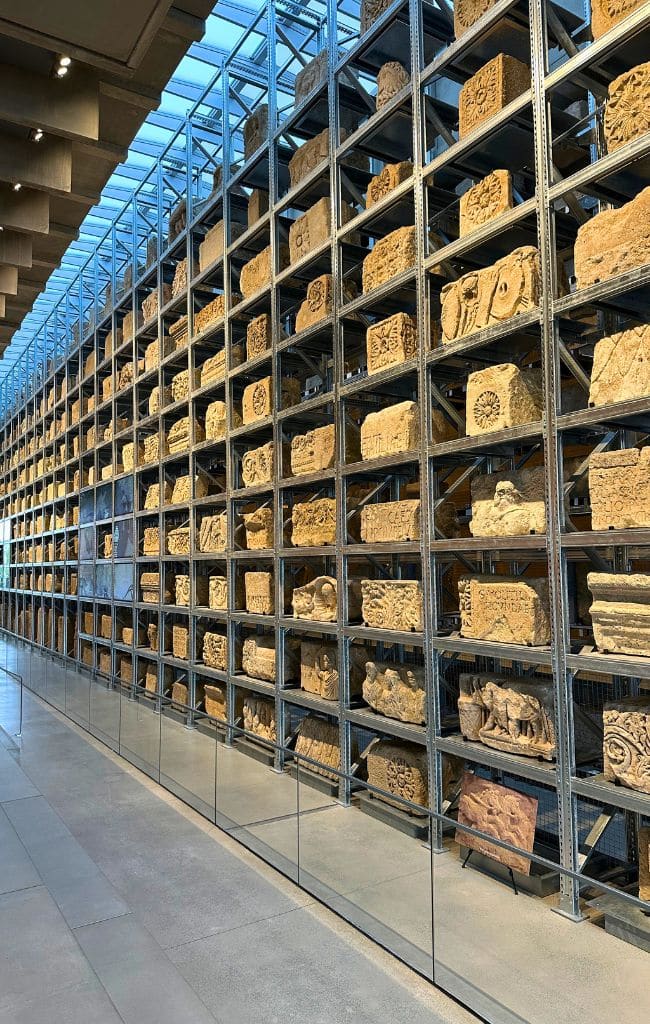
The highlight – and almost the first thing you see as you enter the museum – is the Lapidary Wall. This enormous shelving grid displays giant sculpted blocks carved with everything from travel distances and animals to reliefs of flowers and weapons. It’s been designed to separate the public galleries from the spaces where restoration experts work and, if you’re lucky, you can spot specialists at work.
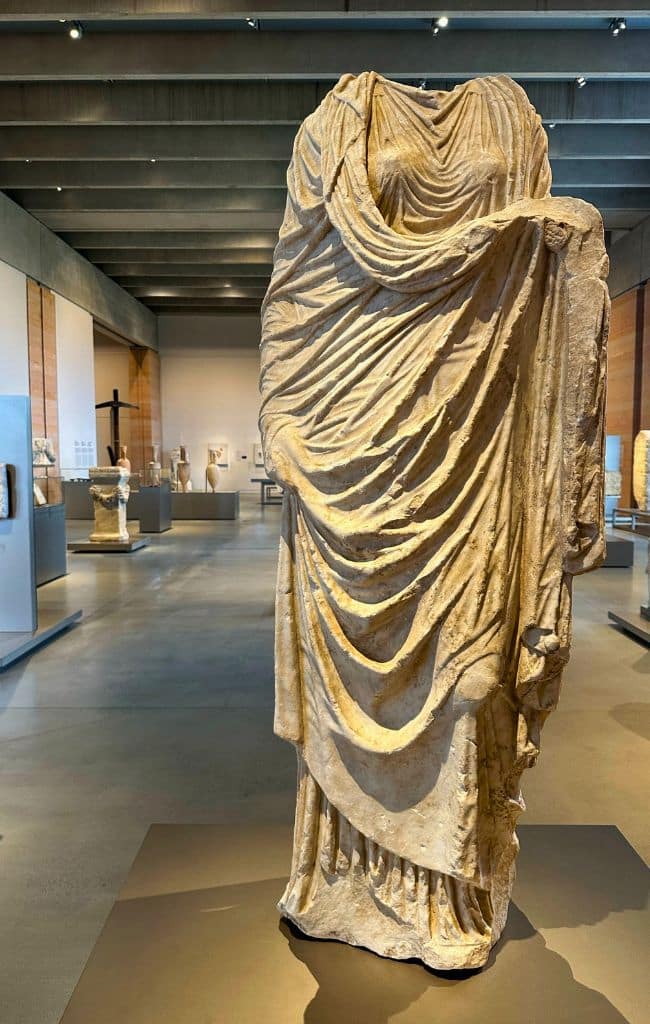
The rest of the collection is equally fascinating and an incredible insight into life in Narbonne during Roman times with plenty of artefacts and some video displays. The rooms are divided according to theme so one focuses on people’s dress for example and another explores rights and sacrifice. Yet another is dedicated to religious ceremonies.
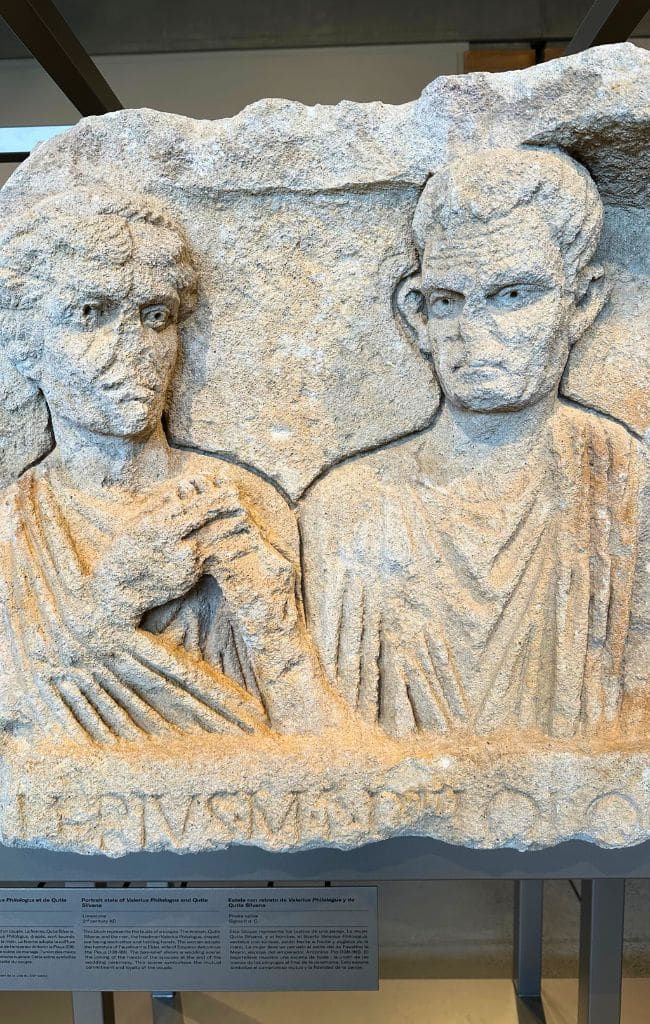
Highlights for me included the portrait stele of married couple Valerius Philologus and Qutia Silvana who are dedicated with wrinkles (once seen as a good thing!), the atrium with the detailed Bacchus-themed mosaic, and the small fragments of every day life including jewellery, perfume bottles, rings, tweezers, nail clippers, mirrors and amulets. The mighty wooden anchor from the 1st Century AD is also impressive.
I would highly recommend dedicating an afternoon to this museum, its collection is extraordinary and does a fantastic job of explaining Narbonne’s important position in the Roman Empire.
Dinner
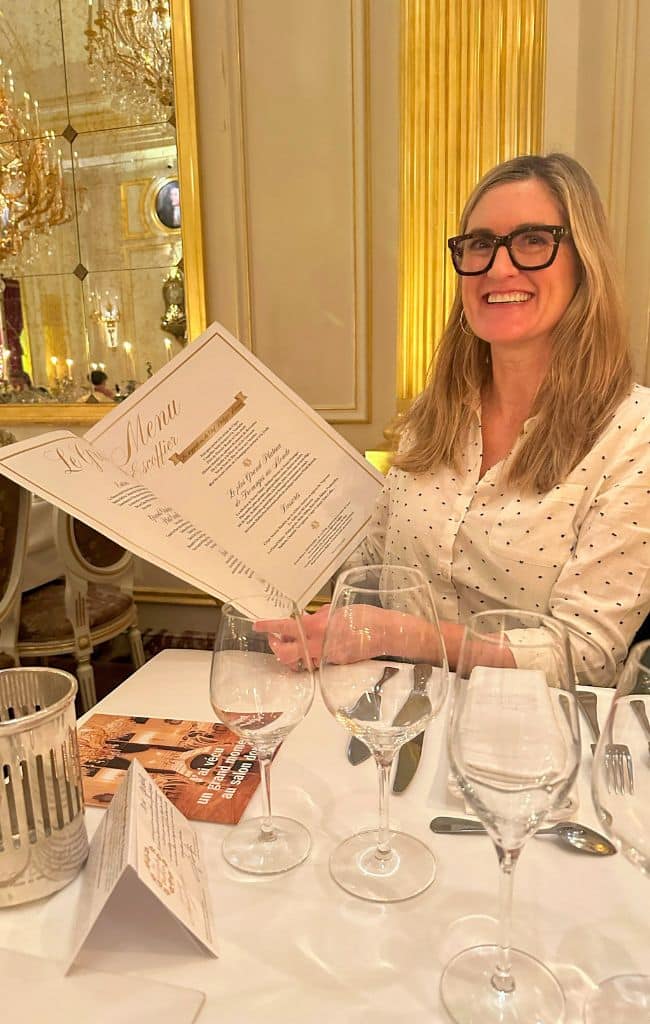
There’s only once place where you should make a reservation for dinner (and be aware that you may need to make your reservation up to six months in advance) and that’s Les Grands Buffets.
Located on the edge of town and sharing – somewhat incongruously – a space with the city’s sports centre, is this extraordinary buffet restaurant that’s currently one of the most popular places to eat in France.
Les Grands Buffets was opened by local entrepreneur Louis Private in 1989 but it’s only in the last couple of years that it has become truly popular. The all-you-can eat buffet specialises in traditional French cuisine – in particular the great classics from the 19th century – with an extraordinary number of dishes on offer.
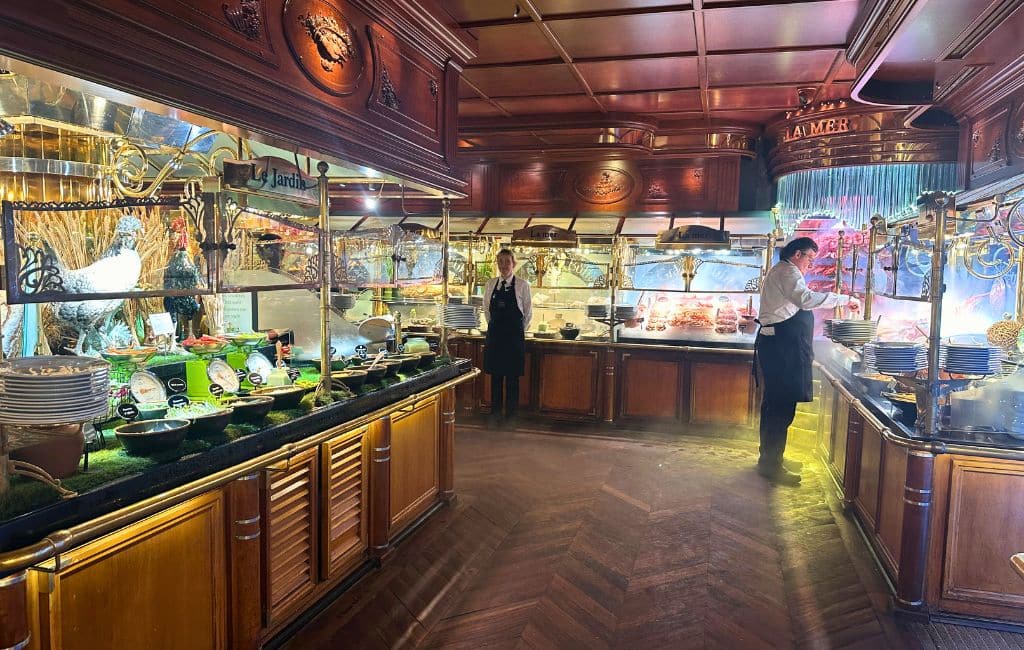
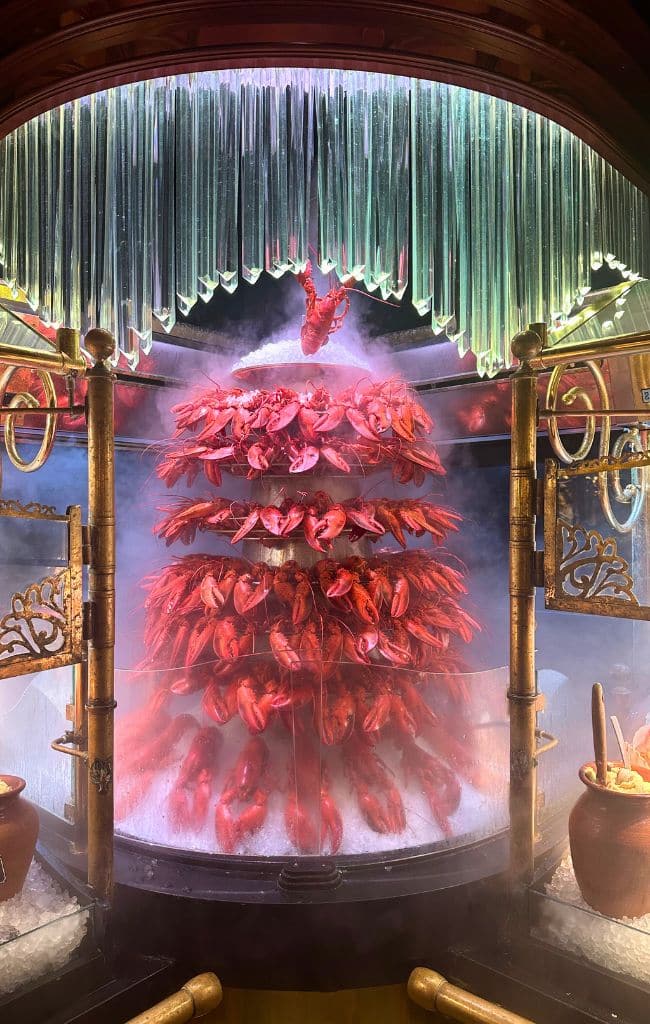
The seafood bar has oysters, caviar and a seven-tiered lobster tower. There are nine varieties of foie gras, the world’s largest cheese board (certified by the Guinness Book of Records) with over 111 different types of cheeses and a central rotisserie where chefs cook Hare a la Royale and roasted kidneys to order.
There’s also Canard au Sang, presented three times a service, alongside a Voiceover explaining that Les Grands Buffets is the only restaurant in France to serve this dish daily.
The dessert section is equally generous (and a little overwhelming) with an enormous chocolate fountain – the largest in the world – taking centre stage.
Les Grands Buffets is open for lunch and dinner daily, 365 days of the year and costs just 62,90 per person.
Day 2 in Narbonne
Your second day in Narbonne involves more food and the chance to explore outside the city centre with a possible half-day or day trip to some of the neighbouring villages.
Morning
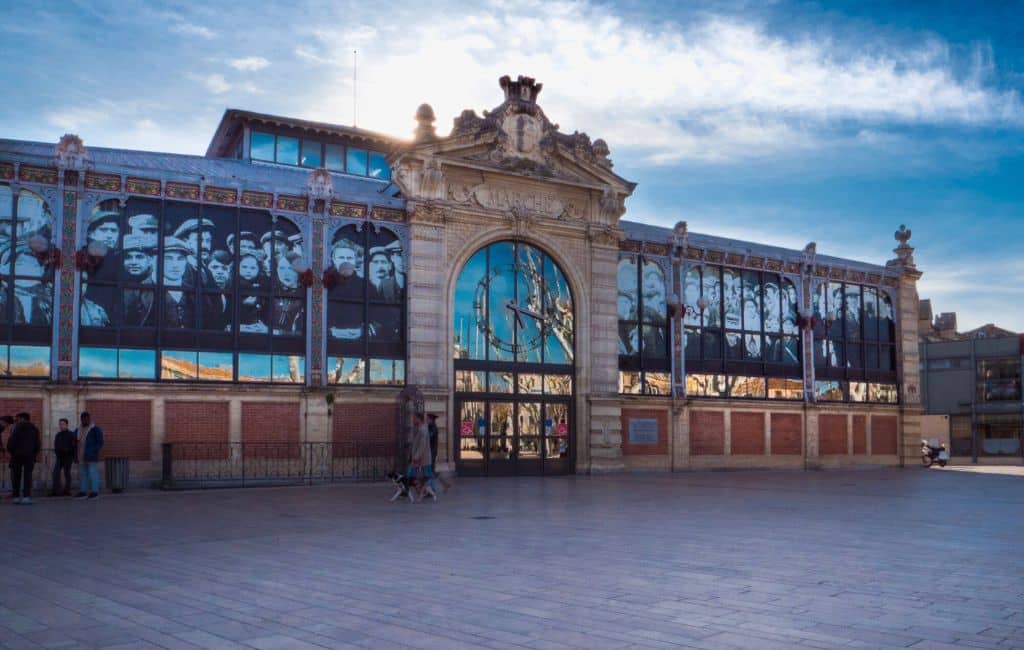
Unfortunately Les Halles de Narbonne (the Narbonne Market) was closed for renovations when I visited but I did manage to peek inside the windows and it’s top of my list of places to visit when I return to Narbonne. Housed within a steel and glass structure, the food market has a reputation for being one of the best in France and is the one of the best places to visit in Narbonne.
Les Halles has been selling fresh produce since it first opened in January 1901 and still today the 70 something stalls sell cheese, fruit and vegetables, fresh fish and meat, flowers, bread and more including spices, jams and Narbonne’s famous honey.
Les Halles is usually open daily and Sunday is when it is busiest. Note that it closes at 2pm.
Lunch
Les Halles is home to a number of small restaurants and one of the best places to go for lunch is Chez Bebelle.
Run by the same family for three generations, this local institution specialises in meat and chips, all purchased from the market and delivered in a somewhat surprising way.
Currently in charge is Bebelle, an ex-Narbonne rugby player, who uses a megaphone to order the cut of meat you have just requested from the nearby butcher. The butcher then wraps the cut in paper and throws it through the air for Bebelle to catch, as if it were a rugby ball on the pitch.
Afternoon
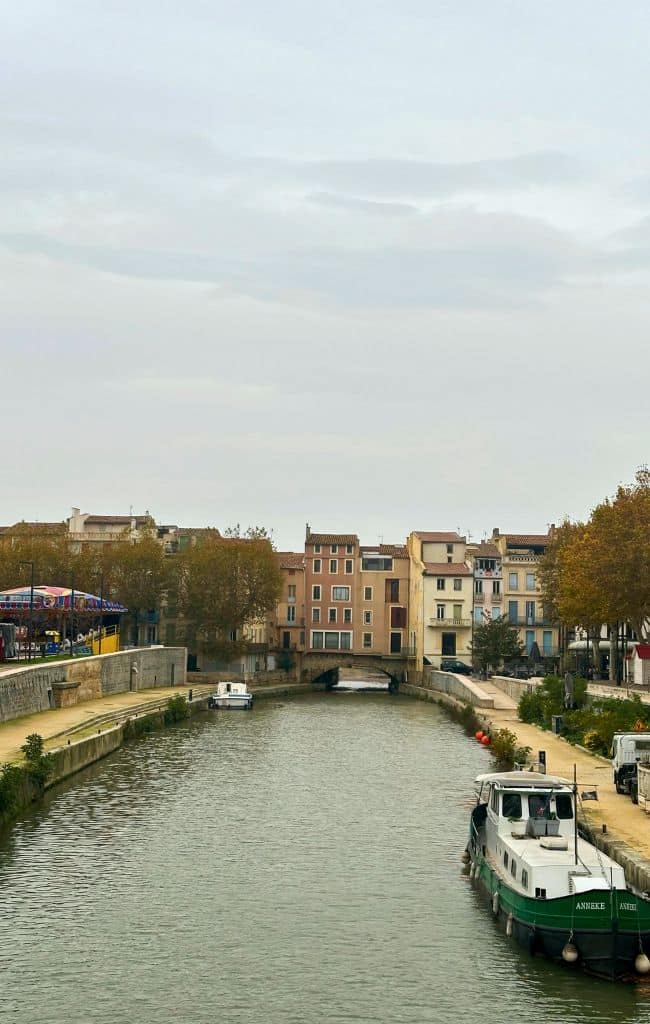
After lunch, take a stroll along the nearby Canal de la Robine and across the Pont des Marchands (The Merchant’s Bridge). Like the Ponte Vecchio in Florence, Italy, this over-the-water bridge is lined with houses and shops, and one of the few such bridges in France.
Between April and October, boats pootle along the Canal de la Robine and during the summer months, mini electric boats are available to hire for quick outings along the calm waters lined with plane trees.
You have various options for how you spend your afternoon. Fans of French music will be happy to know that the famous French chanteur Charles Trenet – best known for his 1945 song “La Mer” – was a Narbonne native and the home where he was born is now a small museum filled with his personal possessions.
Other options – and top of my list for my next visit – is a trip to the nearby town of Gruissan. Located a 20-minute drive from Narbonne, this fishing village sits on a hill between two lagoons and is most famous for its pink salt marshes – its rosy hue the result of a micro-algae living in the waters.
Come here to wander the village streets, snap photos of the “pink lake” and lounge on the huge beach. This wide stretch of sand has long been a favourite with Narbonne families and, in the mid-19th century, locals would sleep here in covered wagons and later cabanes on stilts.
The huts on stilts remain today – and some of them are really quite smart and others with great views of the sea – and are available as holiday lets.
Where to stay in Narbonne
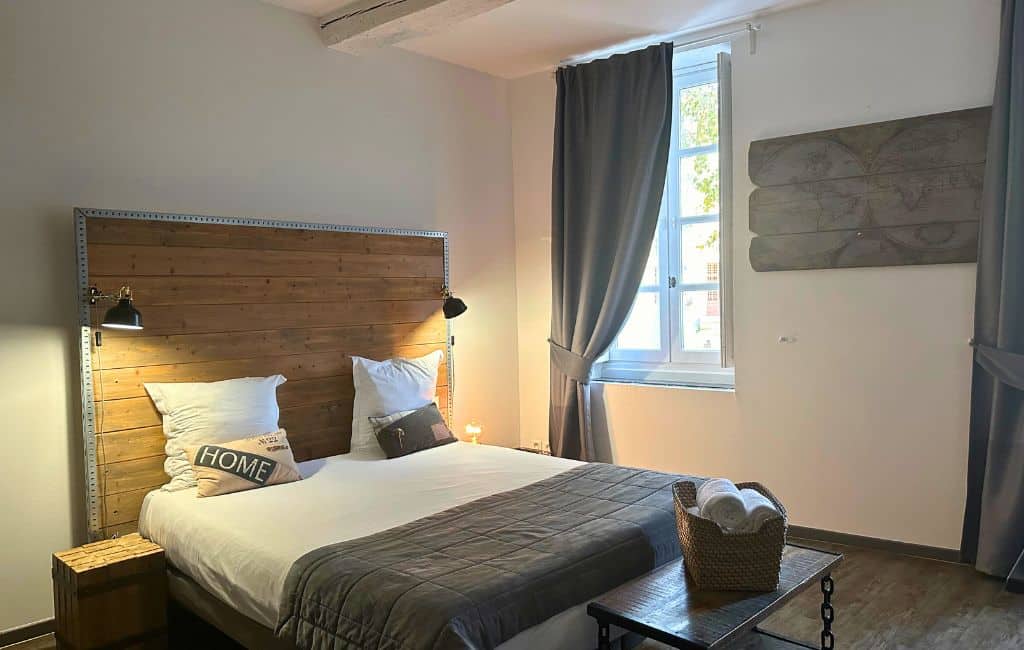
I stayed at La Maison Gustave opposite Narbonne Cathedral. It calls itself a B&B but feels more like an apartment with breakfast pastries delivered in the mornings as there is no reception or staff on duty. The location is perfect, right in the city center and within easy walking distance of all the main sights of the old town.
You can find more ideas on where to stay on the map below, which details hotels and holiday rentals.
How to get to Narbonne
Narbonne is located in southern France, between Beziers and Perpignan and not far from the Spanish border (a lot of Spaniards visit Narbonne by train to go to Les Grands Buffets!).
I arrived in Narbonne by BlaBlaCar and from here travelled back to London by train and plane from Toulouse. The train station is a short walk from the city centre and has good links across the south of France. Other nearby airports include Beziers and Montpellier.