London has enjoyed an array of immersive museums in recent years. Bubble Planet, Twist Museum and temporary exhibitions including the Balloon Museum, have done a good job of keeping Londoners entertained and their social media feeds filled with fun and quirky content.
Now there’s a new museum in town promising a unique experience for visitors of all ages. London’s Paradox Museum opened its doors on 17 July, an immersive space filled with weird and wonderful optical illusions that promises to offer “a world where nothing makes sense yet everything feels real”. We headed along to see what the Paradox Museum London was like.
Disclosure: This post may contain affiliate links. I have been or could be if you click on a link in this post compensated via a cash payment, gift or something else of value for writing this post. See our full disclosure policy for more details.
Paradox Museum London
The Paradox Museum concept was first established in 2022 by entrepreneurs Miltos Kambourides and Sakis Tanimanidis and the first museum opened in Oslo, Norway.
Since that first successful launch, Paradox Museums have opened in cities including Paris, Miami, Stockholm, Berlin, Barcelona, Las Vegas, New Jersey, Shanghai, Limassol in Cyprus and now London.
London’s new Paradox Museum sits in Knightsbridge, a short walk from Knightsbridge tube station and opposite the luxury department store Harrords.
Entrance to this unusual museum is on street level but the museum itself sits above ground level. The museum is home to 25 immersive rooms and 50 “mind-bending” exhibits, including rooms that are London themed – the section dedicated to the London Underground is particularly good.
The rooms vary in shape and size but none are particularly large, and are split over two wings of the building. When we visited, the first wing was noticeably more crowded than the second wing and you have to backtrack through the crowds to reach the Zero-Gravity Room (more on that later).
Who is London’s Paradox Museum for?
The museum says that it welcomes people of all ages and that’s definitely true, the interactive exhibits are fun for everyone from toddlers and teens to parents and even grandparents.
I visited with two nine-year-olds and they had a great time exploring the many interactive displays while I acted as their photographer.
What are the exhibits like?
This is very much a museum built for Instagram (lots of the exhibits come with information panels telling you how to take the perfect photo) rather than a deep dive into famous historical paradoxes.
All the exhibits revolve primarily around optical illusions, mirror-based tricks and fun photo opportunities rather than actual paradoxes but they certainly provide great photo opportunities. That said, if you do want to learn more, there are plenty of strategically placed QR codes to scan.
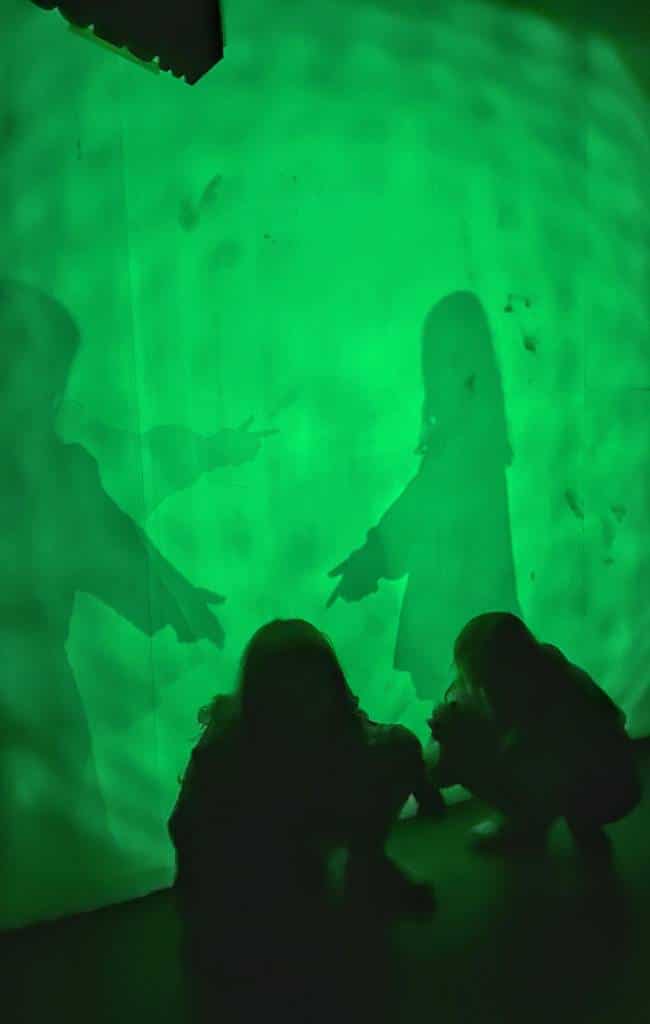
The exhibitions starts with the Human Shadow Etched in Stone where visitors are invited to take two photos, one solo and one with your very own shadow that remains on the wall. Apparently this is a real phenomenon where a person’s shadow remains ingrained on, for example a wall, after a nuclear attack.
From here, the crowds (and there were crowds when we visited despite timed entry tickets) wind their way along a fairly narrow passageway with smaller exhibits on either side.
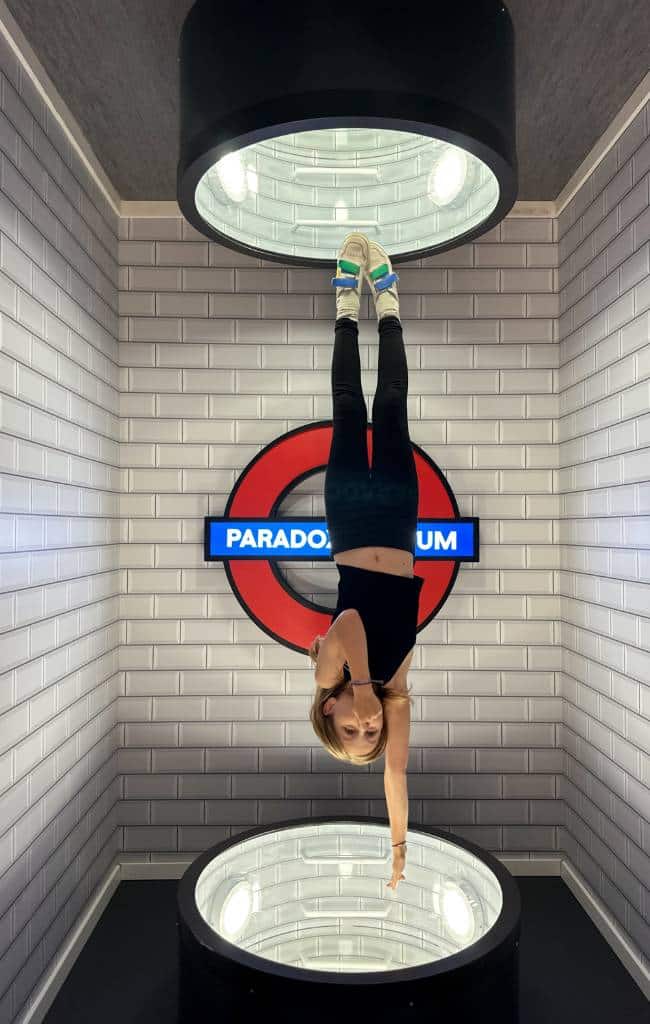
This part of the museum is particularly busy as it’s where you will find the entrance to the Zero-Gravity Room, one of the museum’s most popular exhibits. This is the only exhibit in this world of creativity that requires a timed entry and you need to scan a QR code as soon as you enter the museum to join the virtual queue.
Although this sounds good in practice, what it means in reality is that you have people going back and forwards throughout the museum checking whether or not it is their turn to join the queue, which only adds to the busyness. The museum would have done better to place the Zero-Gravity Room in the last section of the museum.
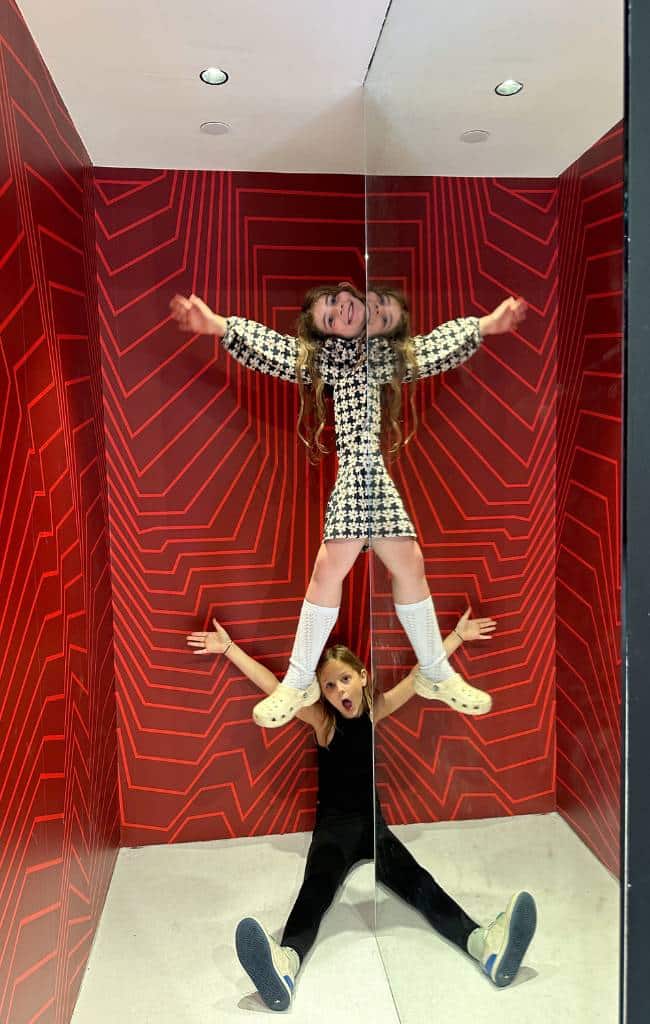
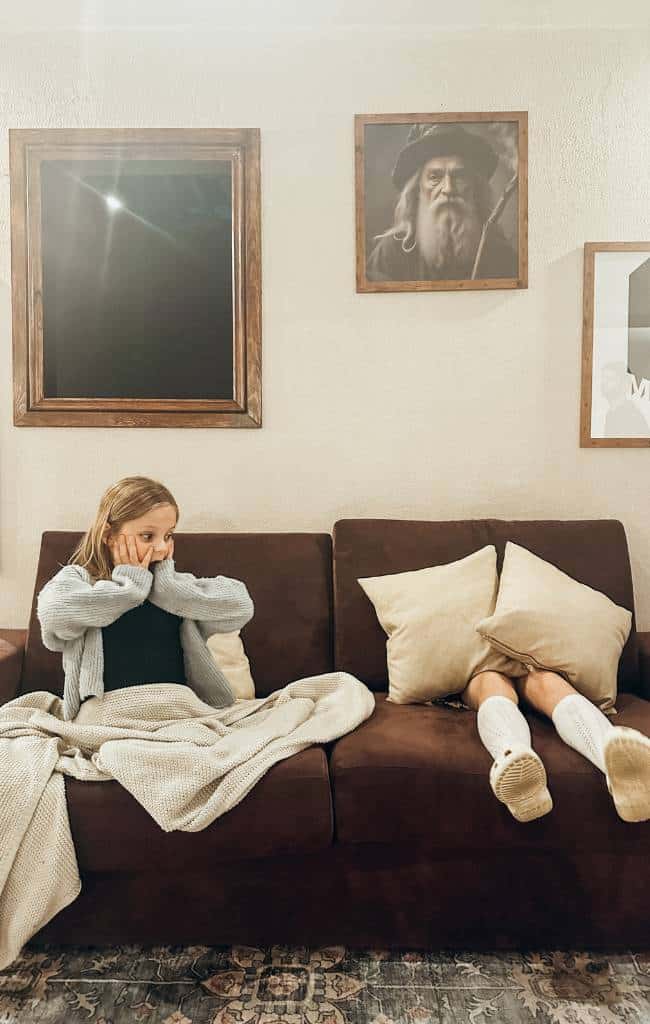
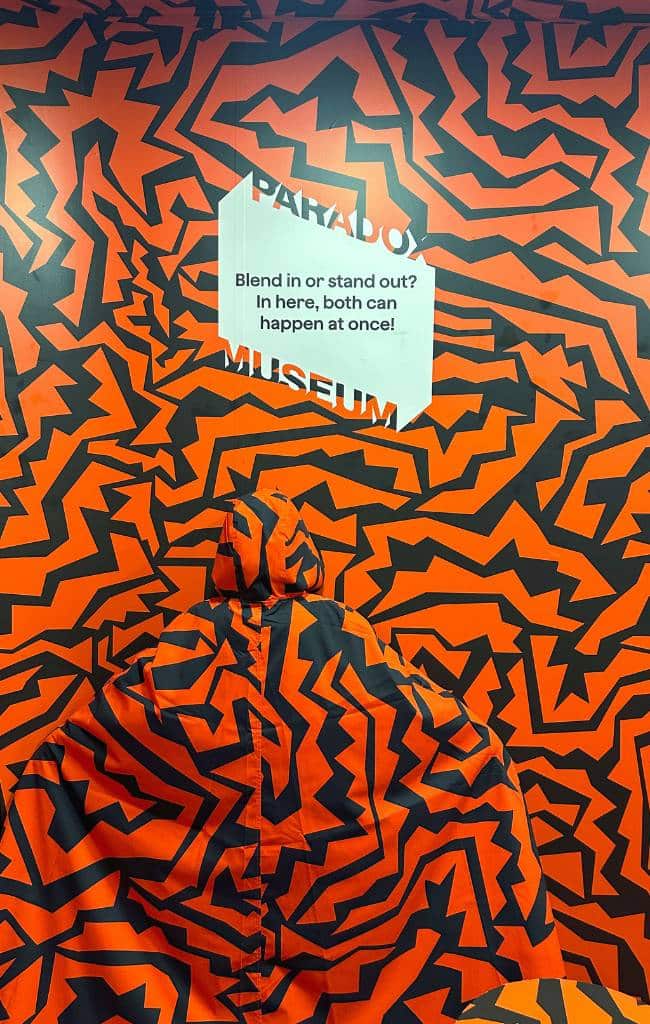
Once you get past this room, you enter the Camouflage Room, which was one of our favourites, followed by the Paradox Sofa – where one person’s body sticks out of one side of the sofa and the legs of an another person’s stick out the other side. This was also a lot of fun – just be prepared to queue as people line up the perfect shot. Staff members are often on hand to help take photos as well.
From the mysteries of the paradoxical sofa we moved through to the next room, the Royal Room, with a deconstructed throne. We couldn’t quite get our photos (and therefore, the illusion) to work so we moved swiftly onto the Infinity Room, which fans of Japanese artist Yayoi Kasuma will recognise although her exhibit doesn’t feature a navy blue Dr Who Tardis at the entrance.
Smaller exhibits pepper the museum alongside fun actual paradox facts. Did you know, for example, that in a group of 23 random people, the probability that two people have the same birthday is more than half?
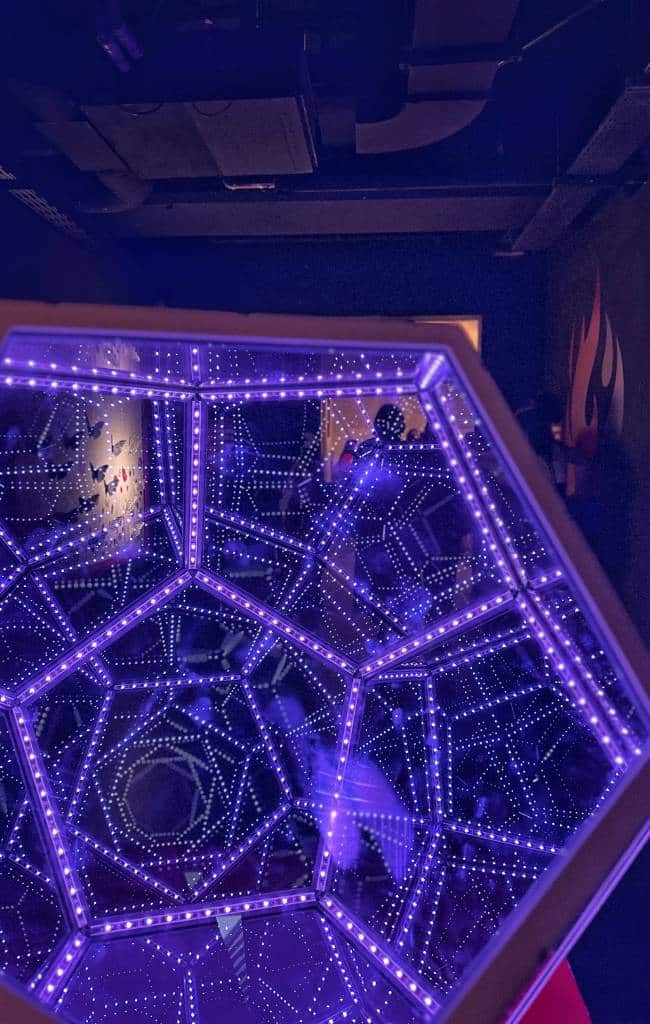
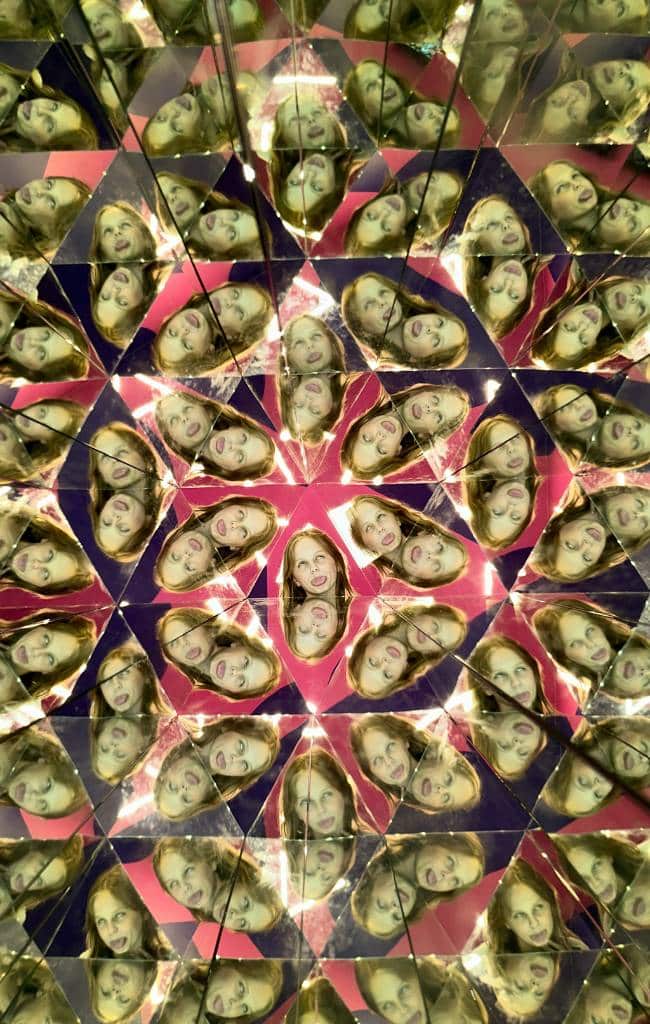
We moved on to the kaleidoscope telescope – a giant telescope where two people peer in either end – which was another highlight with faces reflected an infinite number of times.
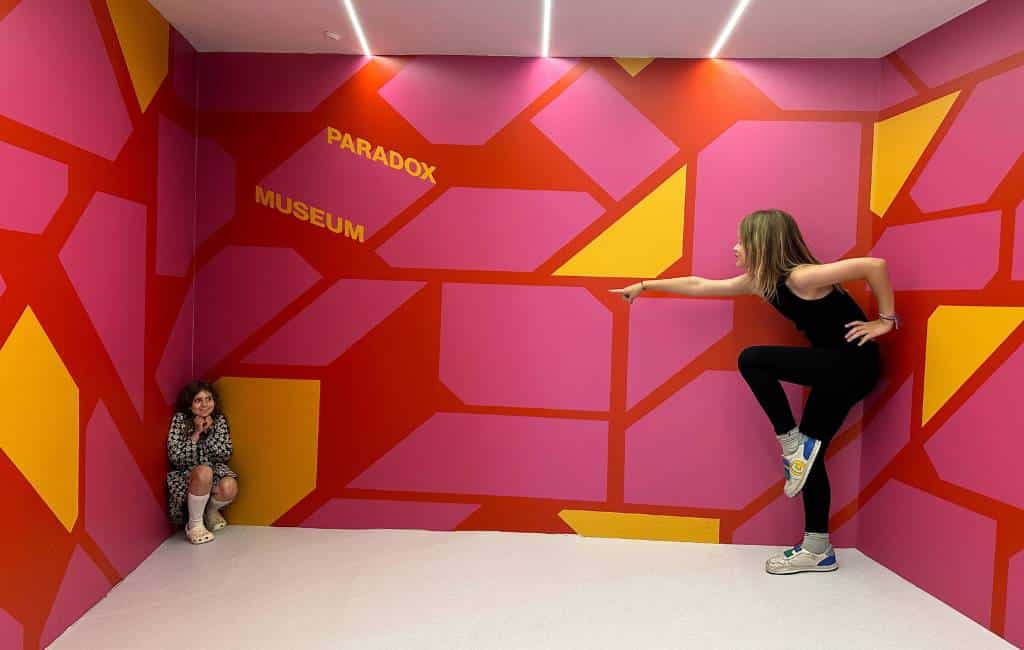
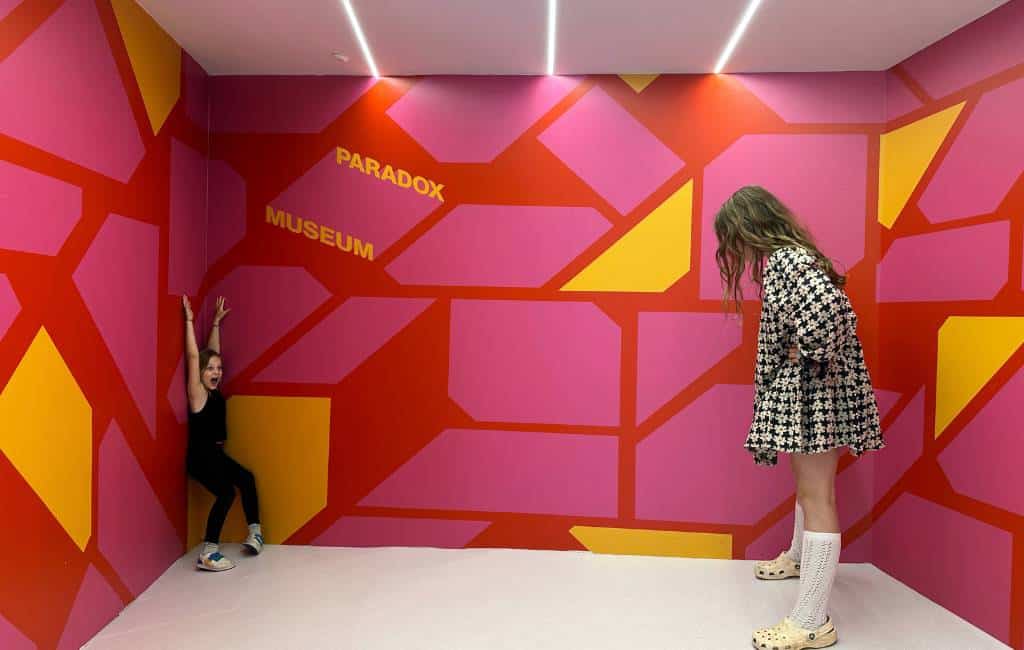
The Ames Room was one of my favourite paradox experiences; guests appear to shrink and grow as if they had just consumed Mad Hatter tea party goodies labelled ‘Eat Me’ and ‘Drink Me’. Opposite the Ames Room is a balcony where you can snap a photo of Harrods that stands opposite.
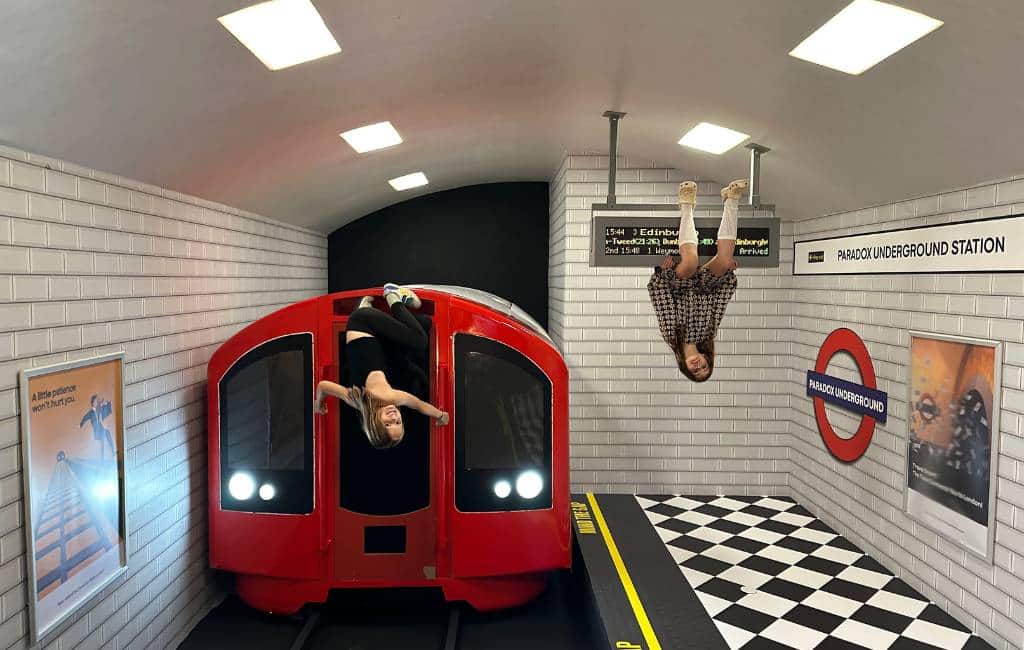
The second wing is where you will find the London Underground themed experiences with lots of eye-tricking experiences to enjoy.
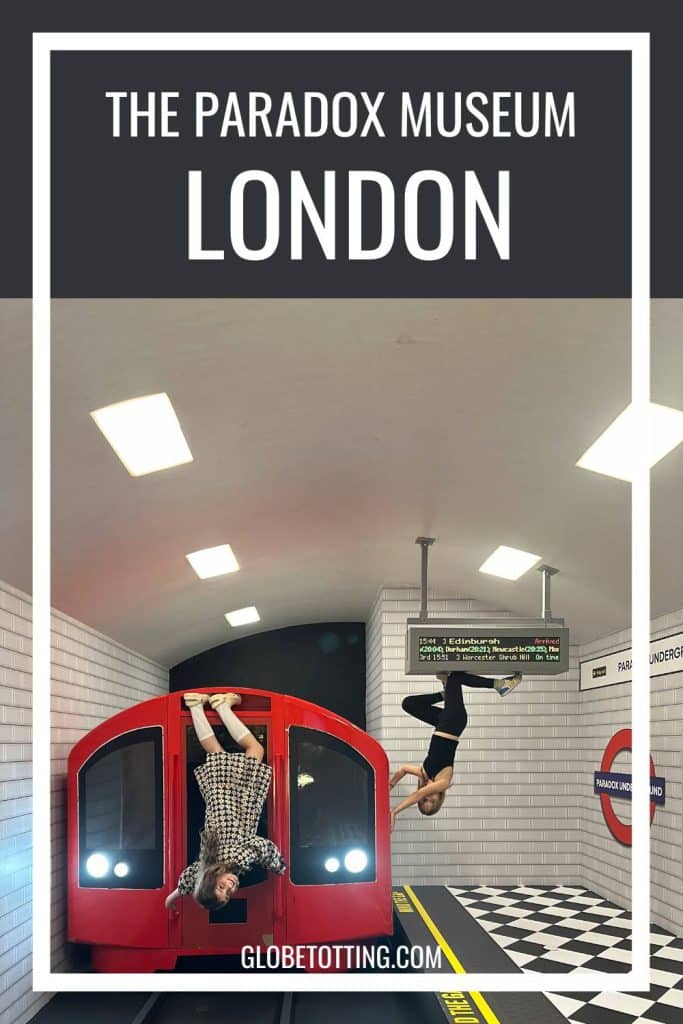
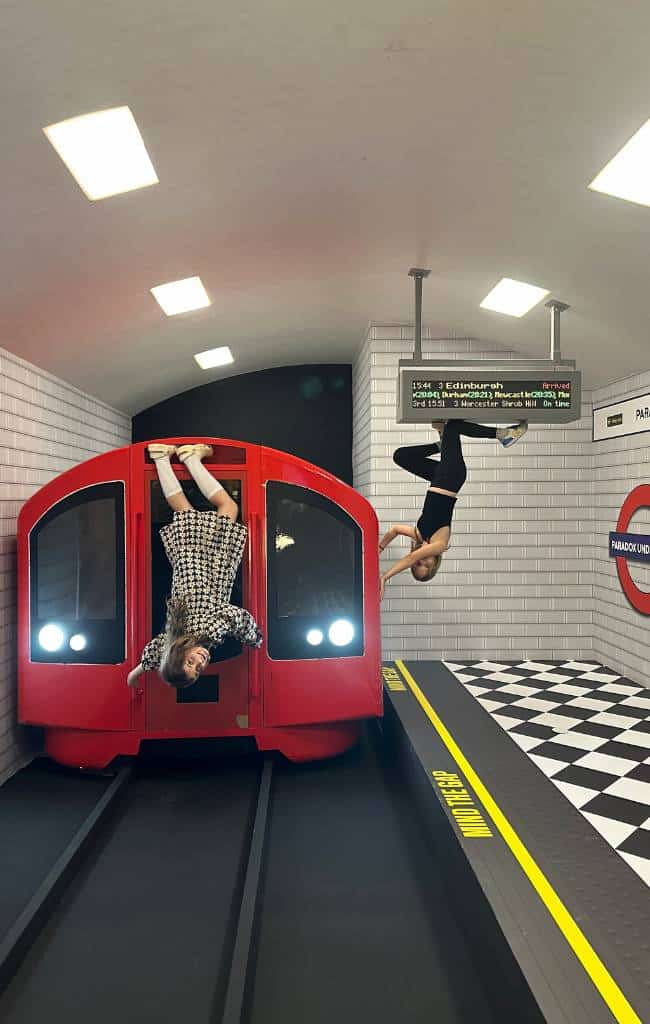
There is a tube-inspired spinning bridge (the Paradox Tunnel), a giant picture of David Bowie who seems to watch you as you move around and the Reverse Room, inspired by the London Underground. This upside down tube station is great fun and invites some particularly creative photo opportunities; sit on top of the indicator board or even on top of a train.
How long do you need at the Paradox Museum?
The average visit is 90 minutes but we probably spent closer to two hours. You may have to wait in line for some of the experiences such as the Zero Gravity Room, the Infinity Room and the Paradox Sofa.
Overall the museum is great fun and kids will love it. Your best bet is to get there as soon as the museum opens to avoid the school holiday crowds.
Paradox Museum essentials
Cost: Tickets for the Paradox Museum cost £18.50 for adults and £14 for children. Children under 4 are free. Buy your tickets here.
Opening Hours: The Museum is open Monday, Tuesday and Sunday: 10am – 5:30pm and Wednesday to Saturday; 10am – 7pm
Address: 90 Brompton Road, London, SW3 1ER, UK Prices: £14 for children, and £18.50 for adults