France has long been one of my favourite countries to visit with kids (and without them too). But despite dozens of regular holidays in France, somehow the Dordogne Valley had passed me by.
I had heard other families wax lyrical about this glorious rural idyll tucked away in southwestern France. They would return from holidays telling stories of honey-coloured villages and fairytale castles, otherworldly caves and prehistoric cave paintings, local markets and delicious local produce, all delivered in the most idyllic of settings.
Finally, I got the chance to visit, travelling with nine-year-old Sammy. Eager to see what the fuss was about, we embarked on a road trip through the Dordogne Valley and quickly discovered the hype is real, there is so much to do in the Dordogne Valley with kids.
Disclosure: This post may contain affiliate links. I have been or could be if you click on a link in this post compensated via a cash payment, gift or something else of value for writing this post. See our full disclosure policy for more details.

The Dordogne Valley with kids
Table of Contents
The below map details our favourite places to visit in the Dordogne for families. This post has more ideas on where to travel in France with kids.
Where is the Dordogne Valley?
The Dordogne Valley sits in southwest France, between the Aquitaine Basin and Massif Central. The landscape is a patchwork of rolling green hills, undulating vineyards, gravity-defying rock formations, dense forests and fertile farmland.
Gently winding its way through this bucolic landscape is the Dordogne River, the fifth longest river in France (it measures an impressive 483.1 km / 300.2 miles) and the only one in the country to be part of the UNESCO World Network of Biosphere Reserves.
Airports: Travelling from the UK, there are a handful of airports to choose from. We flew into Brive–Souillac Airport from London Stanstead but those flights do not operate year-round, only May to October. Bergerac, Bordeaux, Perigueux and Aurillac Tronquiere are other options. You will need a car to travel around the region and you can hire one from any of these airports.
By Ferry: If you want to bring your own car then the best ferry ports for accessing the Dordogne Valley are in France’s northeast at either St Malo or Cherbourg. Brittany Ferries sails to both from Portsmouth. Condor Ferries sails from Portsmouth to Cherbourg from late May to early September. You can also travel from Dover to Calais but it will be a slightly longer drive when you arrive in France.
What is the best time to visit the Dordogne Valley?
While most visitors head to the Dordogne Valley during summer months, the region is a great place to visit year round.
July and August is when the weather is at its best: blue skies, sunshine and temperatures in the mid 30s Celsius. This is the best time to visit if you want to swim in the Dordogne River, for example, visit one of the regions water parks or enjoy a canoe trip or boat trip along the clear waters.
Summer is also the best time to make the most of the many outdoor activities available in the region. It’s also when the majority of festivals and fairs take place, and when the weekly markets tend to be bigger and busier.
But summer also sees lots of crowds. Some of the most popular destinations in France such as Rocamadour and La Roque-Gageac sit within the Dordogne Valley and their streets are packed with visitors during high season (to give you an idea, the small medieval village of Rocamadour receives more than a million visitors a year).
A better way to explore this beautiful corner of France – and if you don’t mind missing out on some sunbathing and swimming – is to visit between October and April. The colder months sees few crowds, if any at all. We visited during October half term and had some of the country’s most famous destinations largely to ourselves.
Of course, the downside with travelling during low season is that the weather is more changeable (we did have one day of non-stop rain) and that many businesses close for their congé annuel (annual holiday).
There were a lot of shops, restaurants and cafes closed when we visited, which did not detract from our enjoyment but it does mean that you have to be a little organised, particularly with regards to eating out. With only a handful of restaurants open, you must make sure to reserve in advance.

The best things to do in the Dordogne Valley with kids
This list by no means covers everything there is to do in the region as a family. There is so much more available in the Dordogne Valley for children, the following, however, were our favourites.
Grottes de Lacave (Lacave Caves)
I start this list with the one place we intended to visit but arrived too late. We had flown into Breves earlier that afternoon and sadly arrived at the Lacave Caves after the final train had departed for its tour.
These caves were discovered accidentally in 1905 by speleologist Armand Viré and put this small village on the map.
Access to the underground world of stalagmites, stalactites and other curious limestone rock formations is by electric train (guaranteed to delight younger children), which travels 400m underground. Once you arrive in what feels like the centre of the earth, you join your guide for a tour through 12 different caves.
We were sorry to miss this experience but it looked great and we’ve bookmarked it for our next Dordogne family holiday.
La Forêt des Singes (Monkey Forest)
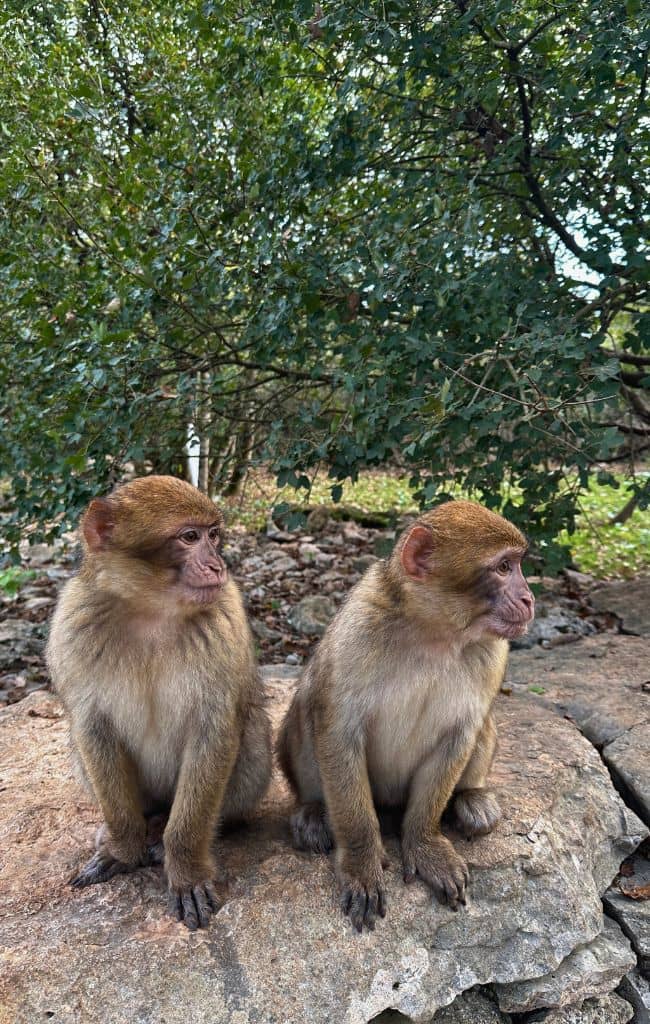
Located on the outskirts of the famous town of Rocamadour in the Dordogne Valley is La Forêt des Singes, the Monkey Forest.
This 20 acre park is home to 150 Barbary Macaques who roam freely among the forest, gorges and rocky ridges, an environment that closely mimics their natural habitats in the mountains of North Africa, Morocco and Algeria. The park is dedicated to the conservation of Barbary Macaques, today considered one of the most endangered populations in the world, and celebrated its 50th anniversary in 2024.
This really is one of the best places to visit in the Dordogne Valley with children. The park is open to visitors and you can wander freely, observing the monkeys playing, feeding and caring for their young.
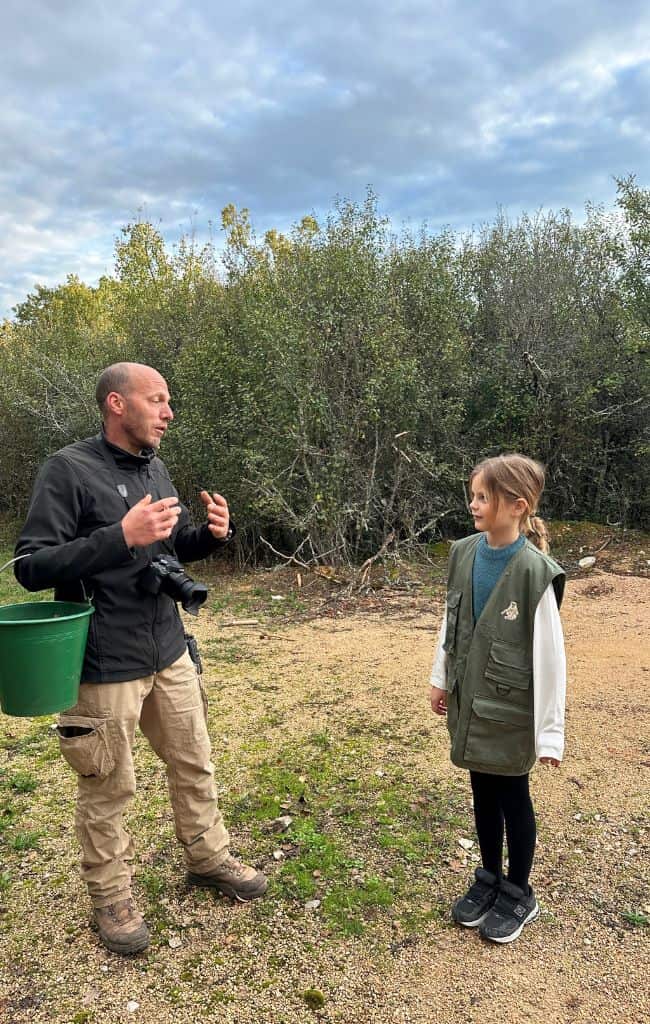
But if you really want to understand these curious creatures then the “Breakfast with the Monkeys” experience is a great way to enjoy the park. We arrived around 9am – an hour earlier than the park officially opens – and were handed two buckets filled with bananas, chestnuts and walnuts by our guide Julian.
During the course of our almost two-hour experience, Julian led us around the reserve explaining the behaviours and characteristics of this species while we handed out breakfast to some very hungry monkeys.
The Foret des Singes really is a unique experience and one that the whole family can enjoy.
Rocamadour
There are not many children who would be excited about the thought of visiting an ancient church complex but then there are few religious buildings that enjoy a setting like the one in Rocamadour.
The Sanctuary at Rocamadour, composed of eight chapels and churches, is where Christianity first came to France and it has been an important religious site along the St James’ Way pilgrimage route for centuries. The mind boggling architecture of this UNESCO World Heritage Site still draws crowds today.
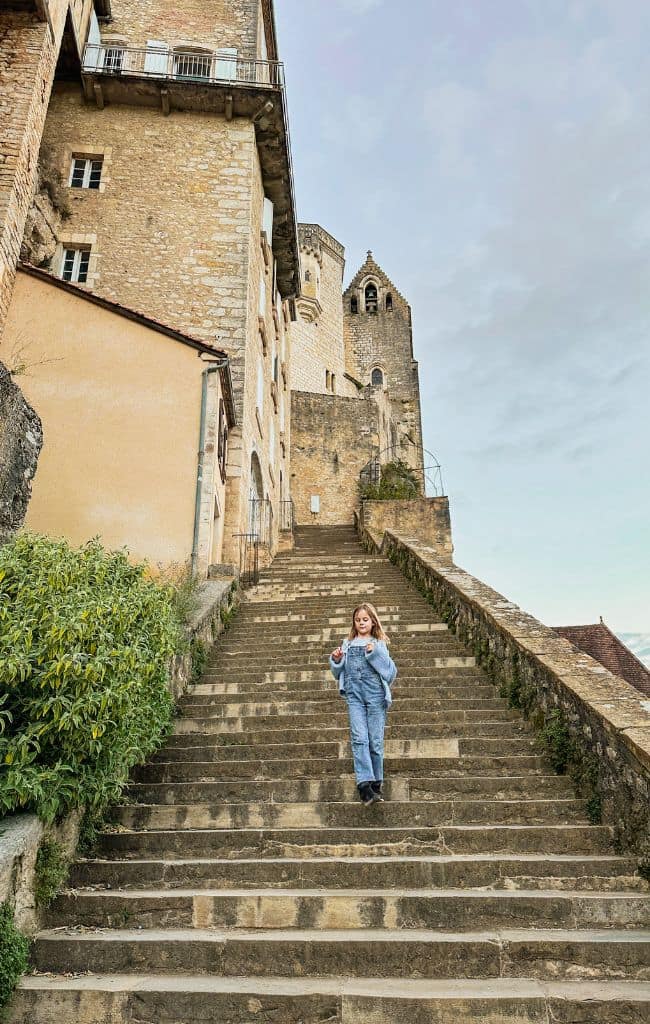
The site is built on three successive levels and is accessed via the Great Staircases, 216 steps that separate the lower town from the religious complex set halfway up a cliff. Once upon a time pilgrims accessed these steps on their knees.
We visited towards the end of the day and enjoyed exploring some of the eight chapels that make up The Sanctuary.
One in particular really grabbed Sam’s attention, that dedicated to the Vierge Noire, the Black Madonna. Carved from walnut wood in the 12th century, is thought to perform miracles and a 9th-century iron bell hanging overhead is said to ring on its own when a miracle occurs. Some of these are said to be linked to sailors at sea, which is why you’ll spot boats hanging from the ceiling.
We did not spend long in Rocamadour but it’s definitely worth visiting on your family trip to the Dordogne Valley, and you can combine a visit here with a trip to the Monkey Forest.
Les Jardins de Marqueyssac (The Marqueyssac Gardens)
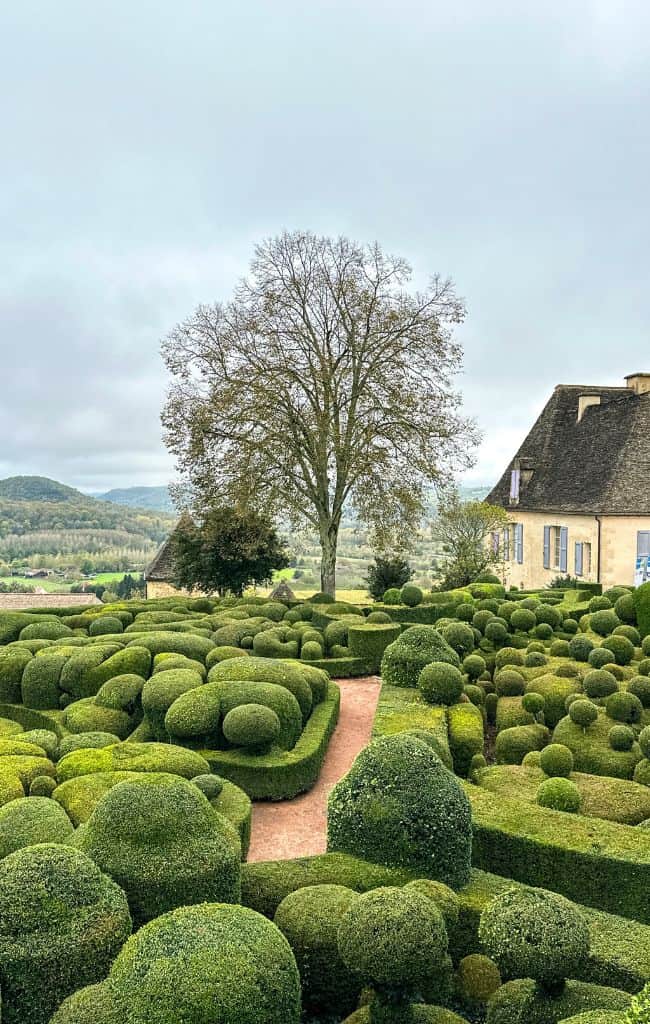
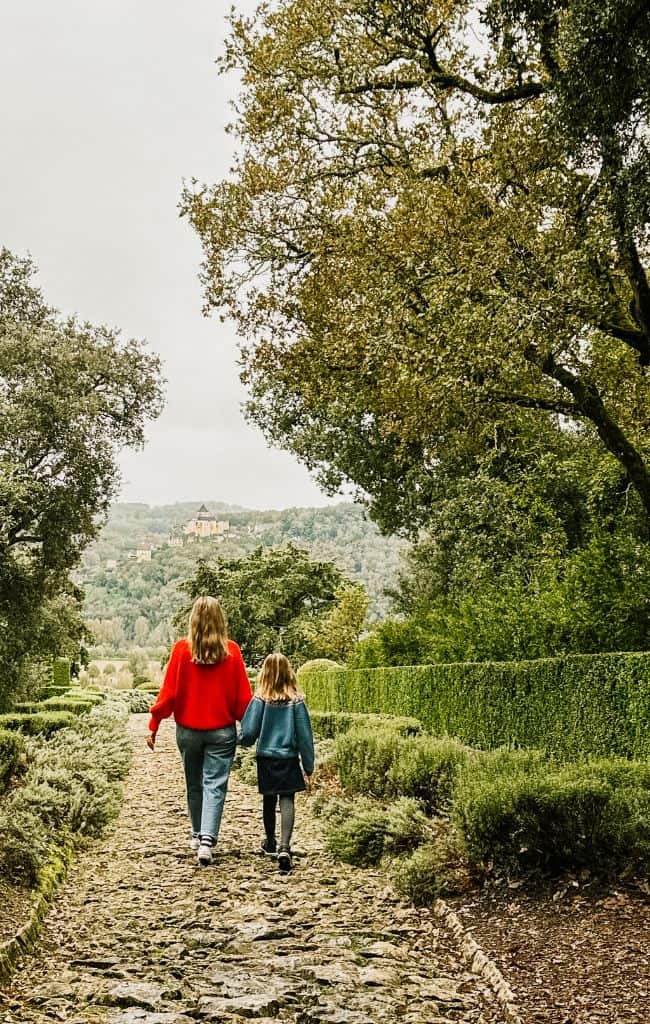
One of our favourite stops along our Dordogne Valley road trip was the morning we spent at the wonderfully whimsical Jardins de Marqueyssac. Also known as the hanging gardens of Marqueyssac, owing to the way in which the plants and trees cling to the steep slopes where they grow, these are the region’s most spectacular gardens.
The beautiful gardens are the work of Julien de Cerval, a passionate gardener who inherited Marqueyssac in 1861 and spent the final 30 years of his life planting tens of thousands of boxwoods. Today some 150,000 vintage boxwoods, trimmed and trained twice a year by hand into a balls and waves, create a brilliant green maze of patterns.
These lollipop-shaped boxwoods are the garden’s most famous plantings but most fun for young children in particular are the many “secret” passages and tunnels that run through the property.
Umbrella pines, maple trees, holm oaks (the tall trees with dark leaves that give the Black Perigord its name) and an assortment of maples have been planted across the gardens creating, in places, living tunnels to walk through – Sammy loved these.
There are waterfalls and an aviary, parading peacocks and a small lemon-coloured chateau that was built on the eve of the French Revolution.
We spent two hours here exploring wandering among the boxwoods and along the pathway that led to the Belvedere, passing one of the garden’s playgrounds along the way. The gardens are also home to a netted adventure course among the trees although we ran out of time. Do make the effort to get to the Belvedere, this spot offers beautiful views over the Dordogne River and the town of La Roque-Gageac.
A friend has subsequently told me that Easter is a great time to visit the Jardins de Marqueyssac as they host a fantastic Easter egg hunt.
Château de Castelnaud
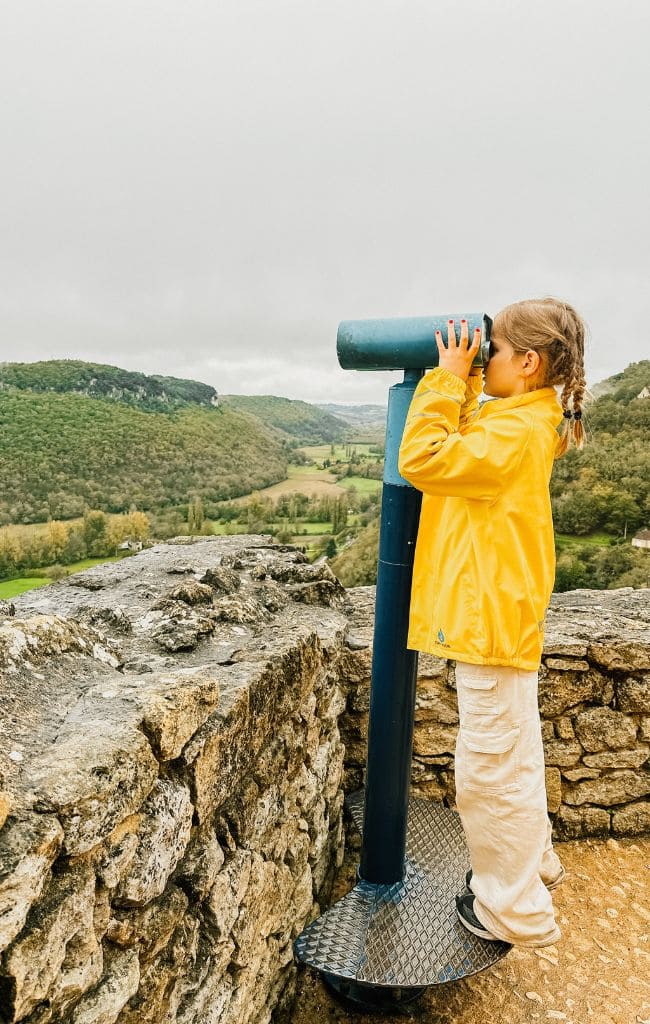
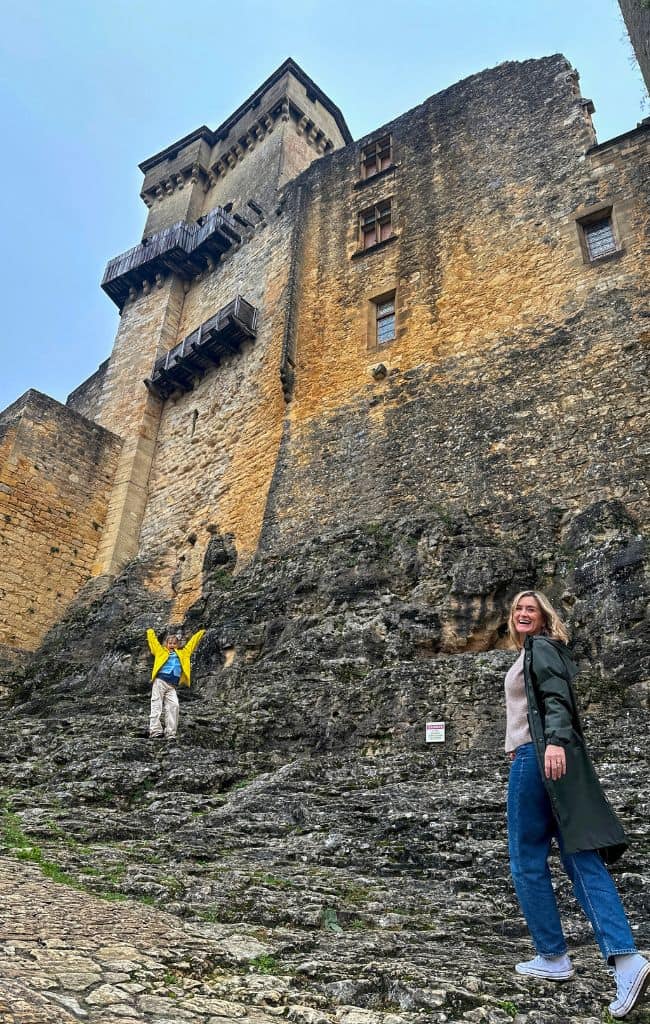
Located near the Jardins de Marqueyssac is the excellent Château de Castelnaud. Built upon a towering rocky outcrop overlooking the Dordogne River, this is the most visited castle in the southwest of France.
The fortified castle was built in the 12th century and was once a powerful Périgord stronghold. Today it’s home to the Medieval Warfare Museum and is a gory insight into the brutality of warfare in the Middle Ages – take a look at the room dedicated to crossbows alone and you’ll get an idea of just how bloody this period in history was.
Castelnaud is a great day out for kids of all ages, especially during the school holidays when you can try on a suit of armour and watch a catapult in action.
We just missed the trebuchet demonstration during our visit (we were too busy exploring the castle itself) but there were shouts of delight coming from the demonstration ground. For those who don’t know what a Trebuchet is (I didn’t!), this was a type of catapult used until the 16th century that was so powerful and precise that just the sight of it made most people surrender.
Château de Biron
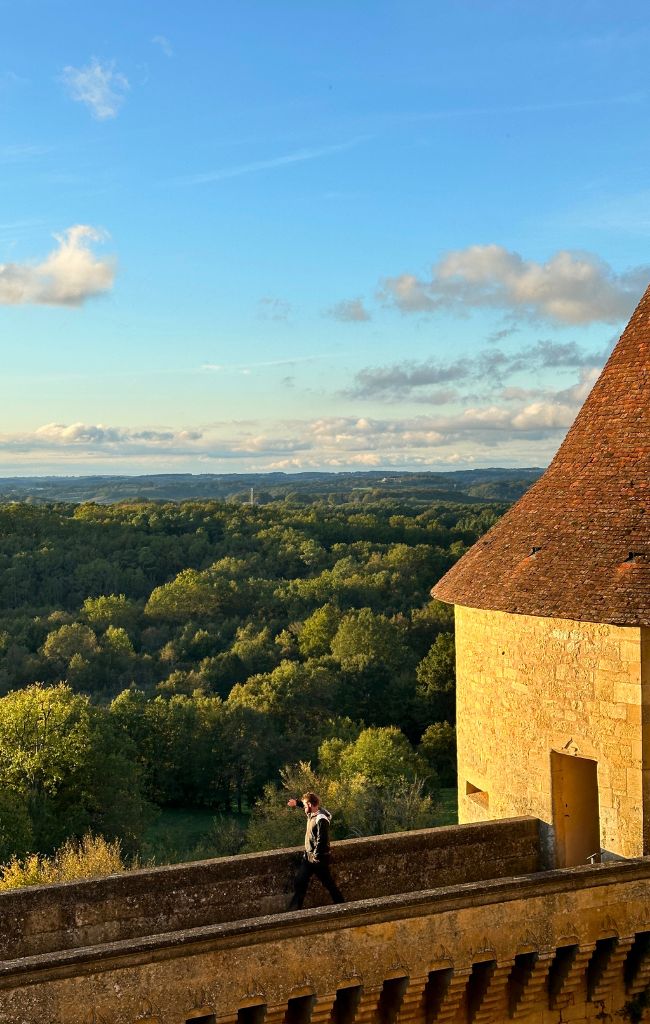
Another popular and excellent medieval castle is the Château de Biron. Located in the heart of the Pays des Bastides region, this castle has been standing strong for nearly 1,000 years surviving no less than five sieges.
We visited at the weekend when the celebrations for the inaugural three-day Fête des Bastides et du Vin was taking place – earlier in our trip we had enjoyed dinner at the Grand Banquet in the medieval town of Domme as part of the festival.
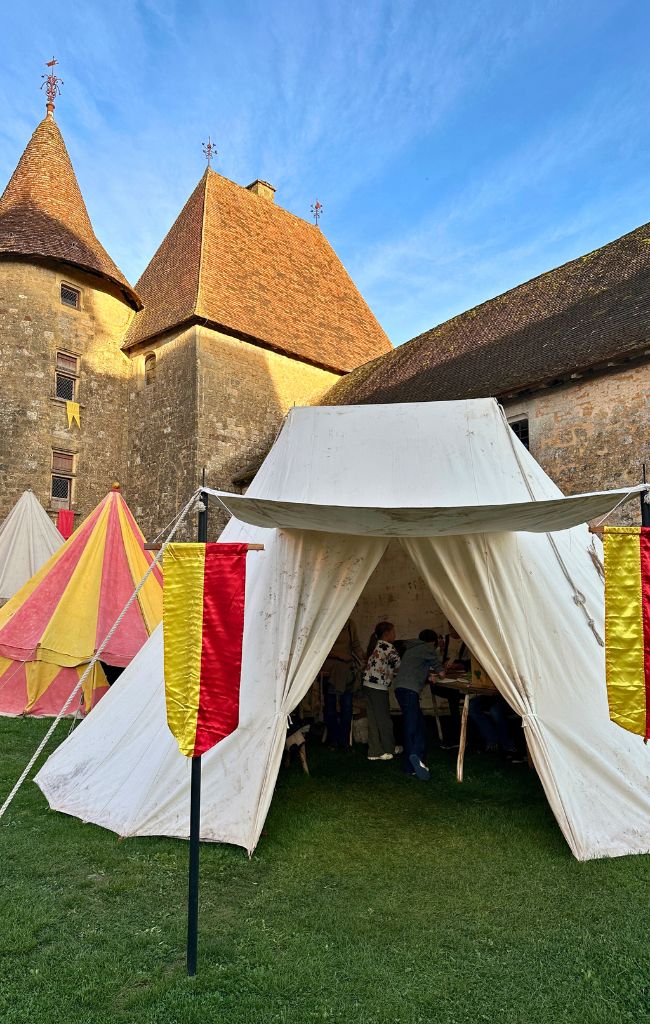
The chateau’s internal courtyard had been transformed into a fair from the Middle Ages. Costumed participants were on hand to explain medieval weaponry, showcase how an ancient forge worked and to demonstrate the reach of a catapult.
Sam spent a lot of time in one tent learning to write with a traditional quill and ink on parchment paper, leaving only to watch the knights fight in close combat and the impressive fire juggler perform underneath the castle walls.
I’m told that regular events and workshops take place but regardless, this mighty castle is a fascinating place to spend a few hours. And, apparently, it’s haunted by the ghost of the French noble and military commander, Charles de Gontaut-Biron!
If you want a special place to stay nearby then I can highly recommend the Chateaux dans les Arbres (Castles in the Trees) where you can stay in your own mini Château de Biron.
La Roque-Gageac
It happened to be very wet and rainy on the day that we visited La Roque-Gageac so the streets were particularly empty of visitors (visit during the summer months and it’s another story).
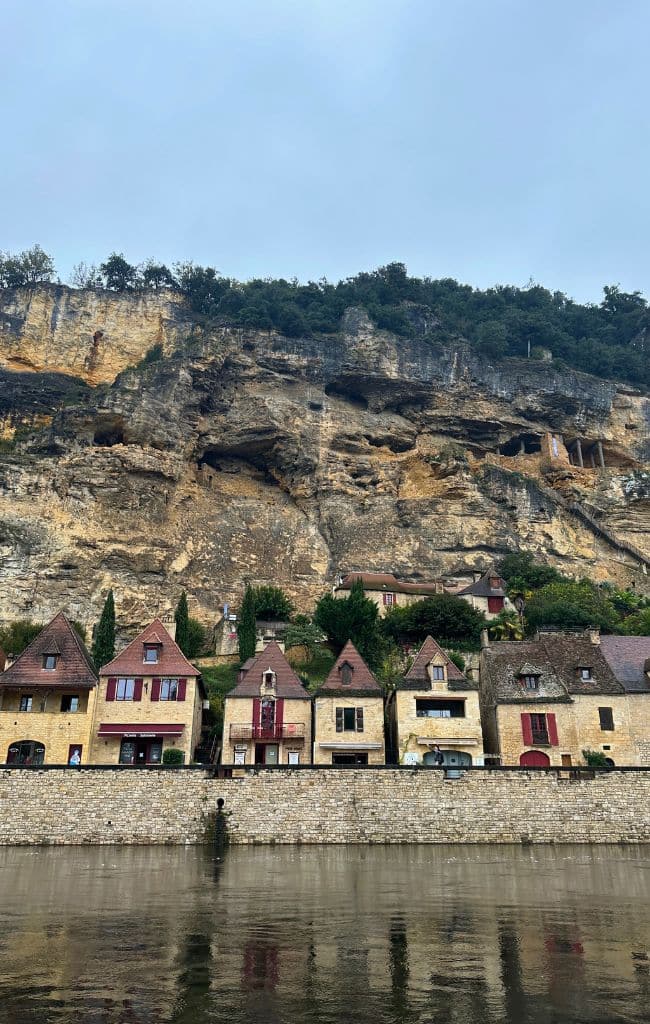
This is one of France’s “most beautiful villages” and it’s easy to see why; sandwiched between the right bank of the Dordogne River and a towering limestone cliff the the golden-coloured houses sit stacked against the cliff face, linked by a medley of stairways and walkways.
Carved into the cliff face is Le Fort de la Roque Gageac, a medieval fortress built high up to deter marauders and invading armies. We didn’t get a chance to visit but if you do, be prepared to conquer the 174 stairs leading up to the main gate.
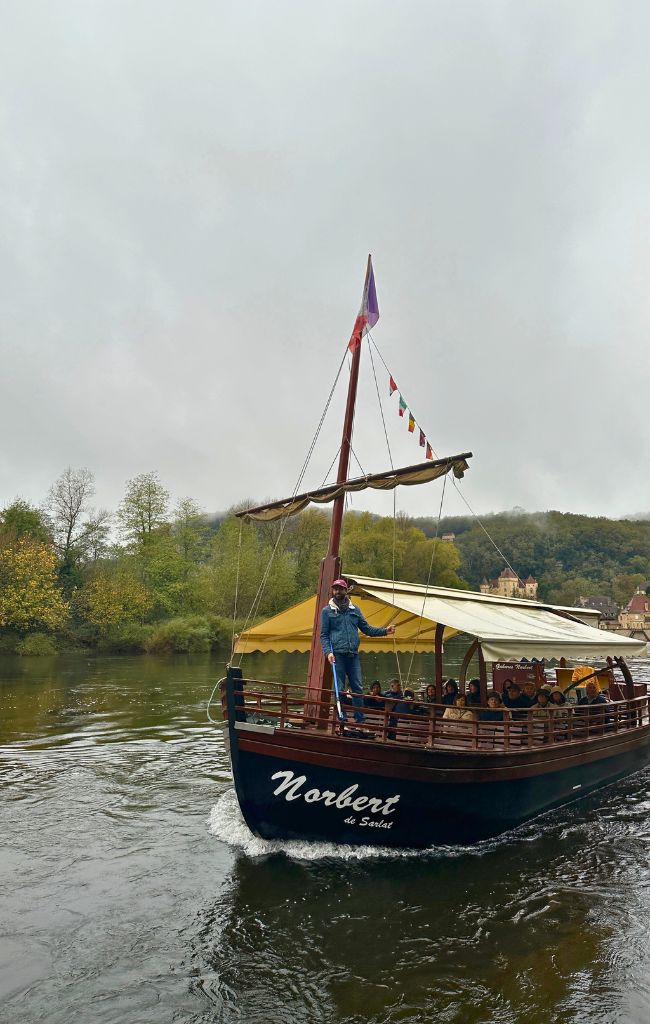
Instead, we took shelter from the rain on board a motorised replica of a traditional Périgordin gabare. These wooden, flat-bottomed river barges once transported goods such as wine, salt, fish, chestnuts and truffles along the river.
Typically, once the gabares had finished their journey, the boats would be dismantled and the wood sold. The skipper then walked back down the river to the starting point at Argentat and started his journey again.
Fortunately, our boat was able to travel both downstream and back upstream again and the hour-long journey offered a great way to see the village’s huddle of old stone houses from the water, as well as the fort carved into the limestone cliffs.
We sailed with Les Gabares Norbert who run trips from early April to the end of October from the pier opposite the village car park (life jackets are provided).
Grotte de Maxange (The Maxange Caves)
I’ll be honest, when I first mentioned that we would be visiting the Grotte de Maxange, to Sammy there *might* have been some eye rolling but once we emerged back into daylight, we both agreed that these incredible caves were a trip highlight.
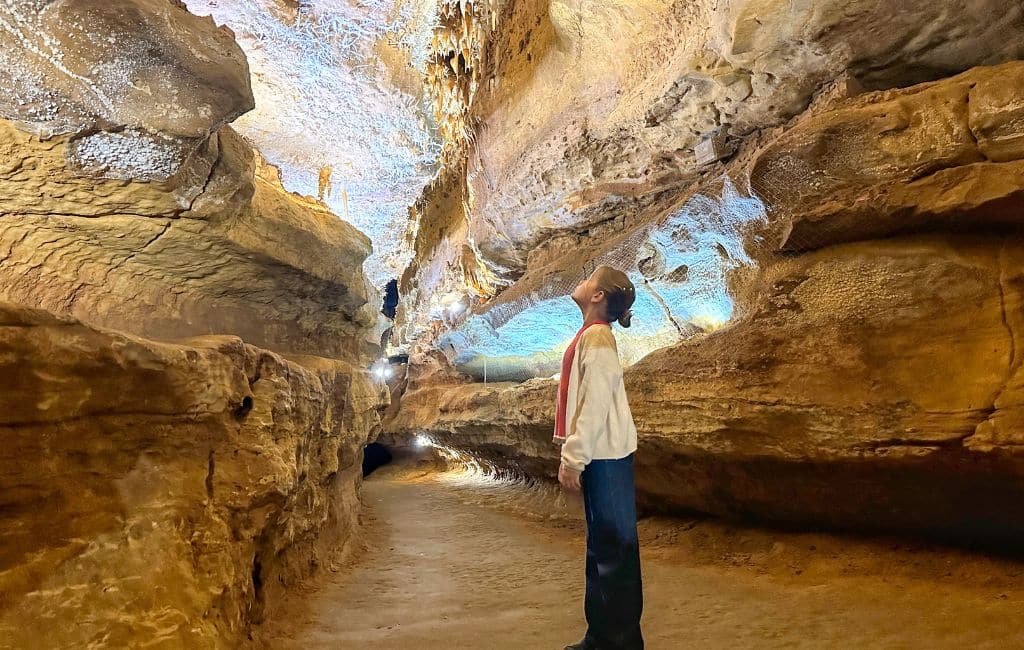
Located between the towns of Bergerac and Sarlat, these caves are home to the incredibly rare helictites. Helictites, for the uninitiated, are curious limestone formations that grow from caves walls, floors and ceilings with no particularly orientation with respect to gravity.
In contrast to stalactites that form thanks to gravity – rainwater water dripping through limestone ceilings and depositing calcium carbonate (and stalagmites grow up from cave floors thanks to dripping rainwater), helictites grow every which way because the water flow is so weak and so slow that the calcite-laden water droplets are not subject to the force of gravity.
Instead, capillary action pushes them up vertically and crystallisation pushes them out horizontally and these two forces work in tandem to create all manner of shapes. In some galleries within the caves, the helictites looked like dozens of milky white stars covering the cave ceiling.
There are only two caves in the world that have helictites in such large numbers and the one at Maxange is one of them.
Visits are by guided tour and although they are conducted in French, our guide also spoke English so answered our questions. The tours take around one hour, which left us just enough time to play a game of Jenga with the giant wooden Jenga blocks in the gardens and picnic area.
Château des Milandes (the Josephine Baker Chateau)
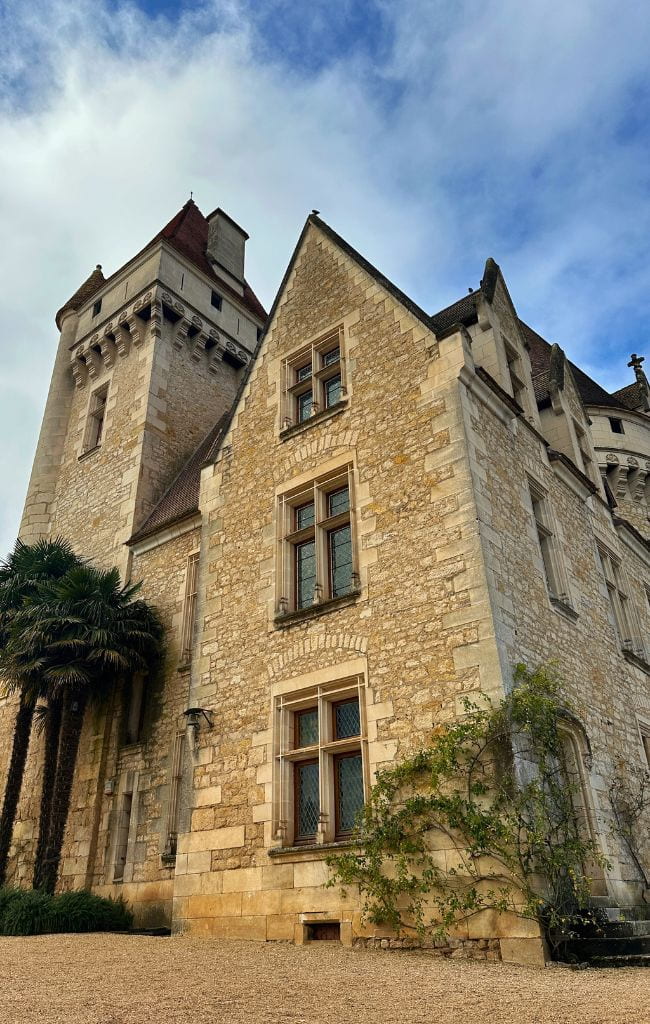
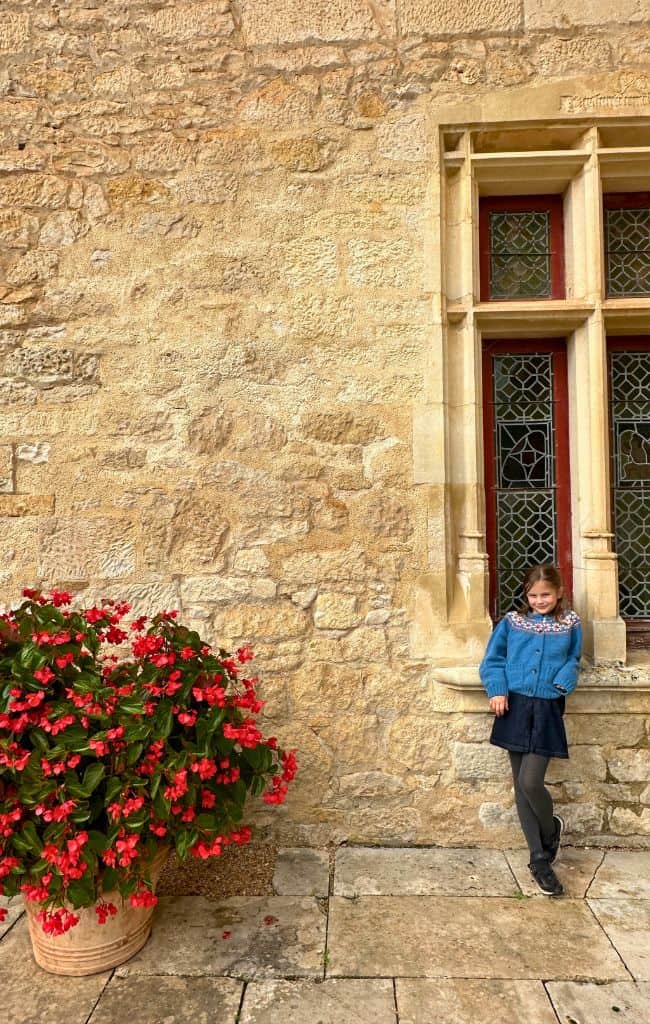
The Dordogne Valley is home to dozens of magnificent chateau, each one offering a different experience. We loved the medieval castles that we visited during Dordogne holiday but the one that we loved best was Château des Milandes.
This isn’t because the chateau is any more beautiful or impressive than some of the others that we saw, rather it is to do with the home’s previous owner, Josephine Baker.
Born into poverty in St. Louis, Missouri, Josephine Baker rose to become one of the most famous dancers and singers during France’s roaring twenties. She was the first black woman to star in a major motion picture, caused a storm when she performed at the Folies Bergère, wearing little more than a skirt made from artificial bananas strung together, and became the most celebrated night-club entertainer of her era.
But there’s far more to Josephine Baker’s story than her time on stage and the Château des Milandes is the perfect place to discover more about her life.
Josephine Baker lives at Château des Milandes for thirty years and, during that time, she was active in the civil rights movement, was a French Resistance fighter, and the mother to 12 adopted children.
The Château des Milandes does an excellent job of honouring the life of this incredible woman and we were completely captivated listening to our audio guides as we went from room to room within the chateau.
Among the many items on display are some of Baker’s costumes that she performed in (including the infamous banana skirt), dozens of photos of her both performing and with her “Rainbow tribe”, framed letters and awards that she received during her lifetime, and other items such as the Baker Fix Hair Gel and Bakerskin that she produced.
One of my favourite things was seeing the rooms that she decorated, including the over-the-top Art Deco bathroom that was modelled on her favourite perfume at the time, Arpège by Lanvin.
The château also hosts a Bird of Prey displays in the gardens and there’s an excellent restaurant on site for lunch (we had possibly the best chocolate mousse ever here!). It’s a great spot for a day out and one of our favourite things to do in the Dordogne with kids.
The Truffle Museum in Sarlat
The capital of the Perigord Noire (black Perigord) region, Sarlat-la-Canéda (commonly known as Sarlat) is one of the most popular towns in the Dordogne Valley. Famed for its storybook medieval streets, charming town squares and historic monuments (the town holds the record for the highest number of listed historic monuments in France), it’s a beautiful town at any time of year.
We enjoyed an excellent – and very family-friendly – tour of the historic centre with our guide Justine from the Sarlat Tourist Office.
This 90-minute tour was the perfect introduction to the town, with an overview of Sarlat’s history and plenty of fun facts to keep Sammy entertained. We learned, for example, the reason why the salamander is the symbol of the city and the purpose of the raised stone block outside what was once a nobleman’s house (for ease of mounting his horse!).
The other thing that Sarlat is famous for is its food and its twice weekly markets. Held on Wednesday mornings and all day on Saturday, the colourful markets take over the historic centre with local producers selling everything from duck, walnuts, honey and wine as well as foie gras (the region is famous for it!). Many also sell truffles, another regional speciality.
We didn’t have much time to browse the market because we had an appointment at the newly revamped Truffle Museum.
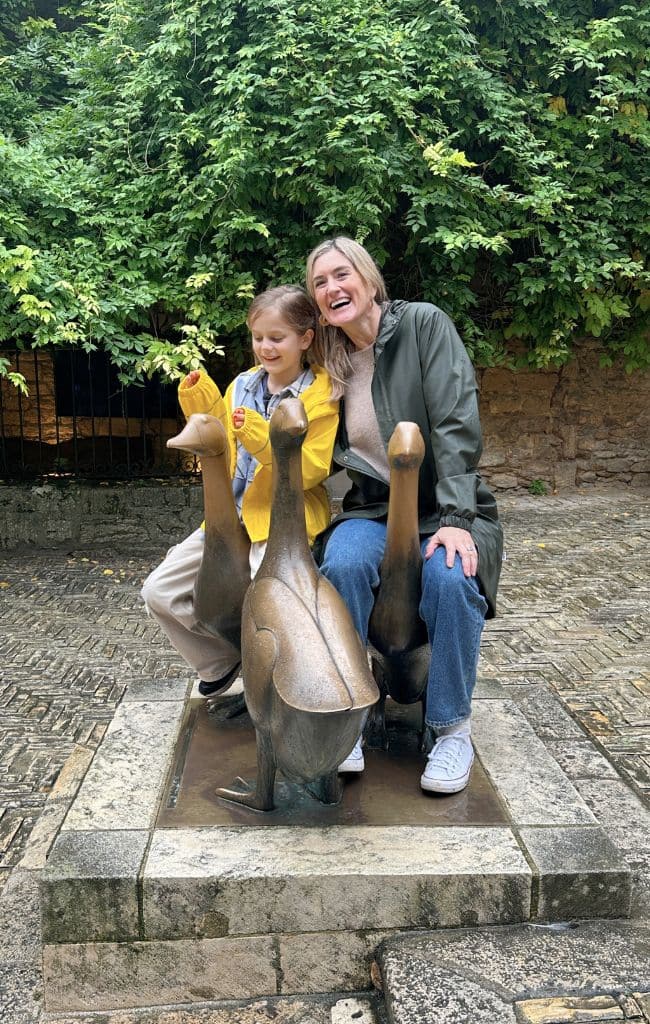
Located on Marché aux Oies (Goose Market Square), next to the life-size statue of three bronze geese, the Musée de la Truffe (Truffle Museum) explores the story of one of the region’s most celebrated products.
Housed within a restored 15th century town house, the four-floor museum re-opened in April 2024 following a substantial renovation. Previously, the museum was only available to visit on a guided tour but today visits are self-guided.
We started on the fourth floor where a short film (in French with some English subtitles) explains a brief history of Sarlat. The third floor was our favourite, an engaging 180° sound and light animation projected onto the walls telling the story of truffles throughout the seasons. Unfortunately, the film is only available in French at the moment but despite knowing only a handful of French words, Sam still enjoyed it. Also a hit were the animated tree, pig and truffle hunting dog statues.
A series of interactive screens stand on the second floor, sharing more truffle tidbits such as cooking techniques and truffle cultures. Particularly fun for Sam was the small room where you can walk among autumn leaves on the ground alongside a projection of a truffle hunter and his dog.
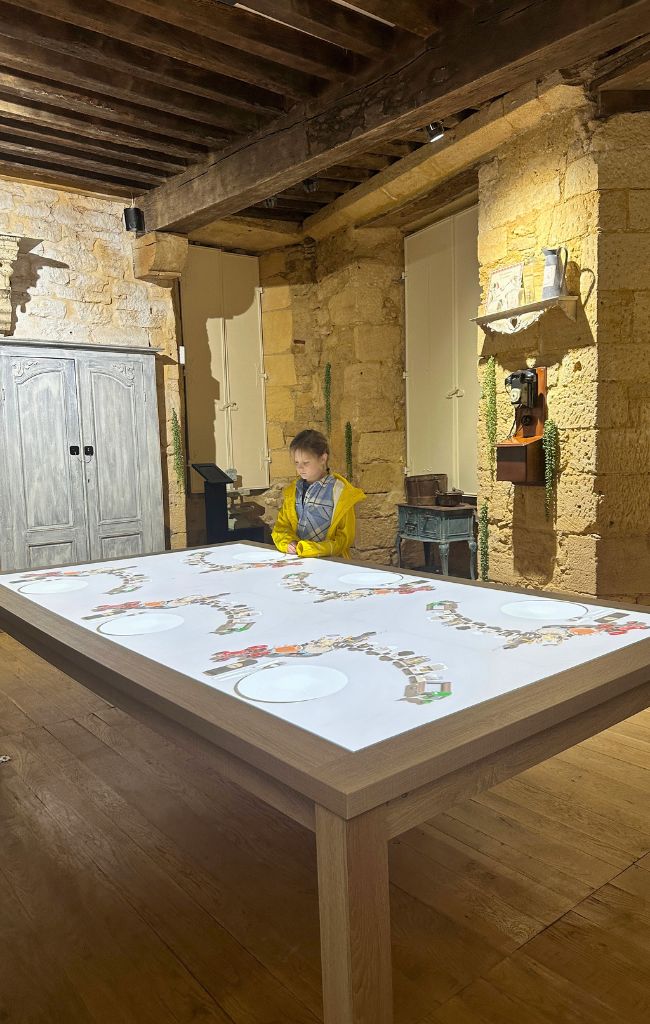
The first floor is split in two: in one room stands a large dining table where an animated film showing the journey of a truffle from underground to your plate is shown. Once that’s finished, it’s tasting time!
I tried a cocktail made with truffle-flavoured limoncello and Prosecco, which was delicious and together Sam and I tried two different truffles, a springtime one and a winter one.
The ground floor is a shop where you can buy all manner of truffle-flavoured products from salt and honey to pepper, oil, creams, pasta, and more.
Despite not liking mushrooms at all (I haven’t since childhood!), I quite like truffles and I really enjoyed this museum.
Château de Tiregand
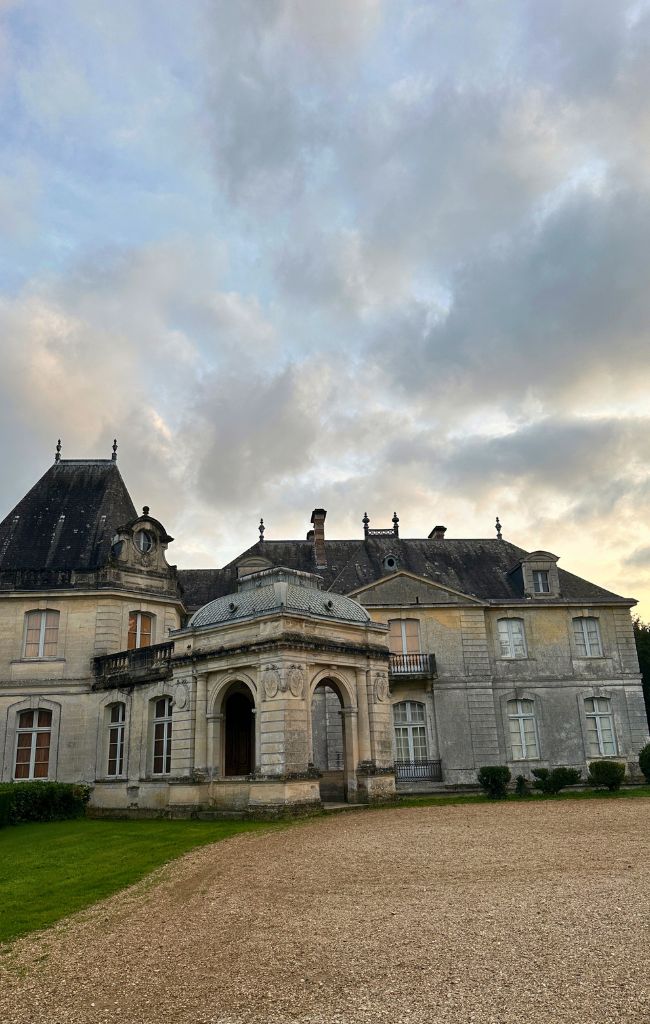
The Château de Tiregand was one of our last stops on our road trip of the Dordogne Valley and was one of my favourites.
This stately home has a storied history, playing a key part in both the Hundred Years War and the Wars of Religion. It was here, apparently, that two Protestant captains shared the haul of good stolen from the region’s Roman Catholics, including a silver reliquary containing sacred items belonging to the first Bishop of Périgueux.
But in recent years the property lay largely abandoned until 2022 when it was bought by Louis Guyot. Since purchasing the home, Guyot has set about given the chateau a new lease of life in the form of an immersive escape room experience.
This is such a brilliant idea (and one that I wish some of the stately homes in England adopted). Based on the adventures of Arsène Lupin, the gentleman thief and master of disguise created in 1905 by French writer Maurice Leblan, this immersive theatrical experience invites guests to solve the mystery of the secret of the Château de Tiregand.
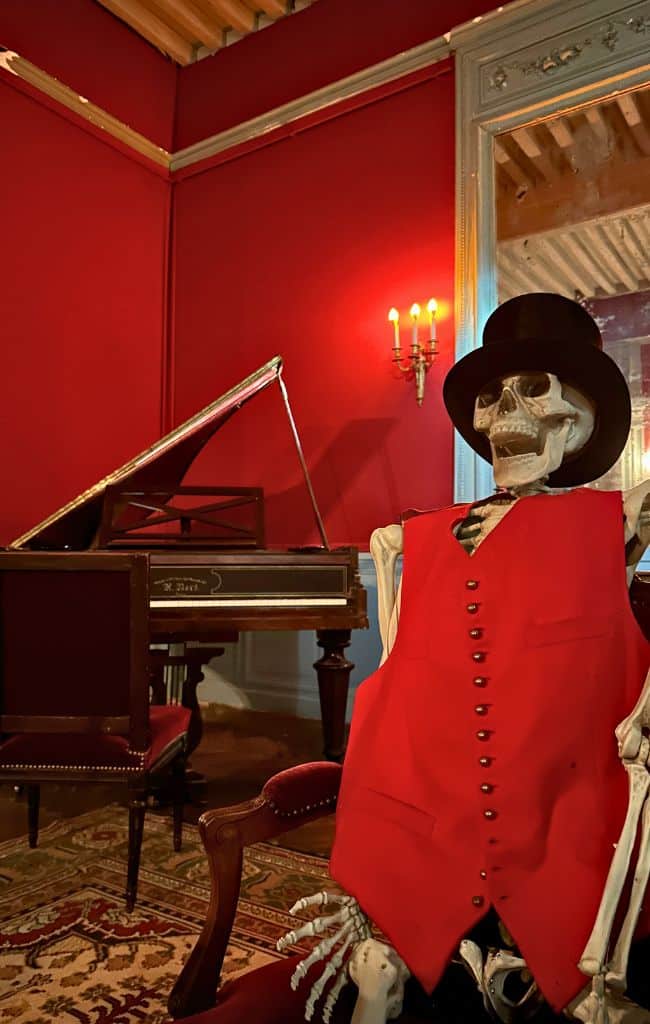
We visited close to Halloween, however, and the château was in full spooky mode.
Instead of uncovering the mysteries of the chateau, we were tasked with trying to lift the curse that had fallen about the home, dodging ghosts as we went. Unfortunately, the castle was a little too spooky for Sam! That said, we still made it through, deciphering most clues along the way (helped largely by one of the costumed actors!).
Despite the ghoulish atmosphere, I thought this was a brilliant experience. Every room has been decorated and the clues are both fun and challenging to decode. Examples included smelling different scents and deciphering what they were or spotting the difference in a menu from 1805 at a dinner party set for 12 people.
The experience takes in the whole of the chateau and takes 1.5 – 2 hours.
The Cyrano Experience
We spent our final morning in Bergerac, a city famed for its wine, its half-timbered houses and for the tale of Cyrano de Bergerac.
The story of Cyrano, the nobleman with the enormous nose who was in love with Roxanne, was first published in 1897 and the tale of unrequited love remains popular today.
One of the best ways to understand the man and the myth is at the recently opened Cyrano Experience at Quai Cyrano.
Located on the upper floors of this building (the Tourist Office is on the ground floor), alongside the banks over the Dordogne River, this immersive experience takes you backstage at a theatre where they are preparing to perform the play, Cyrano de Bergerac.
The self-guided experience uses audio guides, with an English version available, and it’s a really fun thing to do in the Dordogne Valley with kids and a great way to learn about the play and its historical context.