
Despite spending a lot of time travelling to France (and even living there briefly as a child), I had yet to visit the Dordogne Valley. Located in southwest France, between the Aquitaine Basin and Massif Central, I had certainly heard a lot about the region and know lots of people who holidayed regularly in the Dordogne Valley with kids.
And yet, it was only recently that I had a chance to visit.
I spent five days in the Dordogne Valley exploring as many of the medieval villages, majestic chateaux, otherworldly caves, and whimsical gardens as I could.
There is so much to see in this region, however, that I would not recommend doing it all on a 5-day Dordogne Valley road trip. Instead, I suggest dedicated at least one week to enjoy everything that this charming corner of France has to offer. Better still, carve out 10 days from your schedule and enjoy the best of the Dordogne Valley at a relaxed pace.
The following 10-day road trip itinerary in the Dordogne Valley is based on what I experienced, but at a more leisurely pace.
Disclosure: This post may contain affiliate links. I have been or could be if you click on a link in this post compensated via a cash payment, gift or something else of value for writing this post. See our full disclosure policy for more details.
When is the best time to visit the Dordogne Valley?
Table of Contents
The summer months are the most popular time to visit the Dordogne Valley, and July and August are when the weather is at its best. This is the time to visit if you want guaranteed blue skies, sunshine and temperatures in the mid-30s Celsius. Fairs and festivals take place during the summer months and the weekly local markets tend to be bigger and busier.
Summer is also the time to visit if you don’t mind crowds.
The Dordogne Valley is one of the most popular destinations in France with holidaymakers, home to some of the country’s most famous sites including the cliffside religious complex at Rocamadour and the picturesque village of La Roque-Gageac, and their streets are packed during peak season (Rocamadour receives more than a million visitors a year).
The good news, however, is that the Dordogne Valley is a delightful region to visit at any time of year. I visited with my nine-year-old, Sam, over the October half term and despite some changeable weather (we had one day of pouring rain and the rest blue skies and sunshine), we had many of the region’s most famous sights largely to ourselves.
Of course, the downside with travelling during low season is that many businesses close for their congé annuel (annual holiday) and plenty of shops, restaurants and cafes were well and truly fermé. This does mean that you have less choice when it comes to dining out, particularly in smaller villages.
Road trip itinerary of the Dordogne Valley
Getting to the Dordogne Valley
There are lots of options for reaching the Dordogne Valley from the UK. You will need a car for getting around the area.
Airports: Travelling from the UK, there are a handful of airports to choose from. We flew into Brive–Souillac Airport from London Stanstead but those flights do not operate year-round, only May to October. Bergerac, Bordeaux, Perigueux and Aurillac Tronquiere are other options.
You will need a car to travel around the region and you can hire one from any of these airports.
By Ferry: If you want to bring your own car then the best ferry ports for accessing the Dordogne Valley are in France’s northeast at either St Malo or Cherbourg. Brittany Ferries sails to both from Portsmouth. Condor Ferries sails from Portsmouth to Cherbourg from late May to early September. You can also travel from Dover to Calais but it will be a slightly longer drive when you arrive in France.
By Train: If travelling by train then the main stations are Périgueux, Bergerac, Sarlat and Brive. These can all be accessed via Bordeaux, Paris, Lyon, and Toulouse.
Dordogne Valley Road Trip Itinerary Summary
The following Dordogne Valley road trip itinerary starts in Brive. If you are planning your trip between November and April then you will need to start in Bergerac or one of the other airports listed above as Ryanair only flies from London Stanstead to Brive from May to October.
This itinerary can be fully customised according to your interests and time available (as well as your starting destination) and the following is simply an idea of how you may wish to organise your time.
- Day 1: Fly into Brive, overnight in the city.
- Day 2: Visit the towns of Turenne and Martel. Overnight in Rocamadour.
- Day 3: Enjoy the Monkey Forest and the town of Rocamadour. Overnight in Rocamadour.
- Day 4: Travel to Sarlat and spend the day here. Overnight in Domme.
- Day 5: Visit La Roque-Gageac and nearby Castelnaud Castle. Overnight in Domme.
- Day 6: Visit the Marqueyssac Gardens in Vezac and then the Château des Milandes. Overnight in Chateaux dans les arbres.
- Day 7: Visit the town of Monpazier and then the Château de Biron. Overnight in Château dans les Arbres.
- Day 8: Visit the Maxange Caves and later the Château Tiregand. Overnight in Bergerac.
- Day 9: Spend the day exploring Bergerac.
- Day 10: Return home.
10-day road trip in the Dordogne Valley itinerary
France can lay claim to some spellbinding landscapes and countryside but the Dordogne Valley is among the prettiest in the country. The scenery is a glorious patchwork of emerald green hills, dense forests, undulating vineyards, fertile farmland and limestone cliffs that hide castles, prehistoric caves, and some of the region’s most charming villages.
Gently winding its way through this picturesque landscape is the Dordogne River, the fifth longest river in France and the only one in the country to be part of the UNESCO World Network of Biosphere Reserves.
You will need a car to get around and, one word of caution, roads can be small, narrow and windy. This should not be a problem if you are used to driving on English country lanes but if you’re arriving from somewhere where big highways are the norm (hello, America!) then you might find navigating the roads a little more challenging.
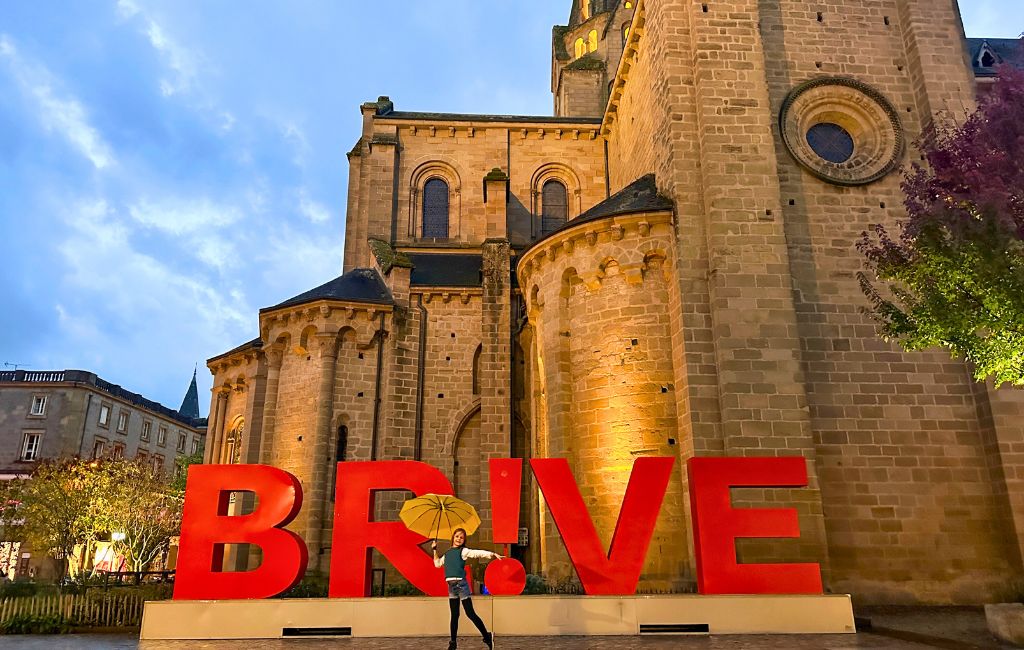
Day 1: Arrive and travel into Brive-la-Gaillarde
We landed in Brive airport where we picked up our rental car and drove the short 20 km drive to our first stop, Brive-la-Gaillarde (often referred to simply as Brive).
This is one of the larger towns in the Dordogne Valley and is a lively hub home to some great shopping (try Chocolaterie Lamy and the 100% Gaillard Boutique), busy bars and excellent restaurants. We had a very good dinner at Le Gueuleton opting for a delicious chicken cordon bleu instead of the house speciality, Limousin beef.
Brive is also popular for its Saturday market, that takes over the centre of town with local producers selling all manner of goods, including some Brive-branded goodies, often adorned with a moustache. The town adopted the handlebar moustache in 2010 and it’s now a much-loved symbol of the city.
Where to stay in Brive-la-Gaillarde
We stayed at the centrally-located Best Western Le Quercy. Modern, comfortable and with really friendly staff, it’s a great option for your first night in the Dordogne Valley.
For more ideas on where to stay in Brive, take a look at these options here.
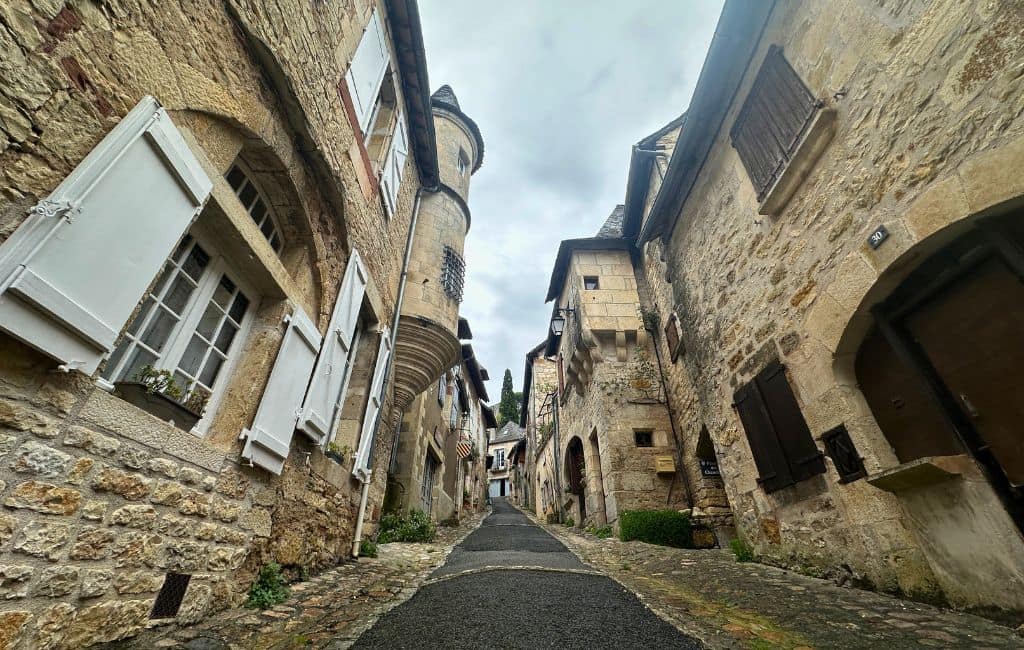
Day 2: Turenne, Martel & Rocamadour
Morning: Visit Turenne
One of “les plus Beaux Villages de France”, the tiny village of Turenne sits on top of a cliff and is famous for its 16th- and 17th-century mansions made from limestone, the gilded wooden altarpiece in its 12th century church, and the 360 degree views from the Château de Turenne that sits on a rocky spur 350 metres high.
Today the town is a popular tourist spot but once upon a time, this hilltop village was incredibly powerful.
Named after one of Louis XIV’s famous military commanders, Henri de la Tour d’Auvergne (known as Viscount Turenne), the town was independent from the crown for nearly eight centuries. That is, until, the last of the La Tour d’Auvergne family was forced to sell the county to King Louis XV in order to pay off his gambling debts.
Louis XV dismantled the castle and today there is a garden among the ruins.
Turenne was very quiet when we visited and the chateau was sadly closed so make sure to time your visit right.
Afternoon: Martel
The first thing you should do when you arrive in Martel is have lunch at Le Petit Moulin, a charming restaurant owned by Adrian. One of three brothers, he started Le Petit Moulin 10 years ago as a deli before he started offering cheese and charcuterie platters and later turning it into a restaurant, such was its popularity.
Today, they serve an excellent fixed-price mid-day menu where they serve their own walnut oil, made by one of Adrian’s brothers in a mill down the road. I can also highly recommend their own Chenin wine.
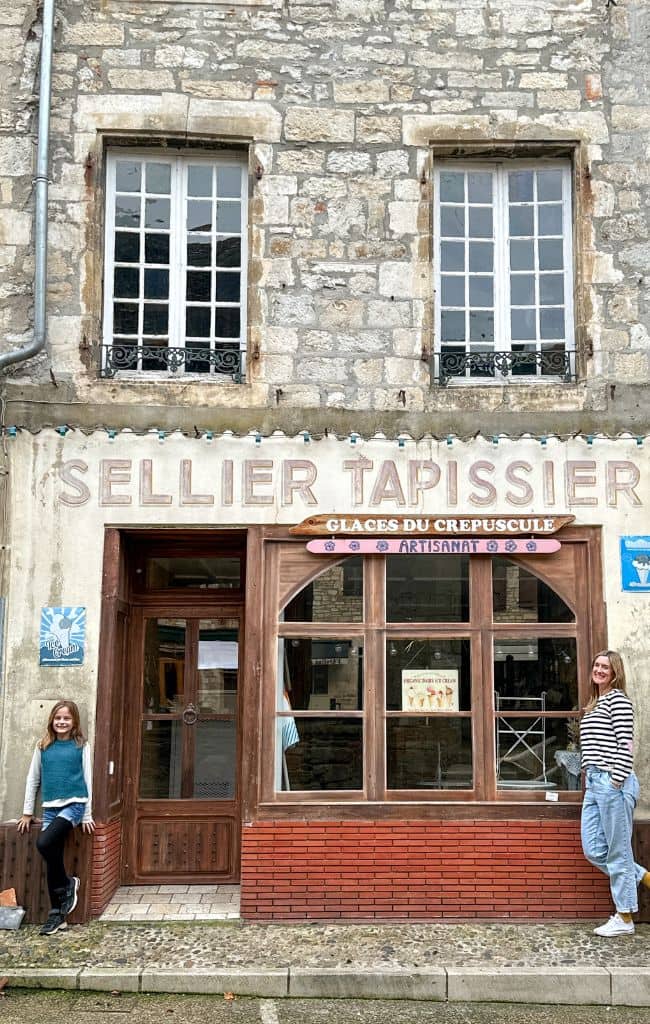
We loved our time in the small town of Martel with its winding streets and perfectly preserved medieval houses.
Positioned on a limestone plateau, at the intersection of two ancient trade routes (and close to the pilgrimage site at Rocamadour), the town grew very rich with merchants trading salt from the Atlantic and wine from Bordeaux along with local walnuts and truffles.
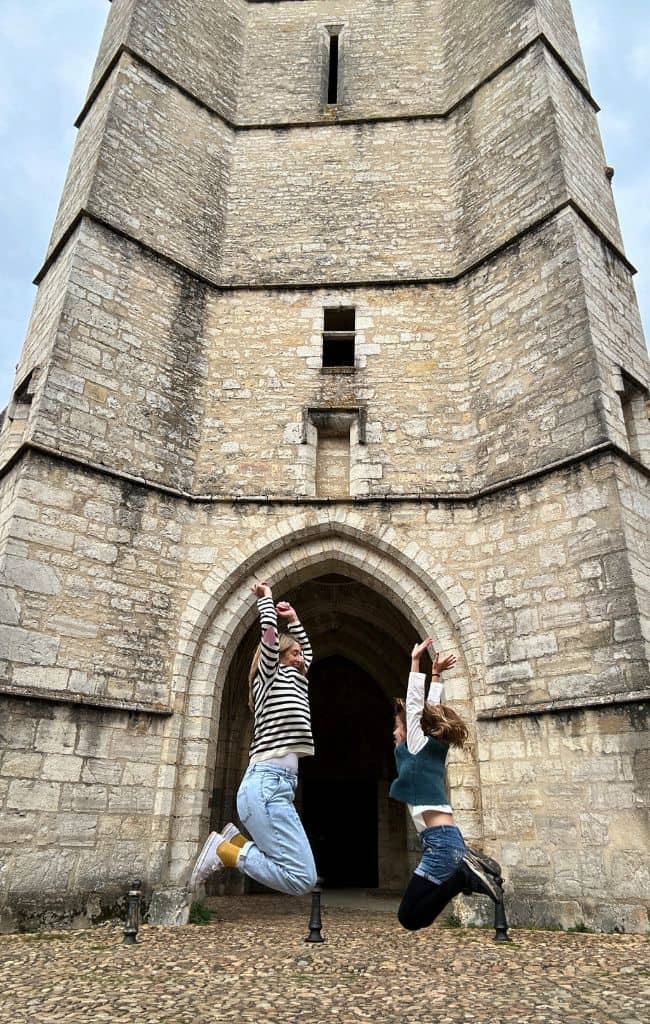
Known as the “town of Seven Towers”, the best way to explore this storybook village is by simply wandering.
We started at the market hall in the heart of town, with its 18th century timbered roof (a market is held here on Wednesday and Saturday) and walked along to the Church of Saint-Maur, the most imposing of the town’s towers, before branching out and exploring the many small, cobbled streets.
The town had long been popular with artisans and you’ll spot plenty of small shops selling artwork and handicrafts. We popped into a small shop, Zibulou et Cie, a shop owned by collective of seven local artists all specialising in different craft from woodwork to pottery.
Evening: Rocamadour
From Martel it’s about 30 minutes to Rocamadour. We stayed at the Hotel-Restaurant Le Bellevue that has cosy rooms and views towards the medieval village of Rocamadour. Their restaurant next door is very good, with a menu featuring plenty of fresh produce locally sourced. The hotel also has a small car park.
For more ideas on where to stay in Rocamadour, take a look at these options.
Day 3: La Foret des Singes & Rocamadour
Morning: La Foret des Singes
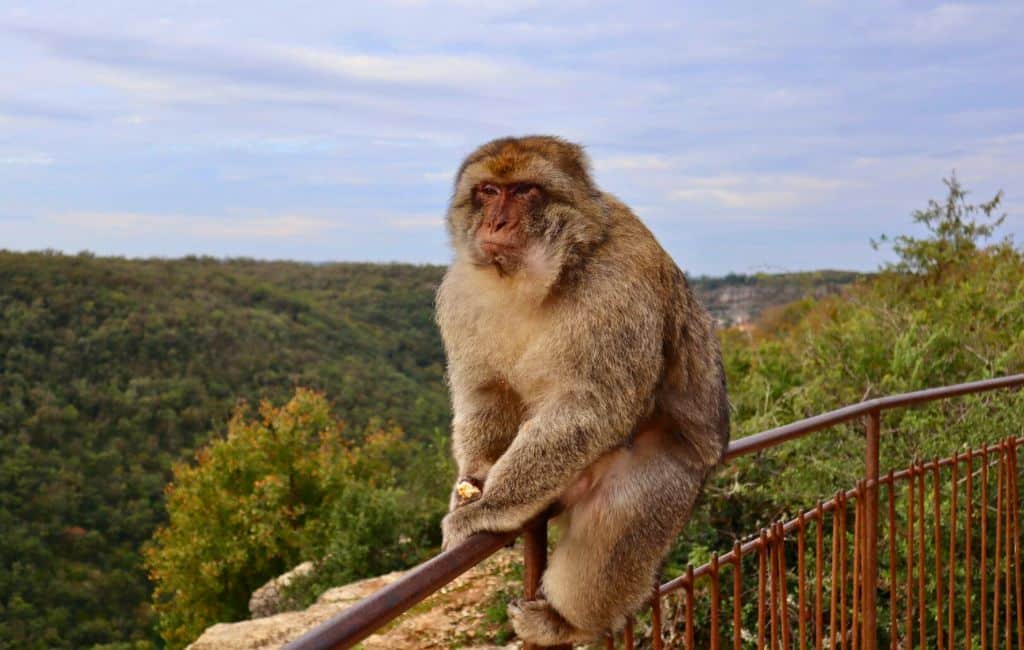
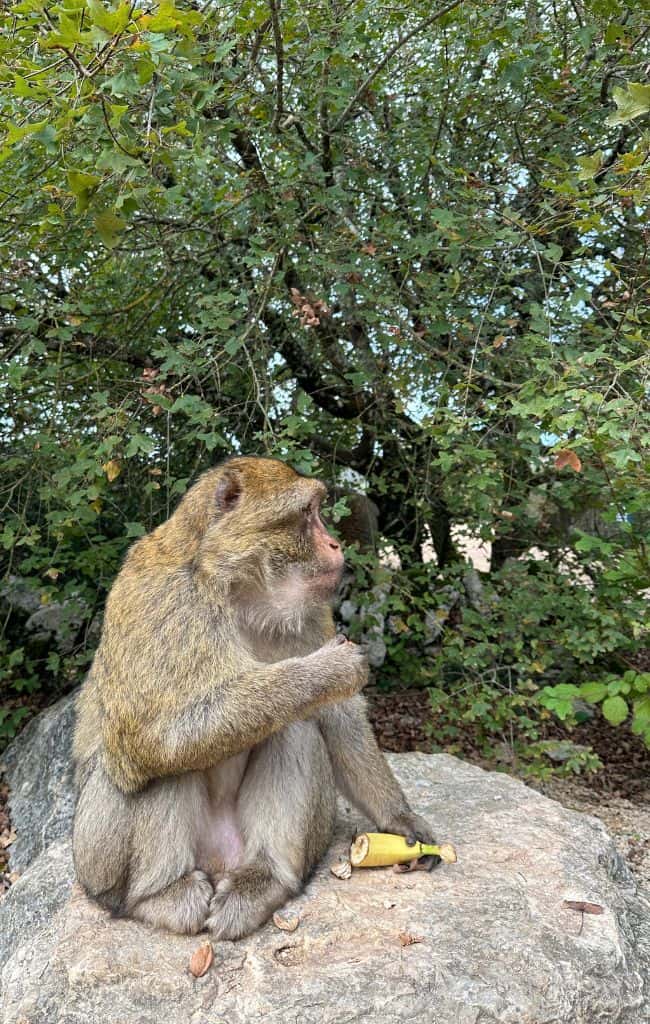
Located on the outskirts of Rocamadour, and just 10 minutes from your hotel, is La Forêt des Singes, the Monkey Forest. This 20 acre park is home to 150 Barbary Macaques who roam freely among the forest, gorges and rocky ridges, an environment that closely mimics their natural habitats in the mountains of North Africa, Morocco and Algeria.
One of the best ways to experience this unique park that is dedicated to the conservation of Barbary Macaques, today considered one of the most endangered populations in the world, is with its “Breakfast with the Monkeys” experience.
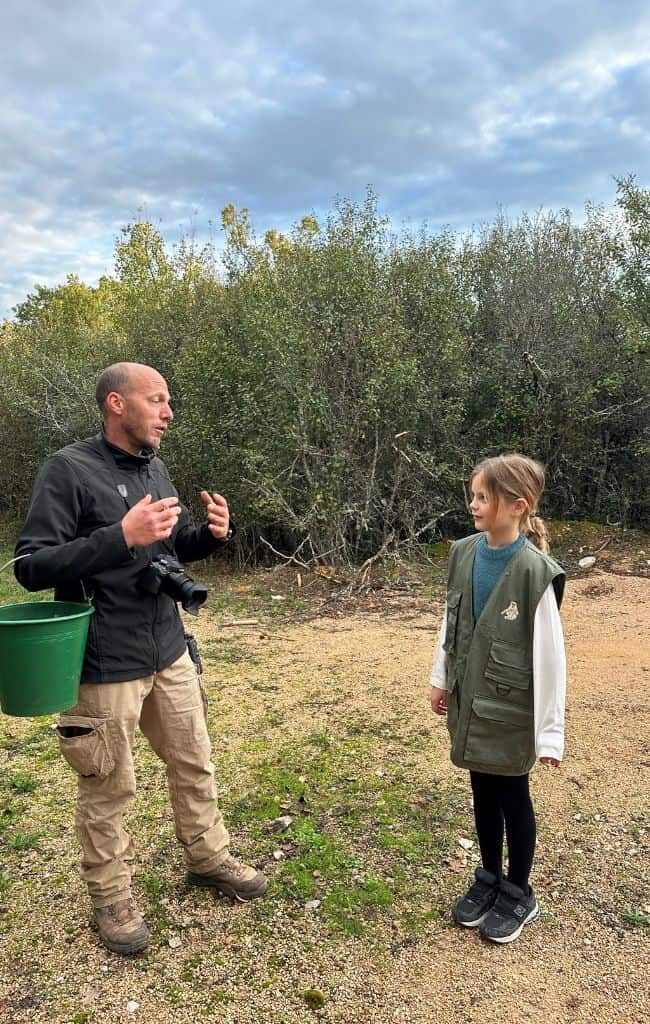
We arrived around 9am – an hour earlier than the park officially opens – and were handed two buckets filled with bananas, chestnuts and walnuts by our guide Julian. During the course of our almost two-hour experience, Julian led us around the reserve explaining the behaviours and characteristics of this species while we handed out breakfast to some very hungry monkeys.
It’s a really unique experience (and particularly fun to do if you are exploring the Dordogne Valley with kids). Alternatively, you can simply visit the park when it opens at 10am and wander along the marked paths, observing the monkeys as you go.
Afternoon: Rocamadour
I recommend spending a couple of hours at the Monkey Forest, although it’s very easy to spend half a day here. Depending on how long you spend with the Barbary Macaques will determine how long you have to explore Rocamadour.
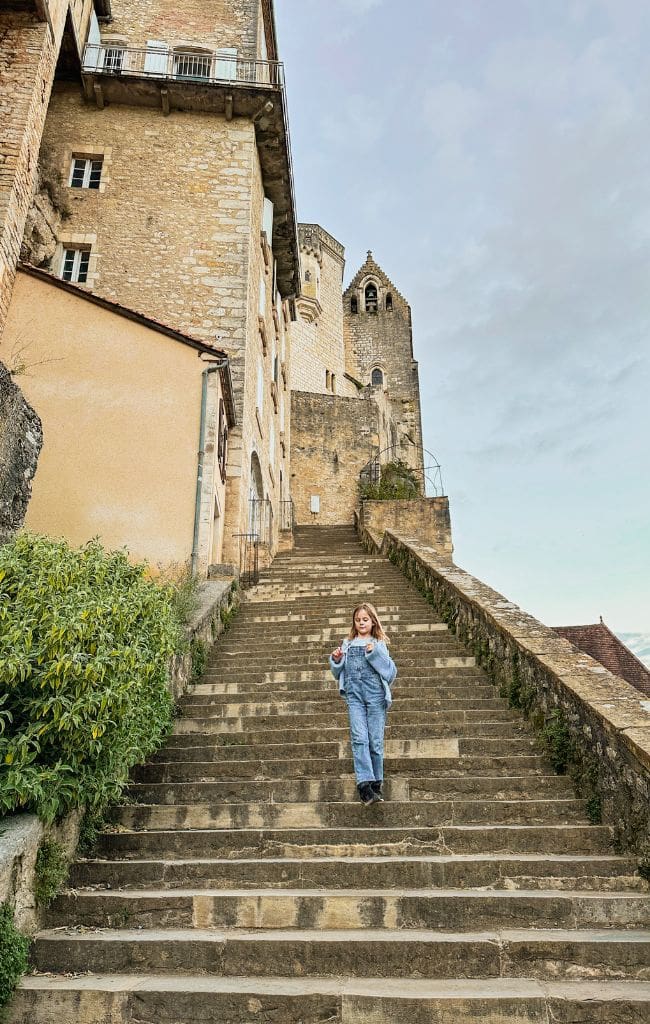
Really, Rocamadour deserves at least half a day. Built into the cliffside is the Sanctuary, composed of eight chapels and churches. This is where Christianity first came to France and it has been an important religious site along the St James’ Way pilgrimage route for centuries.
The mind boggling architecture of this UNESCO World Heritage Site still draws crowds today.
The site is built on three successive levels and is accessed via the Great Staircases, 216 steps that separate the lower town from the religious complex set halfway up a cliff. Once upon a time pilgrims accessed these steps on their knees. Houses sit on the lower level, the Sanctuary in the middle and the castle at the top, built in the Middle Ages to defend the religious complex.
We only had a couple of hours here but it was enough time to see some of the town’s most famous sights including the Vierge Noire, the Black Madonna.
Carved from walnut wood in the 12th century, is thought to perform miracles and a 9th-century iron bell hanging overhead is said to ring on its own when a miracle occurs. Some of these are said to be linked to sailors at sea, which is why you’ll spot boats hanging from the ceiling (I saw something similar when I visited Saint Valery Sur Somme in the Hauts de France region).
Day 4: Sarlat
It’s worth dedicated a full day to Sarlat-la-Canéda (commonly known as Sarlat), the capital of the Périgord Noir (black Perigord) region and one of the most popular towns in the Dordogne Valley. The layout of this medieval town has remained unchanged for centuries, a network of streets and passages, squares and grand sandstone mansions, have remained perfectly preserved.
I highly recommend taking a tour of the city with the tourist office both to get your bearings and for an introduction to the town’s rich history.
Highlights include the Cathedral Saint Sacerdos built on the spot where an abbey once stood. Building on this church started in the 12th century and was completed in the 17th century.
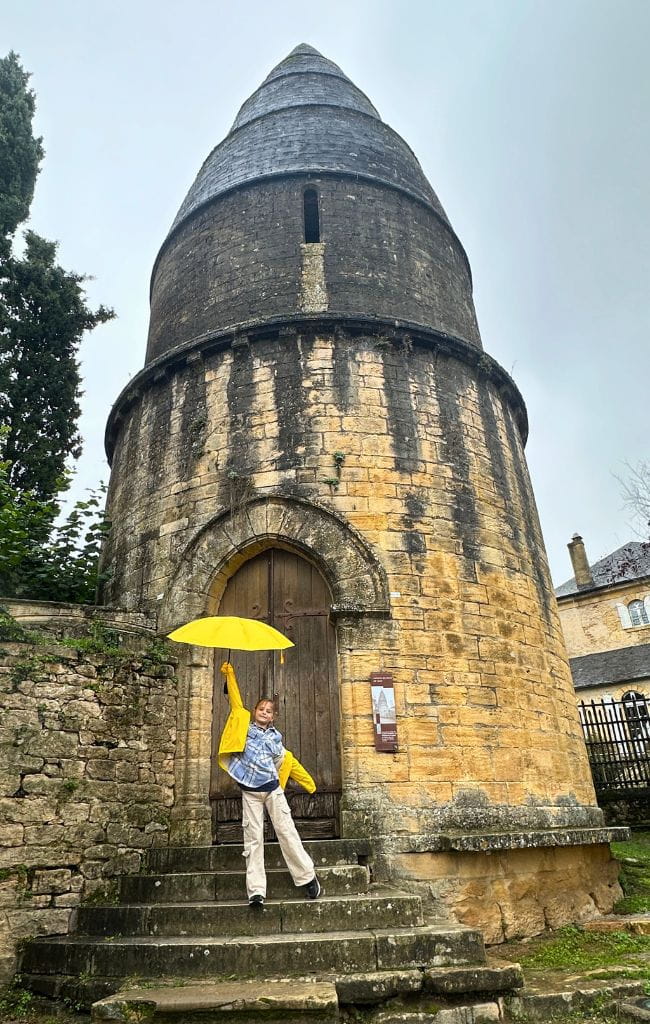
Nearby is the Lanterne des Morts, a giant rocket-shaped building from the 12th century. The exact function of this unusual-shaped building remains a mystery but there several theories. One theory is that it was funeral chapel, another is that functioned as a lighthouse thanks to its narrow upper window. A third hypothesis is that it was inspired by crusaders who had travelled to Jerusalem.
Sarlat’s Panoramic Lift was not working when we visited but I’m told that the glass lift – housed within a 14th-century bell tower – is a great way to enjoy 360-degree views of the city.
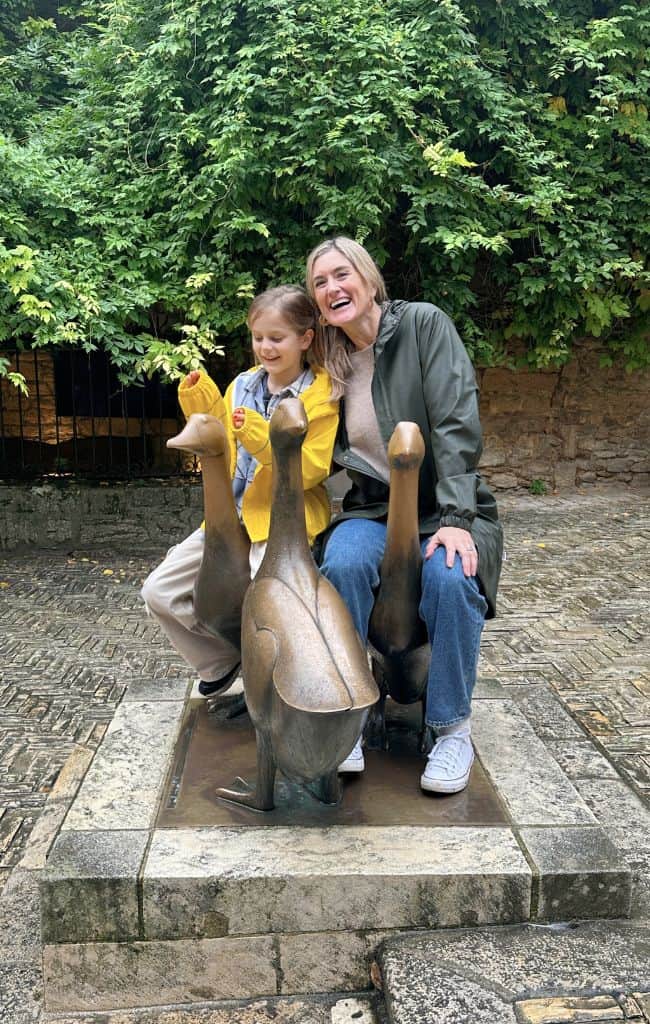
You must also snap a photo with the life-size statue of three bronze geese. Located on Marché aux Oies (Goose Market Square), the popular sculpture is a nod to the town’s past when a goose market was held here. It also celebrates Sarlat’s foodie reputation: the town is well known for its many local delicacies, among them foie gras.
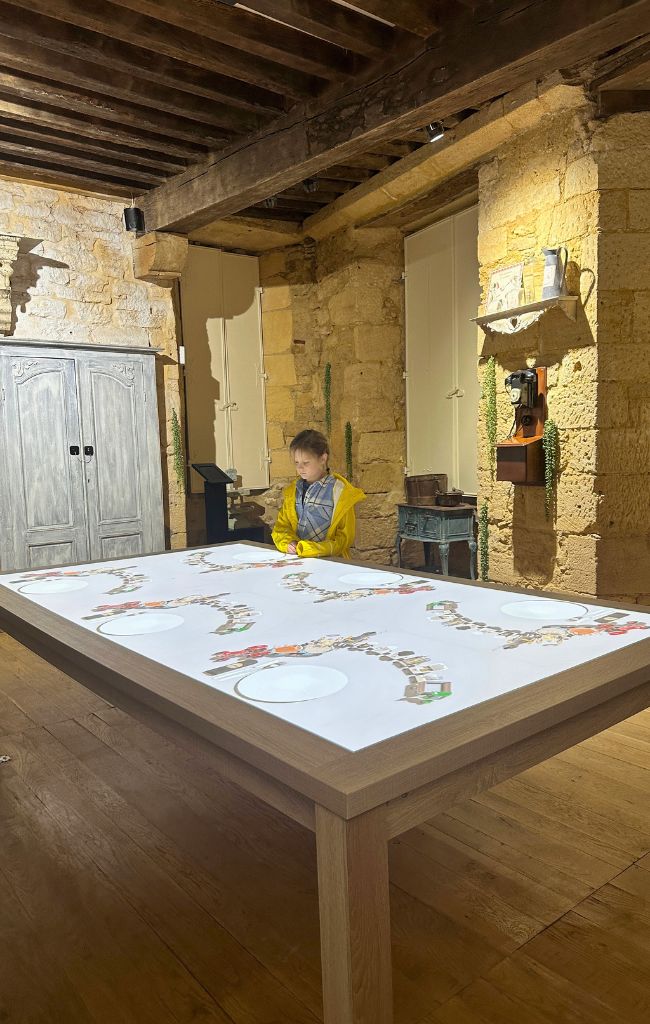
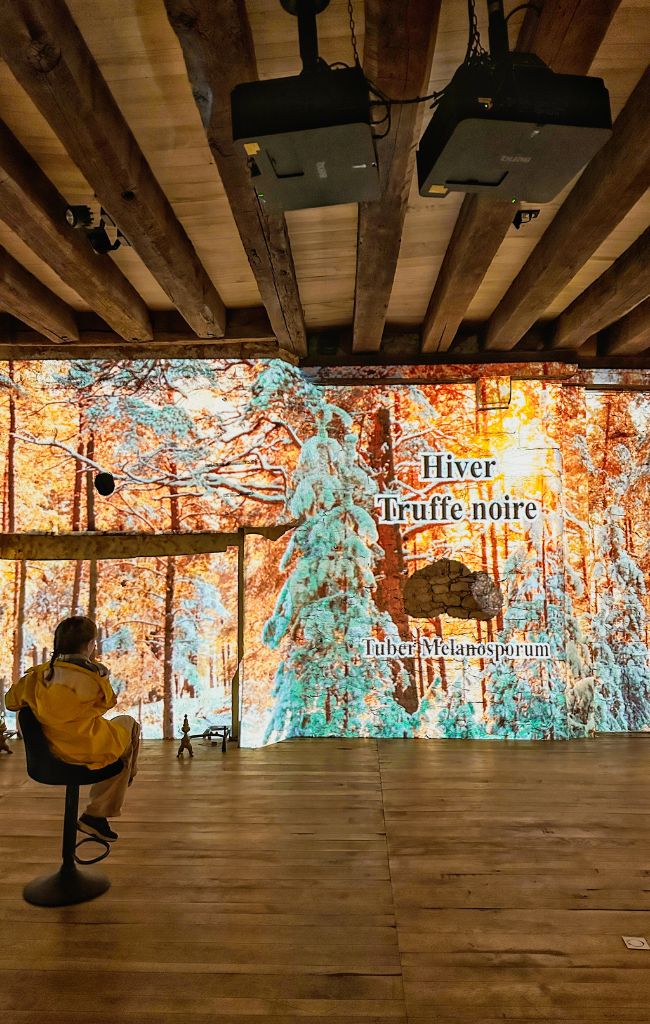
Goose Market Square is also where you will find the Truffle Museum. Newly renovated in 2024, this immersive gallery space – within an 15th century town house – tells the story of truffles through the season. Truffles being another regional speciality. The self-guided visit ends with a tasting.
If you can, time your visit for Wednesday morning or Saturday when the Sarlat market is held with dozens of regional producers selling everything from duck, walnuts, honey and wine as well as foie gras (the region is famous for it!).
From Sarlat, it’s just 20 minutes by car south to the Bastide town of Domme, a storybook medieval enclave that was founded by King Philip III the Bold in 1283.
We stayed at L’Esplanade, a three-star family-run hotel that teeters on the edge of the hilltop overlooking the serene waters of the Dordogne River winding its way along the valley.
Originally a covent school for girls, the building was destroyed during the Second World War and later rebuilt as a hotel. It’s quirky and charmingly old-fashioned with a delightful restaurant and the purveyors of our best breakfast while we were in the Dordogne.
For more ideas on where to stay in Domme, take a look at these options.
Day 5: La Roque-Gageac & Château de Castelnaud
Morning: La Roque-Gageac
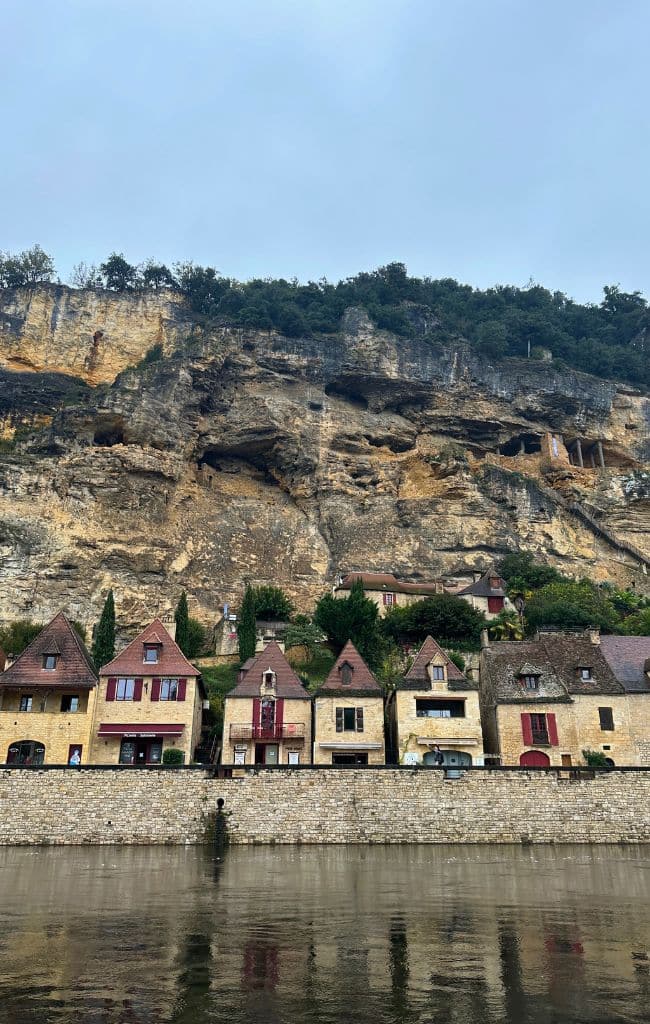
A massive ten of France’s “most beautiful villages” are located in the Dordogne region and La Roque-Gageac is one of them. Sandwiched between the right bank of the Dordogne River and a towering limestone cliff, the town’s honey-coloured houses sit stacked against the cliff face, linked by a series of stairways and walkways.
Towering above them is Le Fort de la Roque Gageac, a medieval fortress that was carved high up into the cliff face – be prepared to tackled the 174 steps to the entrance if you want to visit.
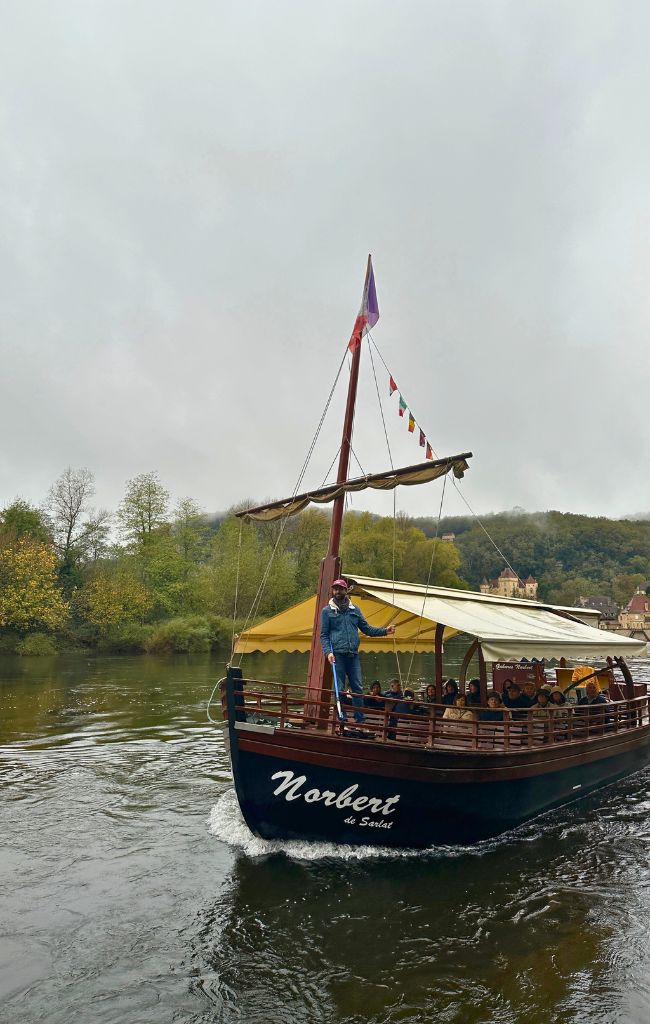
The other main activity here takes place along the water. A couple of companies run trips on board motorised replicas of traditional Périgordin gabarres, flat-bottomed river barges that once transported goods such as wine, salt, fish, chestnuts and truffles along the river.
We sailed with Les Gabares Norbert and the hour-long journey was a great way to see the village’s huddle of old stone houses from the water and learn more about the history of the river.
There are English-audio guides available for non-French speakers. Trips run from early April to the end of October from the pier opposite the village car park (life jackets are provided).
Afternoon: Château de Castelnaud
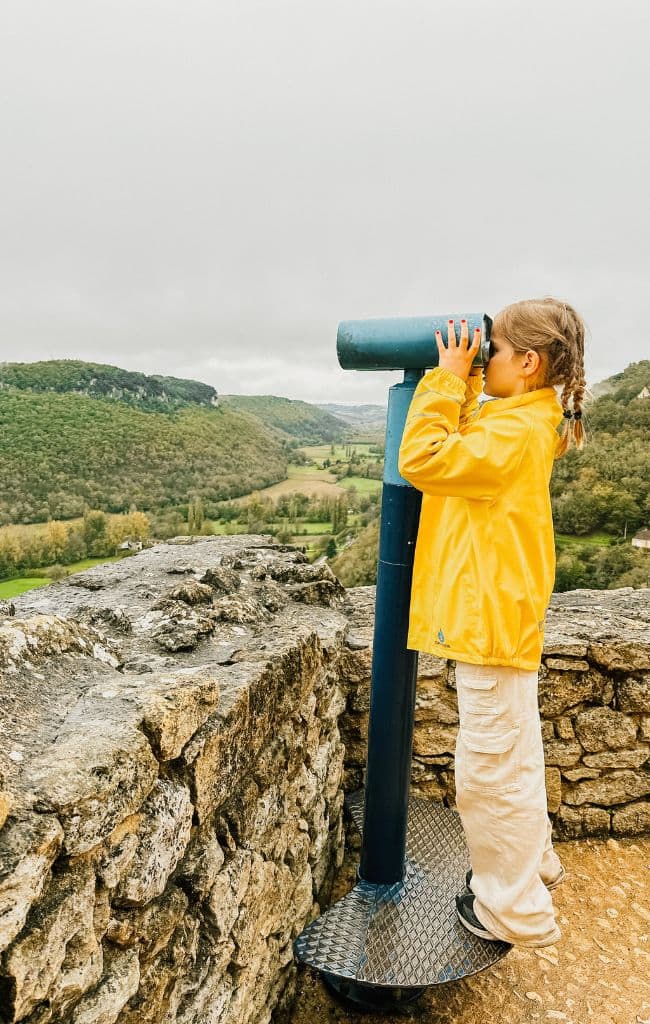
It’s no surprise that one of our favourite chateaux in the Dordogne Valley is also the most visited castle in the southwest of France.
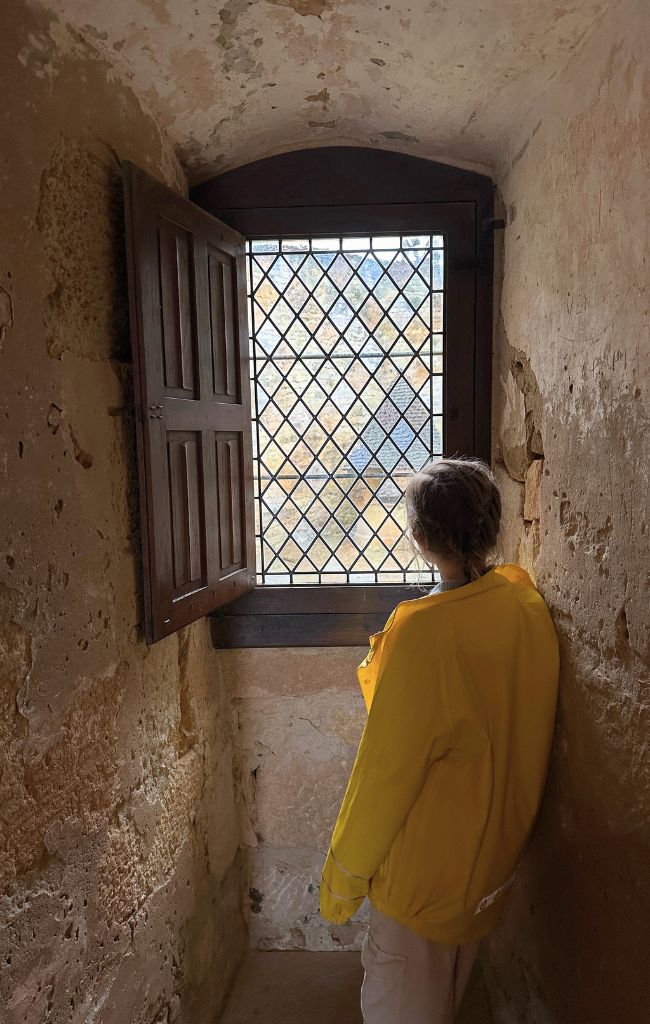
The mighty Château de Castelnaud was built in the 12th century and was once a powerful Périgord stronghold. Today it’s home to the Medieval Warfare Museum and is a grisly insight into how brutal warfare was in the Middle Ages.
Castelnaud Castle is a particularly great place to visit if you are travelling in the Dordogne Valley with kids, especially during school holidays when they host trebuchet demonstrations (a type of 16th century catapult) and other activities where you can stay on a suit of armour or learn to use a sword and shield.
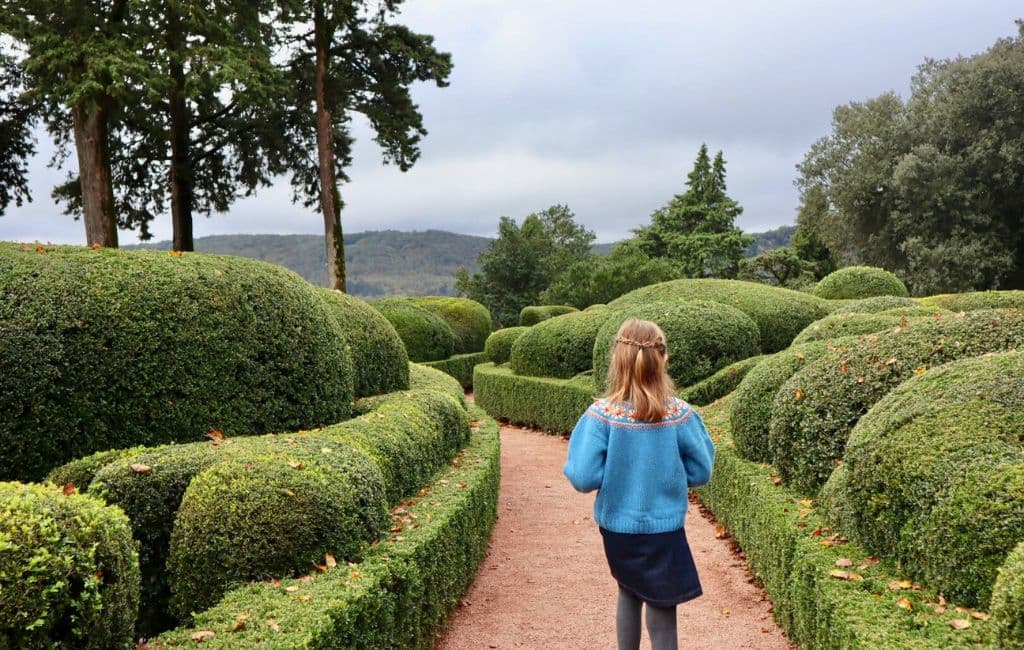
Day 6: Marqueyssac Gardens & Château des Milandes
Morning: Marqueyssac Gardens
It is well worth arriving at the Jardins de Marqueyssac when the gates open; these are the region’s most spectacular gardens and are very popular.
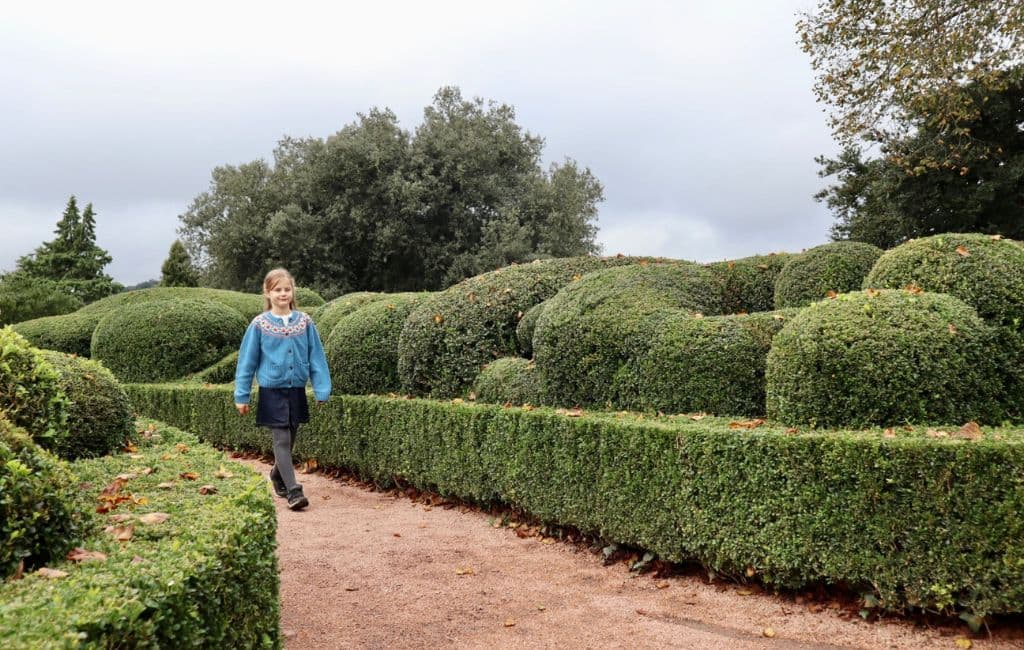
Perched on a rocky outcrop overlooking the Dordogne River, these fantastic gardens are best known for their vintage boxwoods, some 150,000 of them, that have been trimmed and trained by hand into balls and waves to create a hypnotic green maze of patterns.
In addition to the boxwoods, the gardens are home to umbrella pines, maple trees, holm oaks (the tall trees with dark leaves that give the Black Perigord its name) and an assortment of maples through which run a series of pathways that you can wander at will.
We particularly loved exploring the many living tunnels and seemingly secret passageways that lead to all manner of surprises including small treehouses in the woods.
The Belvedere offers the best view over the Dordogne River and La Roque-Gageac beyond.
There’s a cafe here next to the lemon-coloured chateau or you can head to your next stop for lunch, the Château des Milandes.
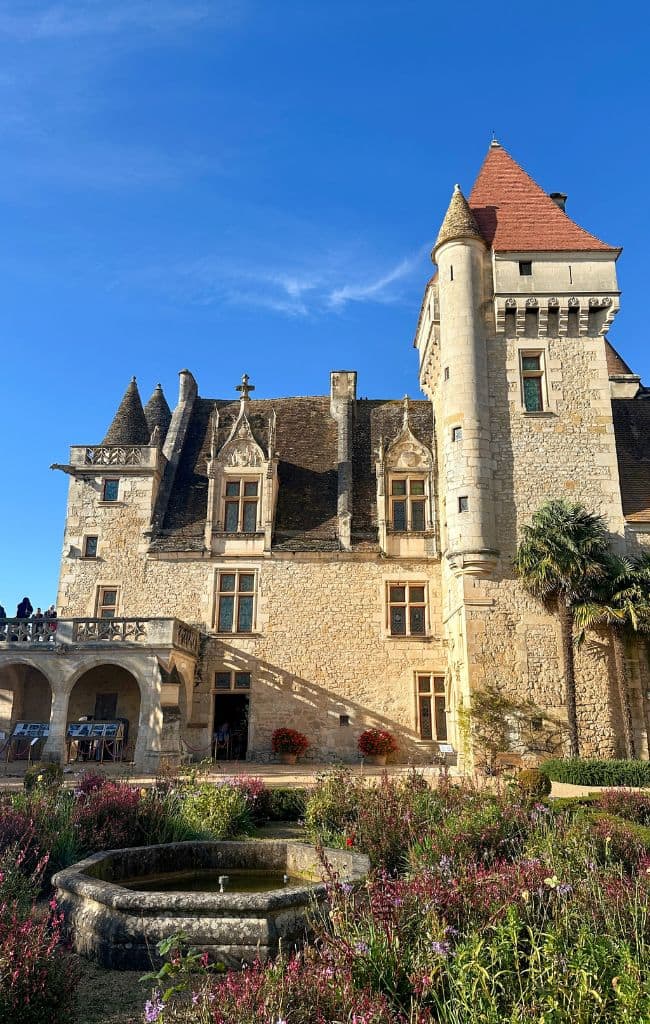
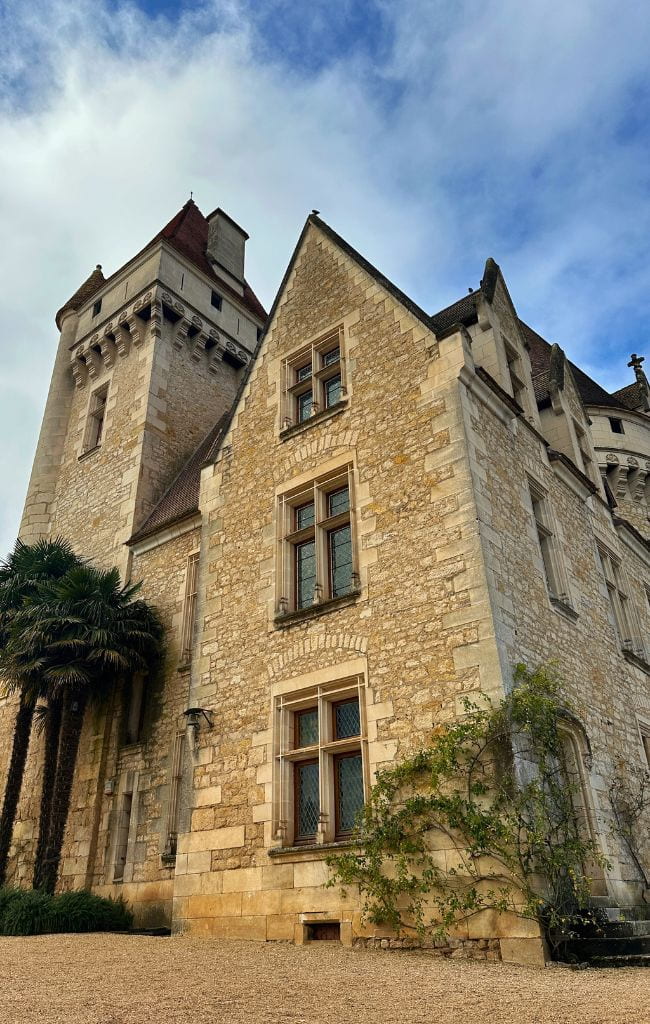
Afternoon: Château des Milandes
It’s just 15 minutes from the gardens at Marqueyssac to Château des Milandes, otherwise known as the Josephine Baker Chateau. If you haven’t had lunch yet then I can highly recommend the on site Brasserie where we enjoyed the most delicious homemade chocolate mousse for dessert.
This was one of our favourite stops on our Dordogne Valley road trip, not simply because it is a beautiful chateau but because it was once home to the celebrated singer, dancer, entertainer, civli rights activist and French resistance fighter, Josephine Baker.
Born into poverty in St. Louis, Missouri, Josephine Baker rose to become one of the most famous performers during France’s roaring twenties. She was the first black woman to star in a major motion picture, caused a storm when she performed at the Folies Bergère, wearing little more than a skirt made from artificial bananas strung together, and became the most celebrated night-club entertainer of her era.
Josephine Baker lives at Château des Milandes for thirty years and today the property does a brilliant job of honouring the life of this incredible woman, showcasing her life and work, including her mission to create a “Global Village” at Milandes while also raising her 12 adopted children.
There are audio guides so you can explore at your own pace. The chateau also host a Bird of Prey display at certain times of day in the gardens.
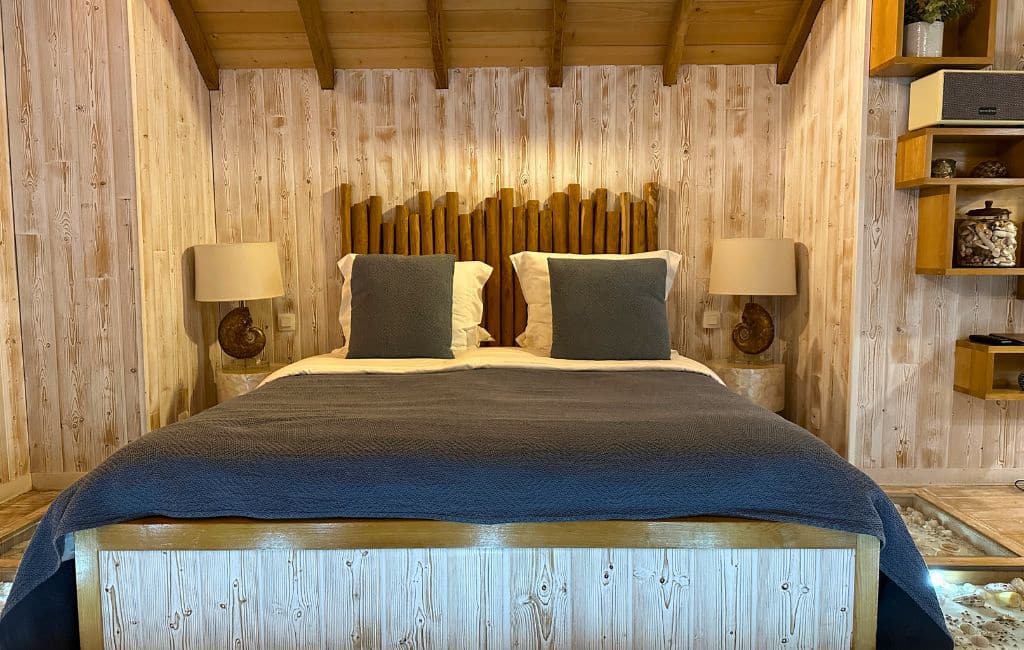
Overnight: Châteaux dans les Arbres
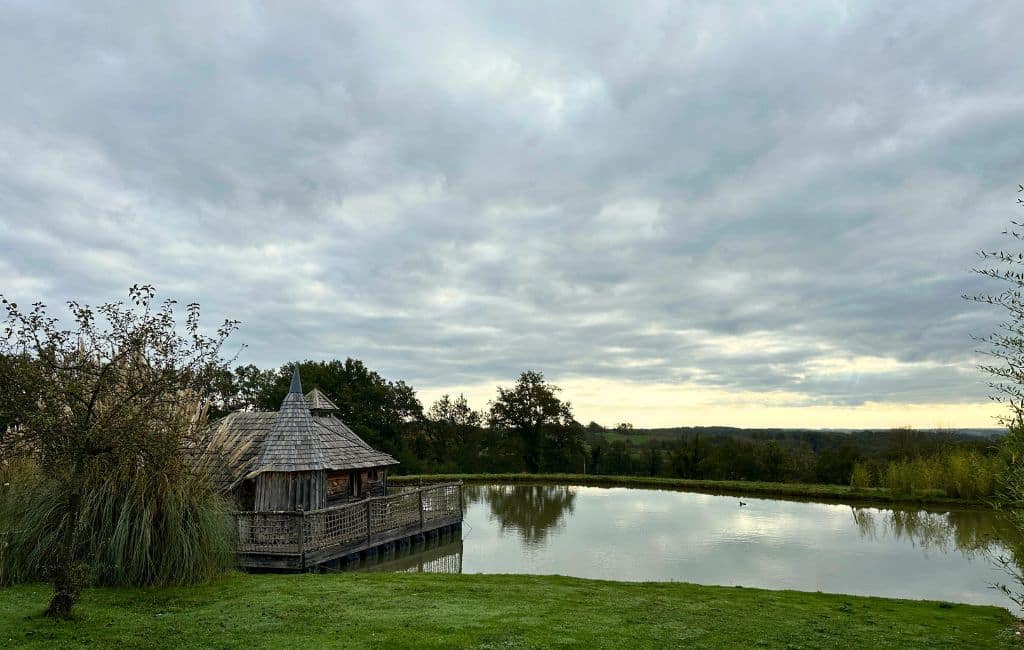
The wonderful Châteaux dans les Arbres is about 45 minutes away, set off a small country lane and tucked away among eleven hectares of woodland and parkland. This is one of the most unique hotels in the Dordogne Valley and was a highlight of our road trip.
This is no regular hotel, rather the property is made up of four delightful treehouses and two whimsical lakeside castles, all modelled on some of the most famous châteaux in the Dordogne.
The property has been open since 2012 and the fairytale châteaux have all been designed and created by owner Rémi Bècherel, each modelled on an actual Perigort castle. Our home for the night was Château Biron, a magnifique castle on the lake with views of the real Château de Biron in the distance.
The Chateaux dans les Arbres is so lovely that you could easily spend a week here but at the every least, I would recommend enjoying two nights.
Day 7: Monpazier & Château de Biron
Morning: Monpazier
Once you manage to drag yourselves away from Château dans les Arbres (did I mention that each castle and treehouse comes with its own private hot tub?!) then I recommend starting your day in the nearby town of Monpazier.
This pocket-size town is a delight, a honey-stone fortified medieval village (Bastide) that was built in 1284 for King Edward I in order to facilitate trade and commerce.
Still today a weekly market takes place in Place de Cornieres, the main central square, under the 800-year-old chestnut-wood roof. So-called because of the “cornieres”, the tall spaces at each corner of the square, these were purpose-built to ensure that knights didn’t need to dismount their horses when arriving in the heart of town.
One upon a time, Monpazier was a walled city, enclosed by ramparts and moats, and reinforced by six towers. Two towers remain today, one at the north and one at the south.
Built on a grid system, the surrounding streets are lined with boutiques, cafes and restaurants, as well as the Church of St. Dominique.
You can take a tour with the Tourist Office or simply explore on your own (it’s impossible to get lost!). The advantage of taking a tour, of course, is that you do get a greater insight into the history of the town.
Our guide pointed out interesting sights such as the oldest building on the square (it’s the mustard-yellow one with a pointed arch) and explained that waste water was the reason why there was a gap between buildings.
One of our favourite locations was the Porte du Paradis, once a secret passageway for peasants to enter the Bastide without having to pay taxes at the main gate. Today, the passage is tall enough to walk through but it once required some commando-type crawling through waste water to reach town.
For a tasty local lunch book a table at Le Croquant before heading to your next stop.
Afternoon: Château de Biron
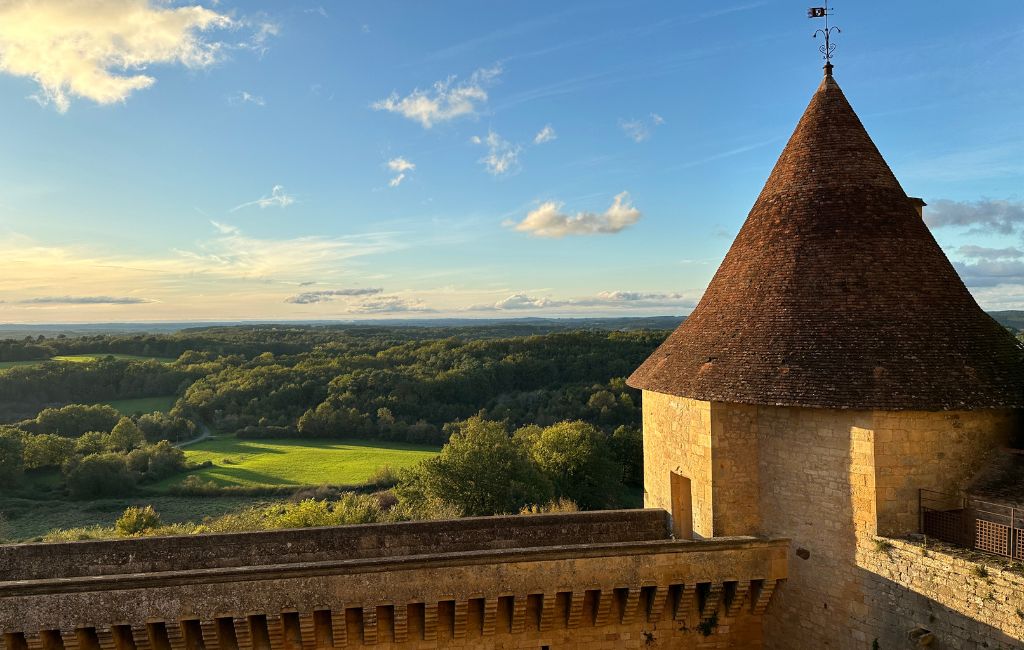
We spent that afternoon at the original Château de Biron a grand 1,000-year-old castle with commanding views over the countryside.
Located in the heart of the Pays des Bastides region, the mighty chateau withstood no less than five sieges and when you visit, it’s easy to understand how. This castle is one of the biggest in the area, an imposing stone structure positioned at the top of a hill.
We visited at the weekend when the celebrations for the inaugural three-day Fête des Bastides et du Vin was taking place – earlier in our trip we had enjoyed dinner at the Grand Banquet in the medieval town of Domme as part of the festival.
The chateau’s internal courtyard had been transformed into a fair from the Middle Ages. Costumed participants were on hand to explain medieval weaponry, showcase how an ancient forge worked and to demonstrate the reach of a catapult.
Even if the festival is not taking place when you visit, you can easily spend several hours exploring the chateau. A mishmash of styles – additions were regularly made across the centuries resulting in a blend of medieval, Renaissance and classical architecture – make this one of the more unusual chateaux in terms of architecture.
It’s also apparently haunted! The French noble and military commander Charles de Gontaut-Biron is said to roam the hallways.
Day 8: Maxange Caves & Château Tiregand
Morning: Grotte de Maxange
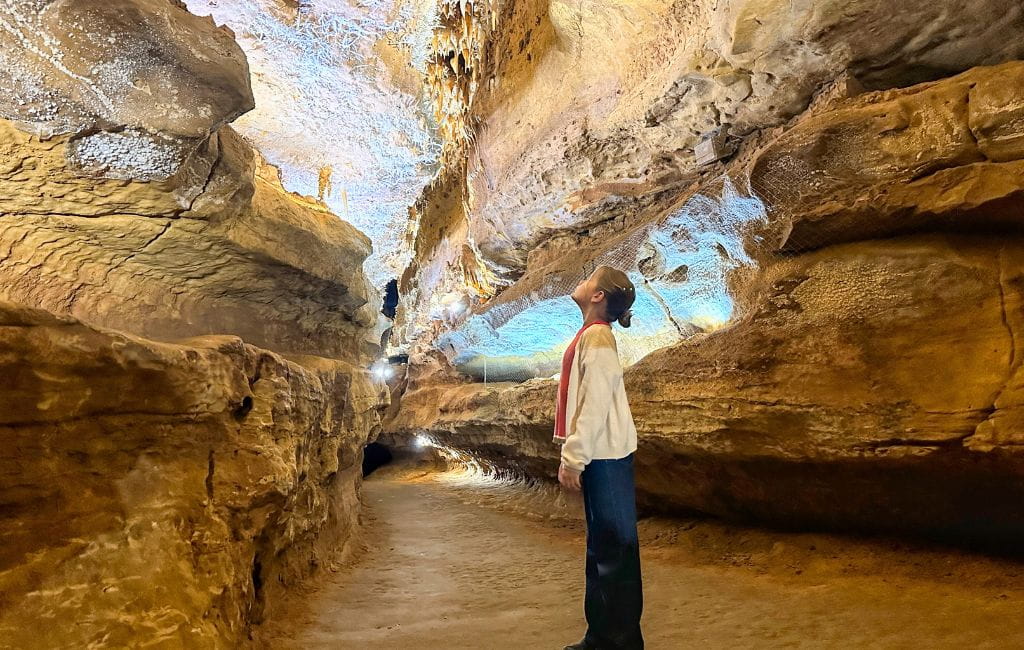
Caves might not be everyone’s cup of tea but even if you prefer to spend your time sightseeing above ground, I highly recommend setting some time aside for the guided tour at the Grotte de Maxange.
Located between the towns of Bergerac and Sarlat – and just 30 minutes from Châteaux dans les Arbres, these caves are home to the incredibly rare helictites. Helictites, in case you didn’t know, are curious limestone formations that grow from caves walls, floors and ceilings at will and are not influenced by gravity.
In contrast to stalactites that form thanks to gravity – rainwater water dripping through limestone ceilings and depositing calcium carbonate (and stalagmites grow up from cave floors thanks to dripping rainwater), helictites grow every which way because the water flow is so weak and so slow that the calcite-laden water droplets are not subject to the force of gravity.
The result is a cave covered in all manner of fanciful and whimsical creations from what look like milky white stars covering one of the cave gallery ceilings, and a small helictite resembling a parrot perched on a branch to sizeable structures in a variety of weird and wonderful shapes.
There are only two caves in the world that have helictites in such large numbers and the cave at Maxange is one of them.
The hour-long visits are by guided tour and although they are conducted in French, our guide also spoke English so answered our questions.

Afternoon: Château Tiregand
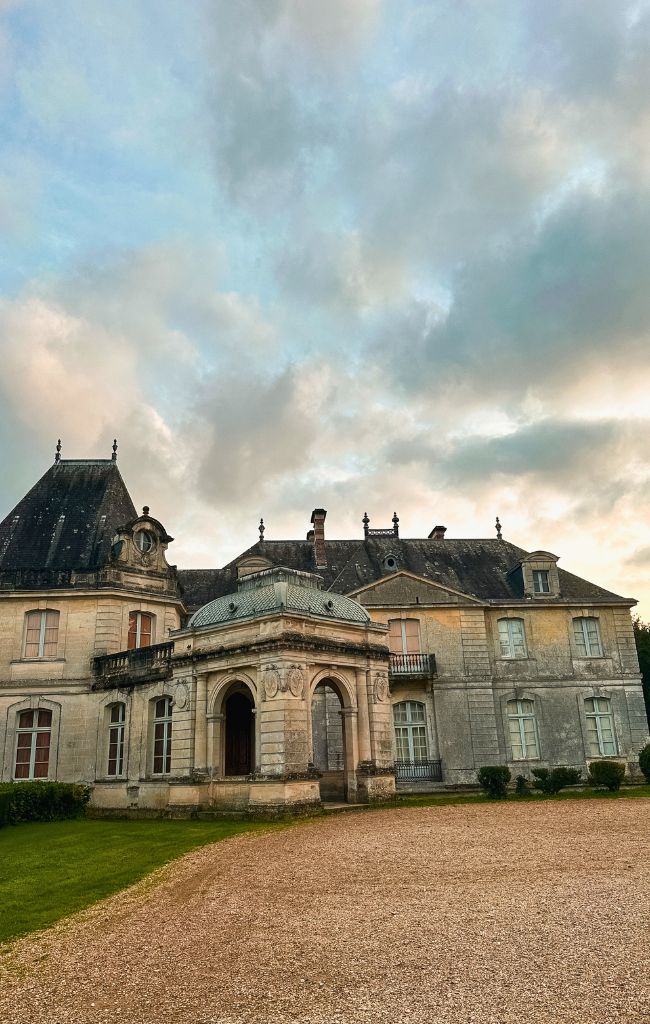
Now, you may well be thinking that you’ve seen enough château on this Dordogne Valley road trip, but Château Tiregand is a little different.
Located on the outskirts of Bergerac, approximately 40 minutes from the Maxange Caves, the 18th-century chateau was part of the Saint-Exupery family for some 200 years before being purchased by a then 25-year-old Louis Guyot in March 2022.
Since becoming the new owner, Guyot has transformed the chateau into the most original, innovative and immersive experience.
Based on the adventures of the gentlemen thief, Arsene Lupin, this is an immersive quest that takes visitors through the chateau as you answer questions and try to solve clues. The experience takes you through almost the entirety of the chateau, through the drawing and dining room, into the billiard room and music room before going upstairs into the bedrooms and then outside through the Orangery and into the gardens.
They also run seasonal events with visits from Pere Noel at Christmas and plenty of spooky characters at Halloween. It was definitely spooky when we visited at the end of October (a little too spooky for my nine-year-old) but it was brilliant fun and a must do if you are visiting the Dordogne Valley with kids – or without!
The immersive experience takes between 90 minutes and two hours.
Overnight: Bergerac
We stayed in the Hôtel de Bordeaux in the city center. For more hotel recommendations take a look at these options.

Day 9: Bergerac
Bergerac was our final stop on our Dordogne Valley road trip and we spent a morning exploring, flying back to the UK in the afternoon from Bergerac Dordogne Périgord Airport. There’s more than enough to see in Bergerac however, if you want to spend a full day here.
One of the must-do activities is the recently opened Cyrano Experience at Quai Cyrano. This immersive experience takes you backstage at a theatre where they are preparing to put on a play of Cyrano de Bergerac. It’s a fun look at the myth and legend that is Cyrano and just as good for kids as it is adults.
Quai Cyrano sits on the banks of the Dordogne River and is also home to the tourist office and Les Maisons des Vins, a wine house and bar that showcases some of the many wines from the region.
If you are on a family trip then another fun thing to do in Bergerac is a TerraAventura treasure hunt.
We previously enjoyed one of these adventures when we were in the Bordeaux area and it’s a fun way to explore a new destination with kids. Simply download the app, choose your quest (we chose Bergerac: “Tis a rock!..a peak!..a cape!”) and head off around town, searching for clues and answering questions.
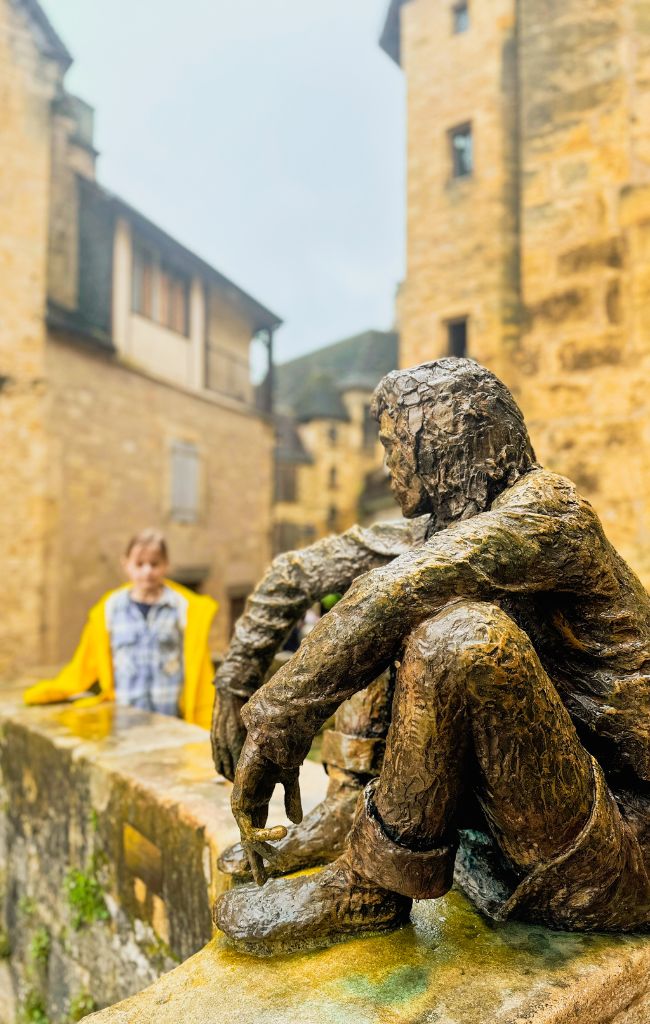
The quest takes you through the historic heart of Bergerac, past crooked half-timbered houses, two statues of the lovelorn Cyrano and to the river.
Day 10: Return home
It’s a short drive from the centre of Bergerac to the airport, which is possibly one of the smallest airports in France that I have ever seen. If you’re hoping to take any local produce home with you for gifts – or yourself! – then make sure you buy them before you fly.
I hope that you find this itinerary useful. The Dordogne Valley really is a magical place and you can’t fail to enjoy it, however you choose to organise your time. Happy travels!

