
I’ve lost count of the number of times that I have driven past the city of Troyes in the Grand Est region of France.
Located southeast of Paris, and directly south of the Champagne capital of Reims, it’s on the route between Calais and the Alps (specifically Morzine for us) and yet, until recently, I had never stopped. Now, having finally visited the city, I only wish we had discovered Troyes sooner.
This beautiful city is known for its delightful old town, its colourful and rich history, and its many (many!) excellent restaurants.
If you are looking for a place to stop on your journey towards southern France or the Alps, or are planning a longer stay, then here’s everything you need to know including the best things to do in Troyes, where to stay, my recommended restaurants and a suggested itinerary for how to plan your time.
Disclosure: This post may contain affiliate links. I have been or could be if you click on a link in this post compensated via a cash payment, gift or something else of value for writing this post. See our full disclosure policy for more details.

A weekend guide: things to do in Troyes, France
Table of Contents
Troyes is very much a city for wandering and the historic centre is where you will inevitably spend most of your time. Locals love to tell visitors that the old town is shaped like a Champagne cork, despite dating from the Middle Ages, long before the first “Bouchon” was invented in 1662. Regardless, it’s remarkably fitting given that Troyes is the historic seat of the Counts of Champagne.
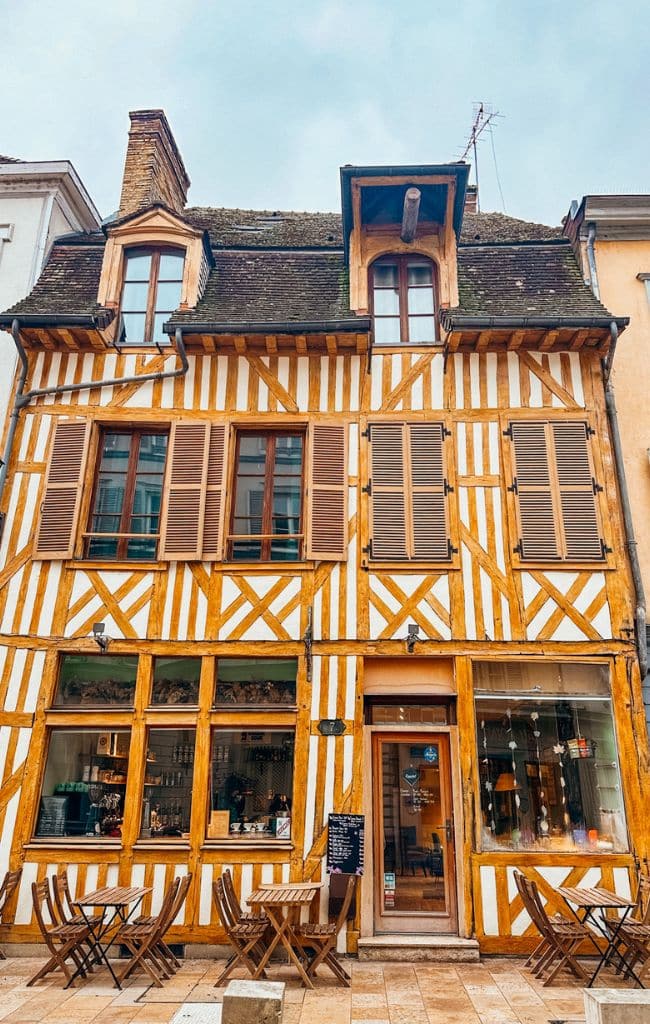
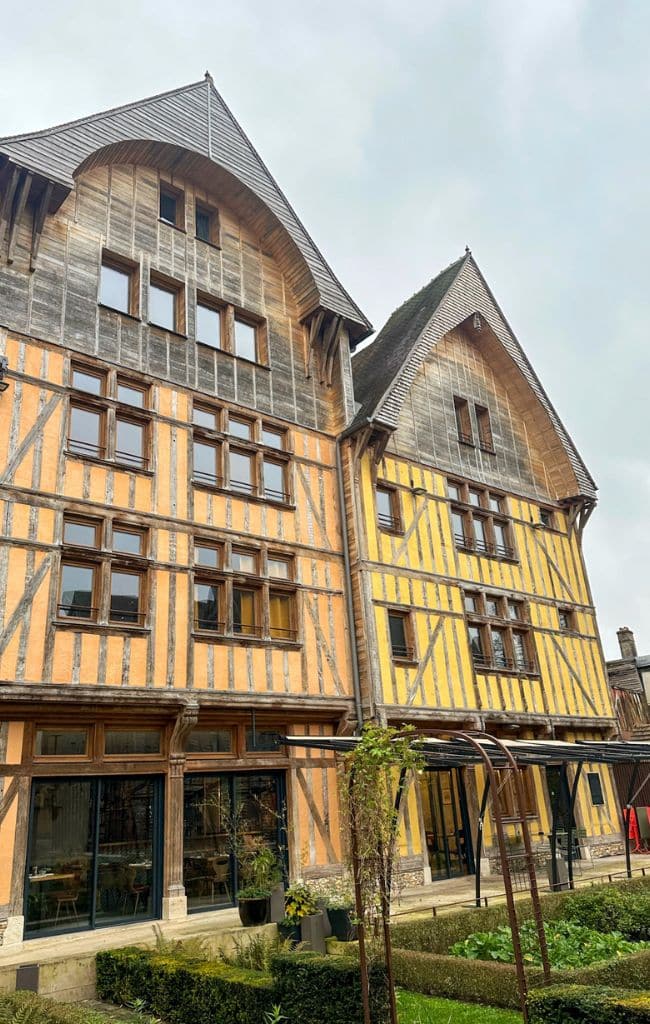
The towns is not dissimilar in feel to places such as Sarlat or Monpazier in the Dordogne Valley or Rouen, in Northern France, with a historic centre lined with charming half-timbered houses leaning against one another for support.
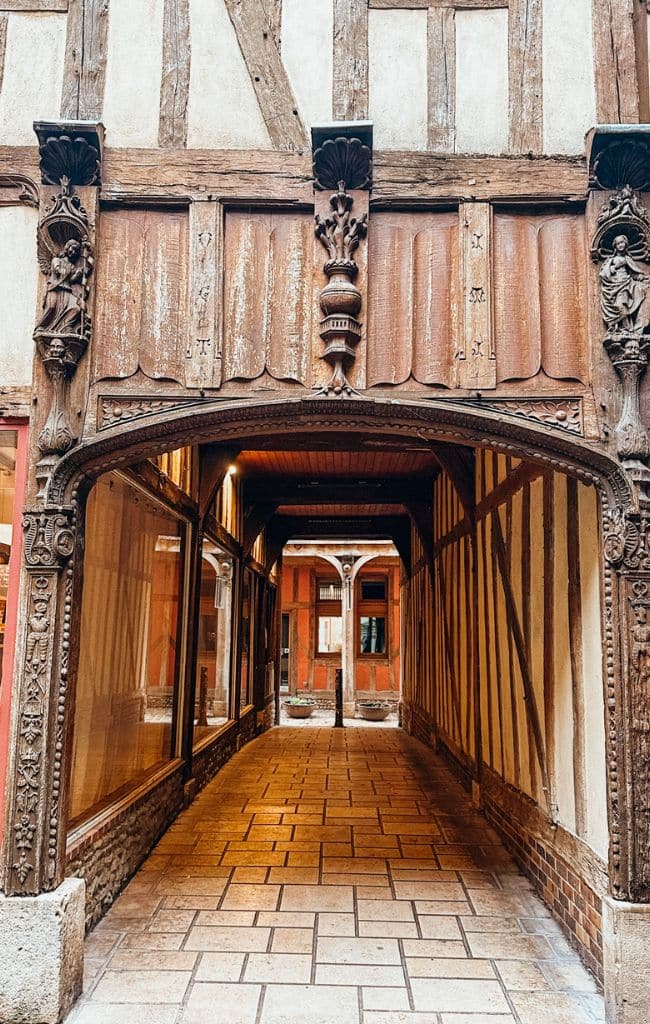
Narrow streets and hidden courtyards reveal family-run cafes and restaurants, churches (there are many!) hide extraordinary stained glass windows hundreds of years old, and characterful shops welcome visitors with the promise of chocolates, Chaource cheese or tastings of the local sloe-based liqueur, Prunelle de Troyes.
It’s very easy to explore Troyes on foot and you can simply stroll at will or join a guided tour. I do recommend joining a tour if possible, simply because this small city has such a long and colourful history.
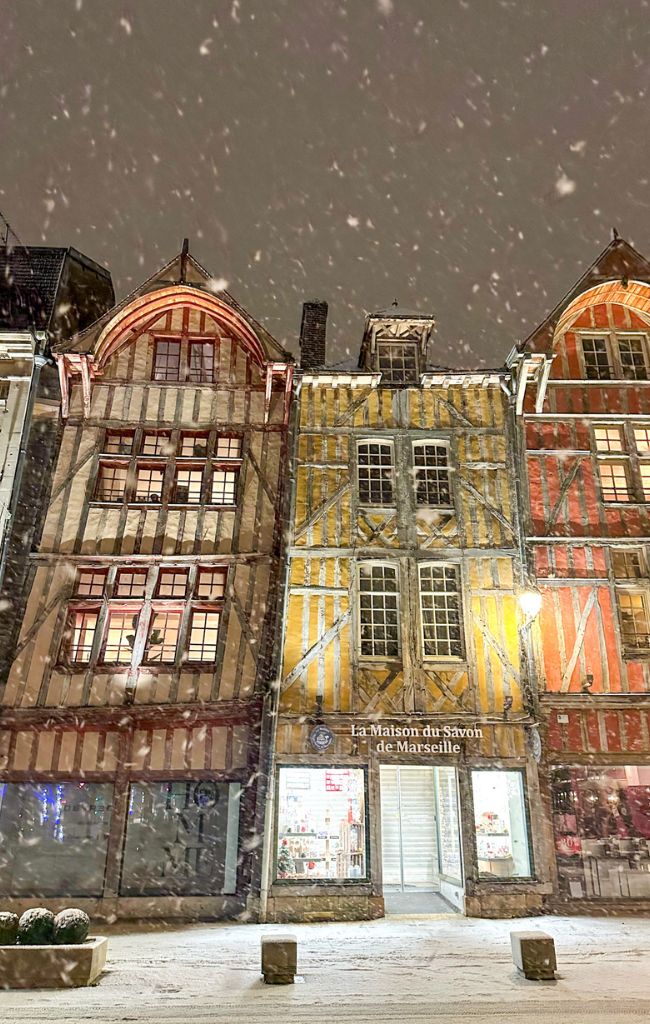

Between the 12th and 15th centuries Troyes was a major centre for trade, particularly around textiles with large medieval fairs taking place twice a year. Merchants from Flanders, Germany, Italy and Spain brought wool, furs, silk and spices, many of them renting houses for long periods and some event settling permanently.
Local traders were equally industrious and, from the 12th century onwards, worked predominantly as weavers, drapers and dyers. In the 16th century they began to knit and the first looms were introduced in the city during the 18th century. Later, big textile firms such as Petit Bateau and Lacoste established themselves and remain here today.
What this all means is that not only does Troyes have a rich and very cosmopolitan history but that it was also very wealthy.
Eager to display their success, merchants constructed grand houses, commissioned ornate stained-glass windows in the city’s many churches and ordered statues of saints to be carved on their behalf, to protect them and their businesses. Many of these displays of wealth remain and a guide can point out details that you might miss if exploring on your own.
Tours can be booked at the Tourist Office, which sits in the centre of town on Place Alexandre Israël. Tour or not, stop by the Tourist Office where you can pick up a map of the town; the bottom half of the ‘cork’ is the medieval old town and the upper part is where the spiritual and political centre was (and is where you will find Troyes Cathedral today).
Day 1 in Troyes
How you organise your first day in Troyes depends on when you arrive. My trip to Troyes took place in November so by the time I had arrived in late afternoon it was dark, which made sightseeing a little more challenging, not to mention chilly. This guide assumes you have two full days to enjoy Troyes: sights and activities can be changed according to your time available and interests.
Morning
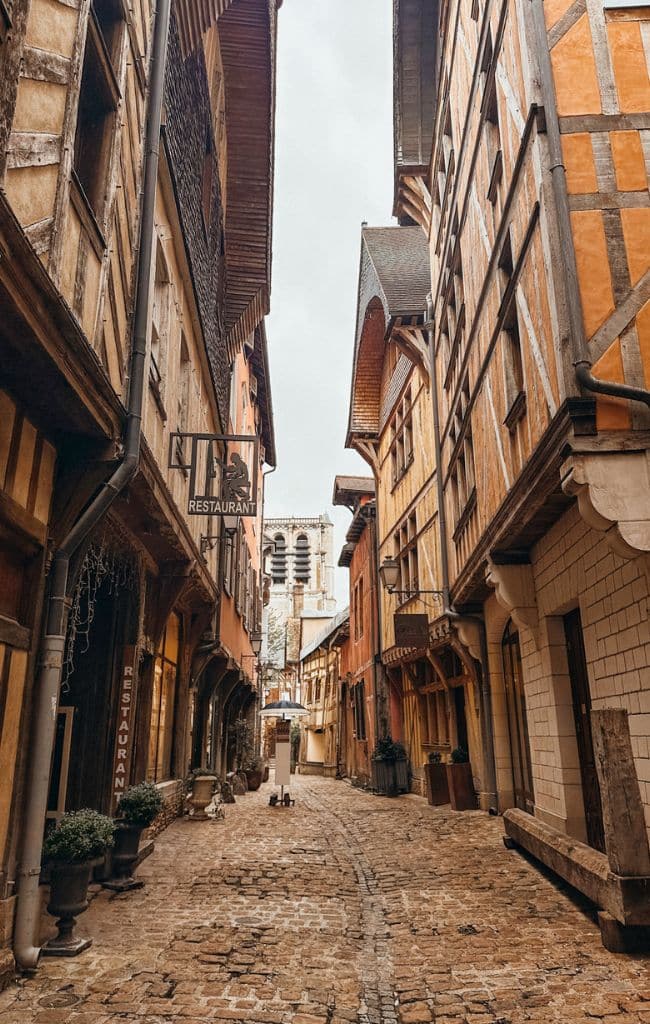
Your first port of call should be the Tourist Office, always a good source of information and staff can advise you on the best places to visit. They also have very good maps of the city with a marked walking route that includes the main highlights.
Restorations of the old town began in the early 1960s and the first two houses to be renovated in the old town were the Baker’s House, so-called because for centuries it belonged to families of bakers and the Goldsmith’s House.
The two houses stand opposite one another and, if you look up at the Baker’s House, you will see that the pulley once used by bakers to haul their flour sacks up to the attic can still be seen on the dormer window.
The exterior staircase of the Goldsmith’s House, corrbelled into a turret, indicates how wealthy the merchant once was – the higher the tower, the wealthier the home owner. Both buildings can be found on the corner of Rue Champeaux and Rue Paillot de Montabert, not far from the Tourist Office.
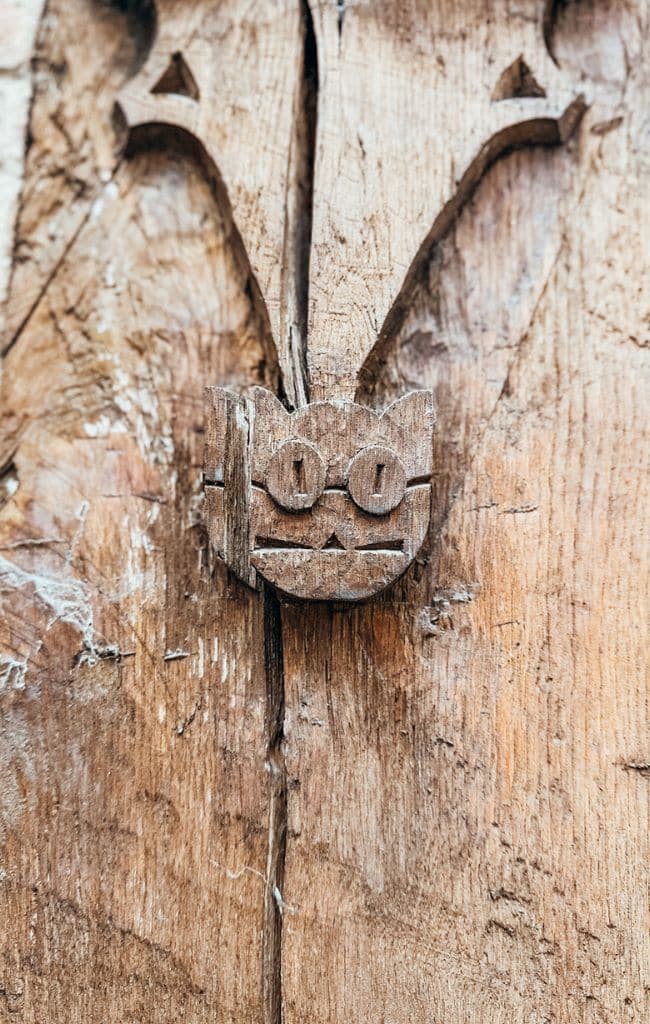
Nearby is the Ruelle des Chats (Cats’ Alley), the narrowest street in Troyes and the reason the city has a cat for its mascot. It’s said that the rooftops along this lane are so close together that cats can jump easily between the rooftops. Keep an eye out for cats’ faces carved into wooden beams.
Duck into Jardin Juvenal-des-Ursins while you’re here, this Renaissance-style garden is beautiful and also where you will find the restaurant, Végétal (see my restaurant recommendations below).
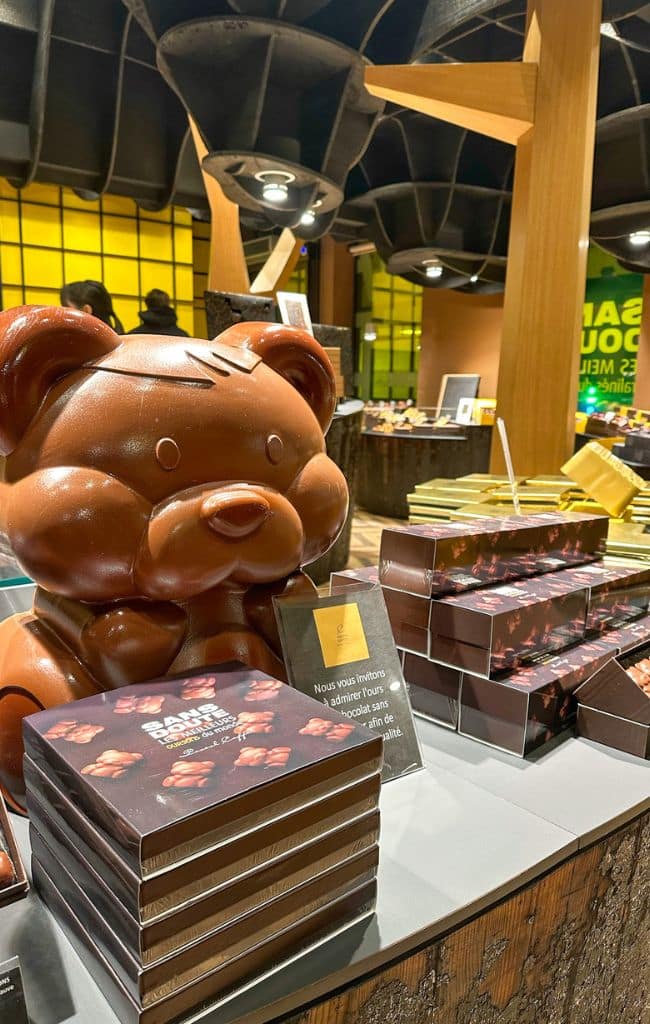
Nearby is the Eglise Saint-Jean-au-Marché (the church of Saint John the Evangelist) where King Henry V of England married Catherine of France in June 1420. A short walk away is the Maison Caffet, a gourmet Chocolatier and Pâtissier that really does make exquisite chocolate (they are not cheap but they are delicious!).
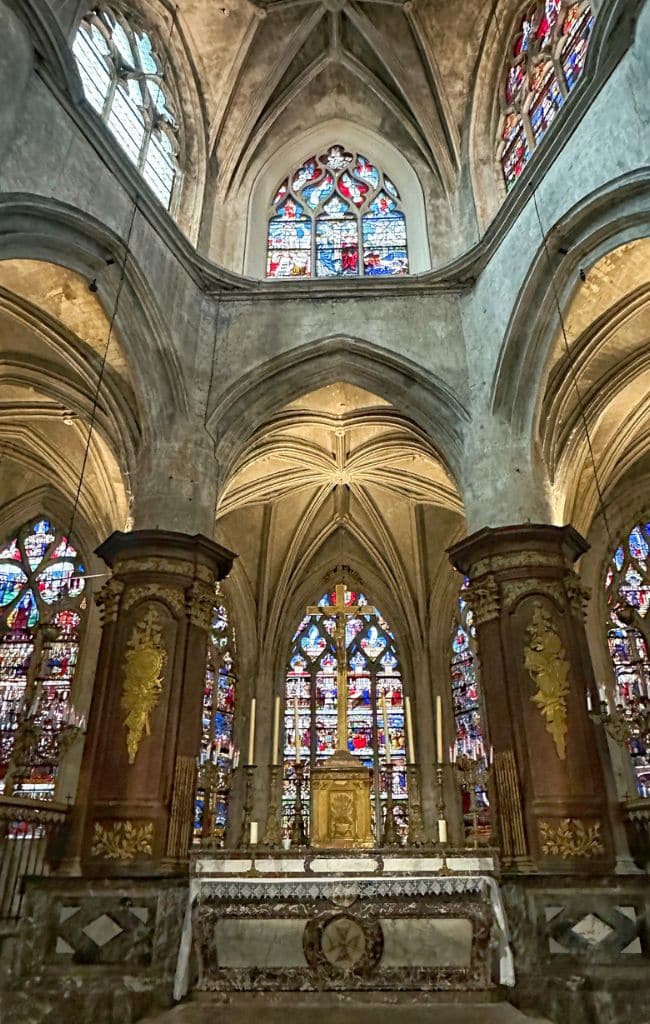
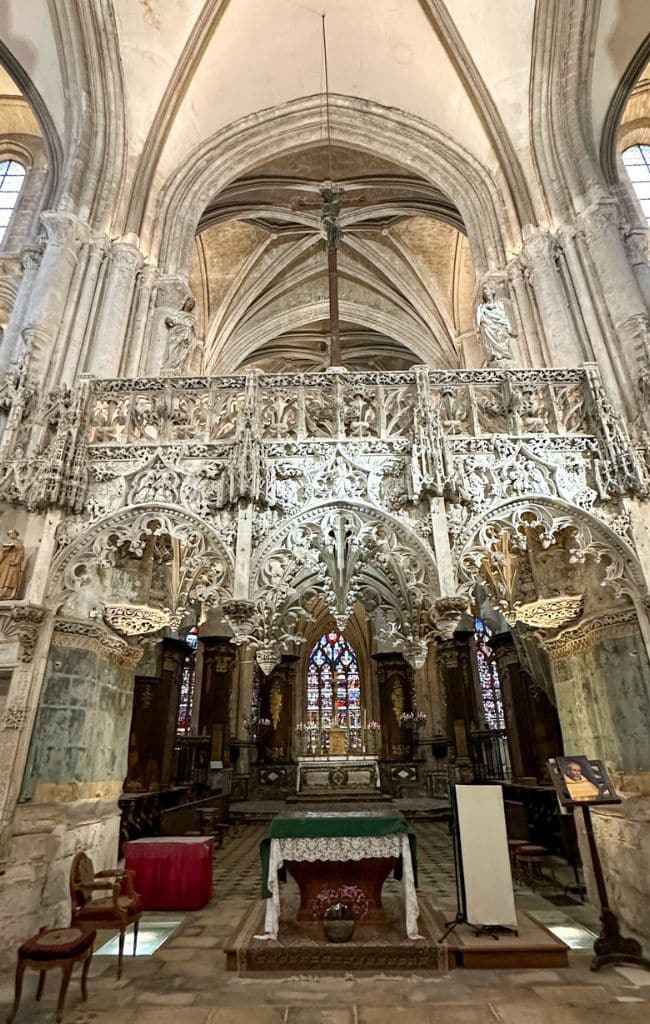
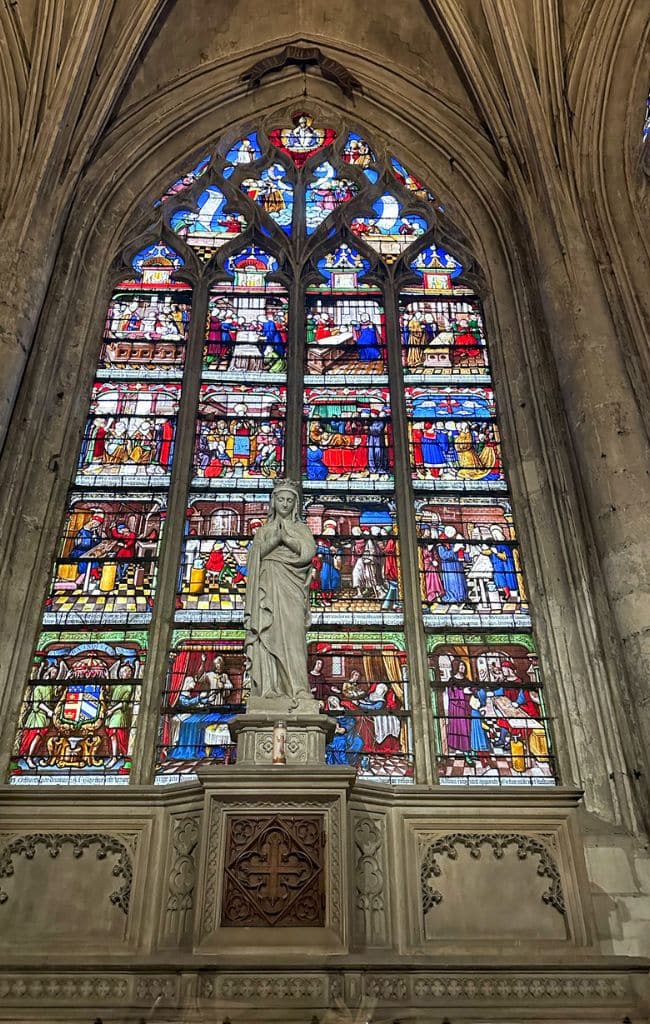
There are 10 churches in the city centre but the oldest is the Eglise Sainte-Madeleine (Saint Madeleine’s Church), which dates back to 1120. Even if churches are not your thing, it’s well worth visiting this one. Home to one of only 10 rood screens in France (the decorative partition that separates the chancel and the nave), the 16th-century elaborately carved stone partition is extraordinary.
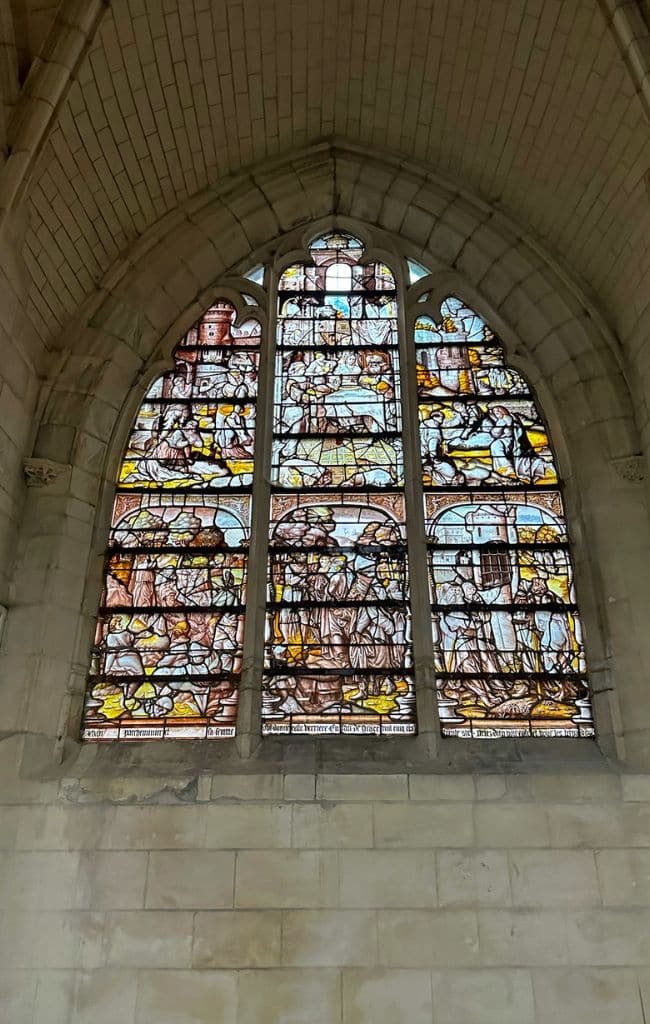
The church is also famous for its stained glass windows with stories of the Bible laid out almost like comic strips to educate the illiterate worshippers. They are extremely well preserved and offer a fascinating insight into life in Troyes in the Middle Ages when wealthy merchants could pay to have their images represented: one window features a local man named Nicolaus along with his coat of arms, his wife and their daughters. Another features the Goldsmith of Troyes.
The other reason why this is the most visited church in Troyes after the Cathedral is its many carved statues, including the detailed stone sculpture of Saint Martha said to have been the work of a master sculptor.

Lunch
There are lots of very good restaurants in Troyes and you are somewhat spoiled for choice when it comes to deciding where to eat.
The local speciality is Andouillette de Troyes, made from pork intestines and stomachs, seasoned with onions, salt and pepper, and served in its own skin. I have had Andouillette before when I was in Arras (and my visit coincided with the Fête de l’Andouillette, the festival of Andouillette) do didn’t feel the need to try it again.
However, locals have subsequently told me that their andouillette is the best in France so maybe I will order a dish next time. If you’re keen to try the local food then I suggest you do!
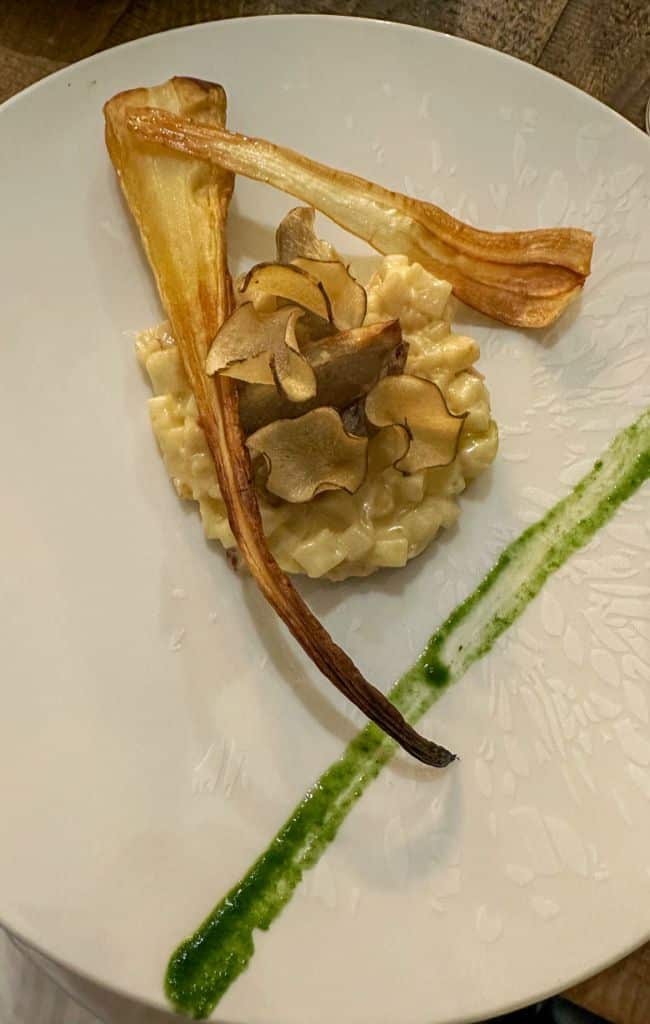
Instead, I had lunch at Végétal, a cosy restaurant where vegetables dominate the menu. It’s not a fully vegetarian menu (meat and fish dishes are available) but I had the set lunch menu which was entirely vegetable-based. My favourite of the five dishes was the risotto made from Jerusalem artichokes.

Afternoon
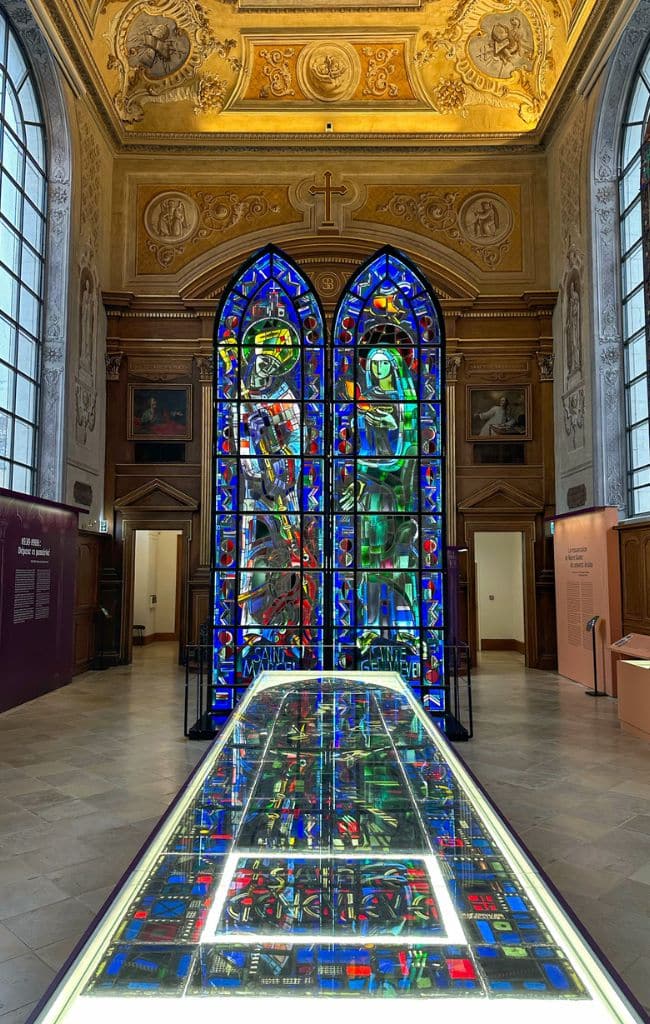
You have various options for the afternoon but one place you really must visit is the stained glass museum. This museum opened its doors to the public in mid-December 2022 and is the first centre dedicated to the art of stained glass in France.
Cité du Vitrail (City of Glass)
Some forty percent of all stained-glass windows in the world can be found in Troyes and the surrounding Aube department so it makes sense that there is a museum dedicated to the art.
Located near the Cathedral, the City of Glass is housed within the 18th-Century Hôtel-Dieu-le-Comte and covers both the history of stained glass windows and the art form today. The exhibits – presented at eye level – are rotated regularly and feature both antique windows and modern ones.
Cathedral of Saint-Pierre-et-Saint-Paul in Troyes
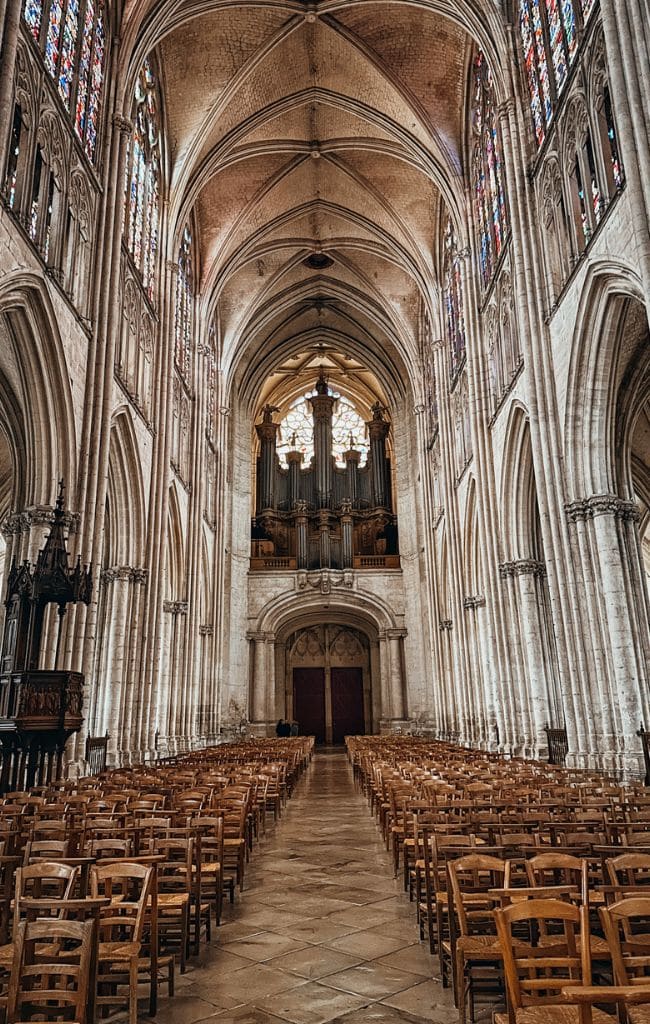
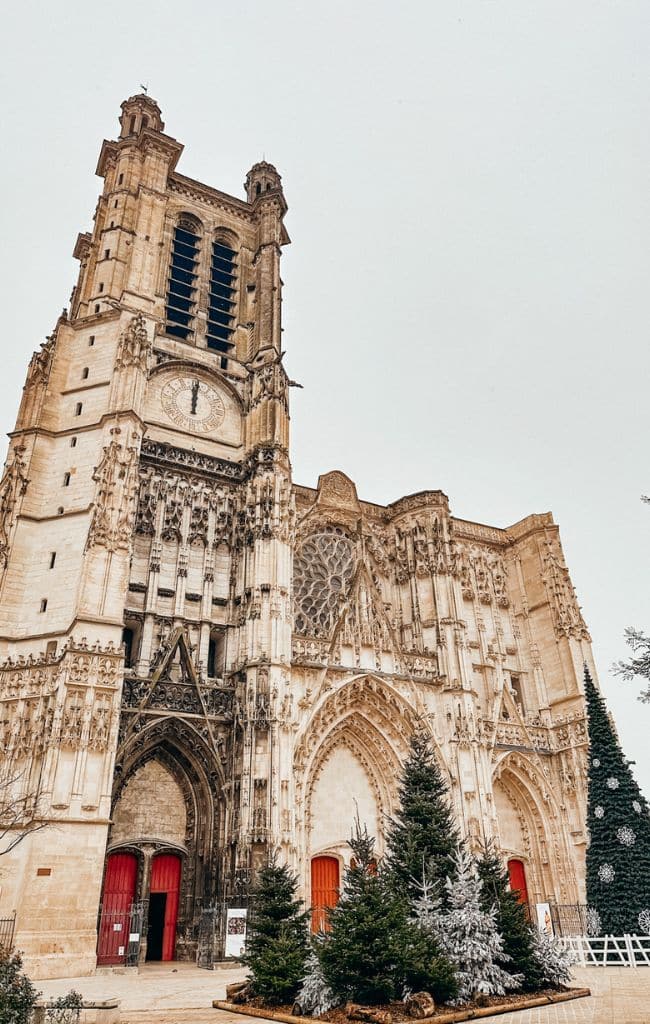
From the City of Glass, it’s a short walk to the Troyes Cathedral, a magnificent gothic building constructed over five centuries. Despite the long timeframe, the Cathedral was in fact never finished – look closely and you’ll see that it’s missing a tower. St Peter’s tower in the north stands tall but St. Pauls’ tower, which was due to built to the south, was never constructed as the Church eventually ran out of money.
As well as being home to some impressive and enormous stained glass windows, the Cathedral has a unique collection of relics. Among them is the skull of Bernard of Clairvaux, a prominent figure of the Church during the Middle Ages.
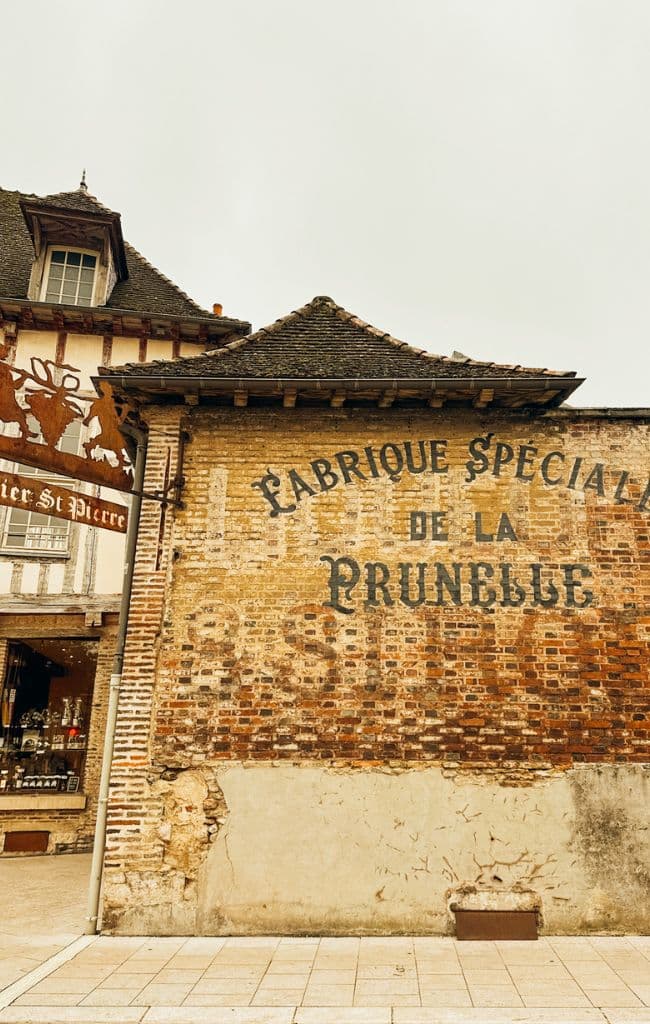
Opposite the Cathedral is Cellier St Pierre, a 12th century building once belonging to the church (a tunnel used to run from the cellars to the Cathedral). Today, the shop sells a variety of wine and liqueurs including the local speciality, Prunelle de Troyes, sloe-based liqueur only available in the city of Troyes. Their is gold-medal winning so stop by for a taster.
Musée d’art moderne de Troyes (Museum of Modern Art)
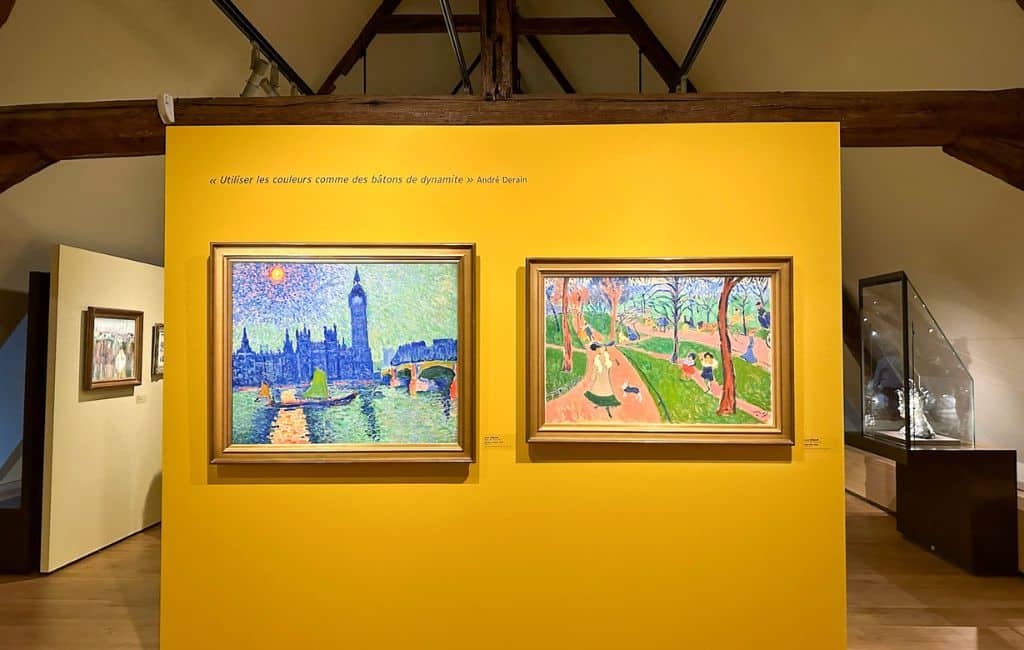
Almost next door to the Cathedral is the Musée d’Art Moderne, which reopened in 2022 after a four-year renovation. If art is your thing then it’s worth setting aside a couple of hours to explore the collections. I arrived not long before closing so had to rush through the top floor (which is arguably where the best of the collection is displayed) but if you have time then it’s worth spending a bit longer.
The museum was originally founded in 1982 to house the impressive collection belonging to Pierre and Denise Lévy, who made their fortune in the textile industry. Among their vast collection are works by Millet, Rodin, Degas, Gaugin, and Matisse.

Dinner
I had two very good dinners when I was in Troyes and I recommend them both highly.
The first was at Le Jardin, a charming bistro-style restaurant with an eclectic decor. I enjoyed their set Menu d’automne (Autumn Menu) with a choice of three starters, mains and deserts.
Although andouillette was on the menu I opted for the garden salad with mackerel followed by a roast chicken served with a mushroom sauce. I was torn between the creme brûlée and the chocolate fondant for dessert but in the end opted for the later and was not disappointed.
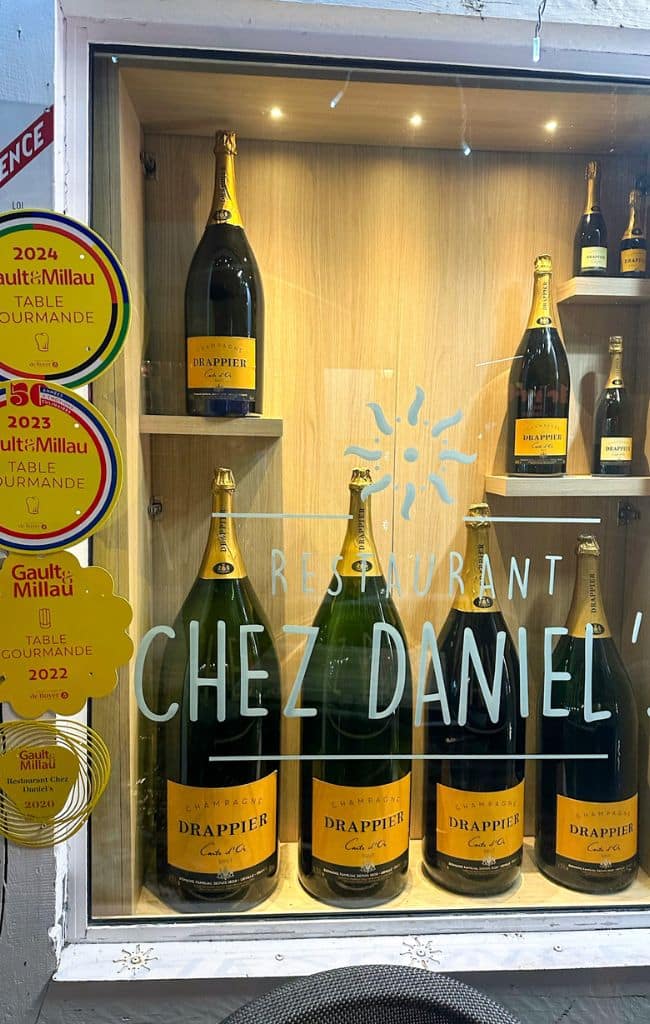
My second dinner was at Chez Daniels, an excellent white-tablecloth restaurant in the heart of the historic centre. Run by Chef Daniel and his wife for the last six years, this was an outstanding meal. With an emphasis on truly local products (the egg in my lentils and poached egg dish had been collected that morning from a local farmer), the seasonal menu is small but excellent.
I enjoyed a white fish with a champagne sauce for my main course (the name of the fish escapes me but it was delicious) and a unique apple tiramisu to finish. The service is excellent and Chef Daniel is a delight.
Day 2 in Troyes
There are various ways that you can organise your second day in Troyes. You may well still have things you want to tick off from day one or you may want to find a cosy cafe and eat croissants. Regardless, here are some suggestions on things to do in Troyes on day two.
Morning
This museum is a little quirky but well worth a visit. The Maison de l’Outil et de la Pensée Ouvrière (the Tools and Trades museum), known as simply MOPO, sits in one of the prettiest buildings in Troyes.
The Hôtel Mauroy was once a hospital and college for orphans founded by local tax collector, Jean Mauroy in 1570. Orphans were taught a range of skills while living here, in particularly spinning and hand knitting.
Today, the Renaissance-style building is home to more than 12,000 handmade tools from the 17th, 18th and 19th centuries, organised by theme. It was founded by the French Guild of Travelling Craftsmen in 1974 and is unique in France.
The explanatory panels are in French but there is an English version of the audio guide.
Afternoon – Shopping
Textiles made Troyes rich and still today some of France’s best-loved brands are based here. It’s not surprising, then, that this is where the first factory outlets in France opened. Today, Troyes is a great place to pick up a bargain and the decidedly un-French sounding McArthurGlen Designer Outlet Troyes is packed full of stores selling goods at a discount. Stores include local brand Lacoste, the high-end French clothing brand for kids, Jacardi, Naf Naf and more.
The outlet centre can be reached by bus number 1 or 12 from Les Halles in Troyes.
Because textiles made Troyes’ fortune before Champagne was a thing (you’ll notice quite a few old factory brick chimneys), this is the city where the first factory outlets opened. Today, there is a vast shopping centre of factory outlets, McArthurGlen Troyes Designer Outlet, which you can reach by taking bus 1 from Troyes train station or bus 12 from the city centre, or by driving – the complex is 8km (5 miles) north-west of the Le Cube parking.
Afternoon – Champagne
One of the best vineyards to visit near Troyes is the Montgueux vineyard, a 215-hectare vineyard just 10 kilometres from Troyes. Not only does the vineyard offer blockbuster views of Troyes and beyond but it produces a huge range of wine and champagne.
Forty winegrowers cultivate the vines and 24 sell their own champagne on their properties. Ask at the Tourist Office for recommendations.

The best time to visit Troyes
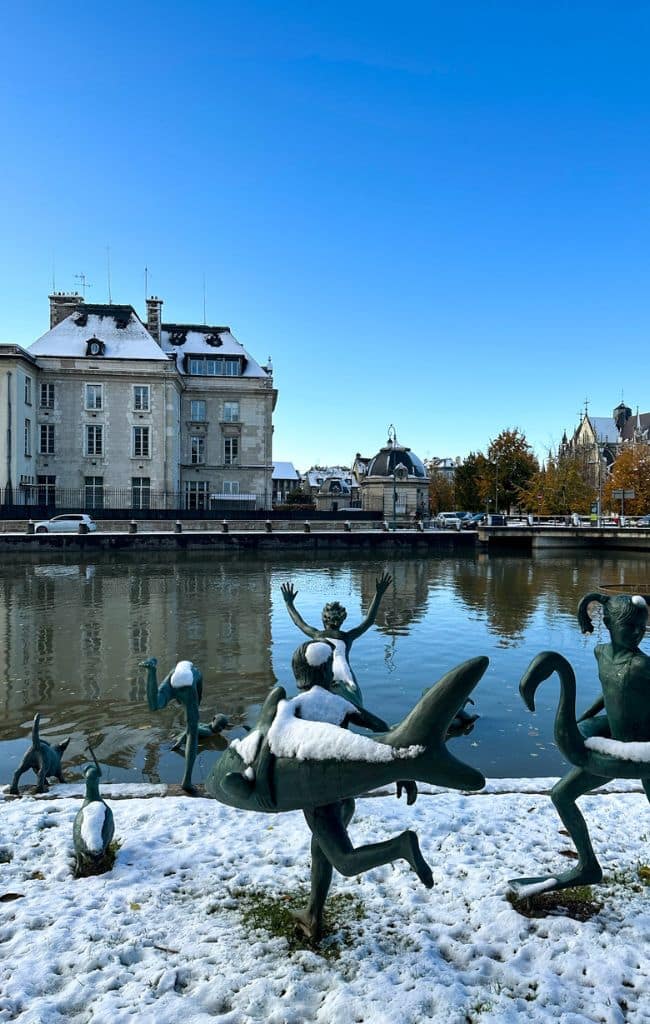
You can visit Troyes at any time of year. The summer months are the busiest and you will need to book accommodation and restaurants in advance. I visited in November when my trip coincided with unexpected snowfall. Although snow is not that common, it was beautiful seeing the coloured half-timbered houses dusted with snow.
How to get to Troyes, France
Troyes is just 90 minutes from the Paris by train, departing from the Gare de l’Est train station. If you are driving from the UK, then it’s roughly four hours from Calais and – as I’ve already mentioned – is the perfect place to stop en route to the Alps or the south of France.
It’s another five hours by car from Troyes to Morzine, two hours to Dijon, just under four hours to Lyon, and a little under five hours to Grenoble.

Where to stay in Troyes
I stayed at Maison M, a lovely Chambre d’hôtes (Bed & Breakfast) lodged on the banks of the canal. Housed within a grand 19th century townhouse, the property has been brought back to life by its current owners Michelle and Bruno and the five light-filled rooms are large and welcoming. Breakfast is excellent.
For more ideas on where to stay, take a look at the map below that details hotels and apartments.

